Replacement Power Adapters for Laptops, Phones & More

Category: Technical Specifications & Compatibility

wrong power adapter
Can the Wrong Power Adapter Damage an External Hard Drive?

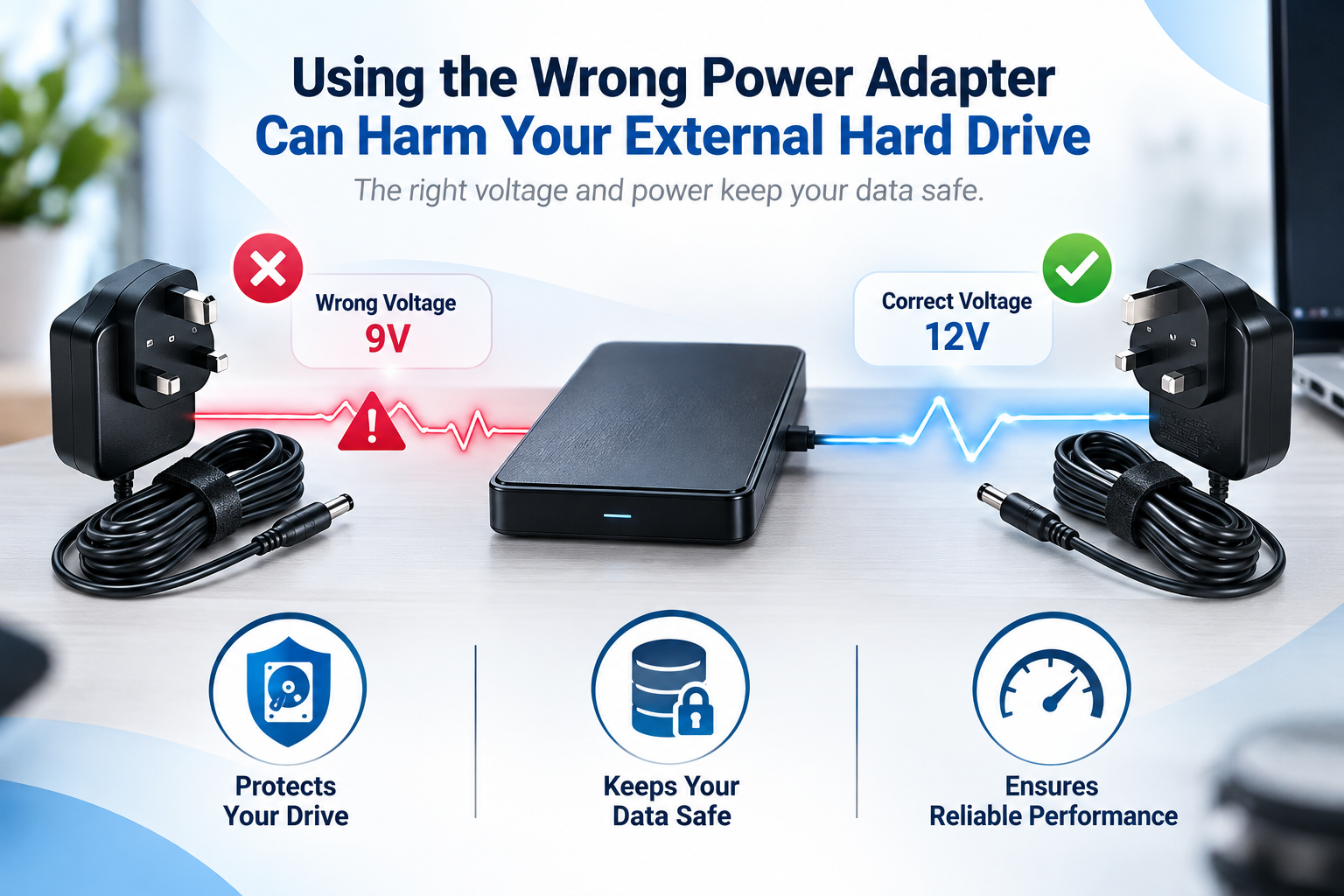
Yes, the wrong power adapter can damage an external hard drive, particularly if the supply delivers incorrect voltage or uses the wrong polarity. An unsuitable brick can also cause erratic performance, sudden overheating, or constant shutdowns when its current rating falls short of what the hardware demands.

The good news is that you can easily prevent these hardware disasters by reviewing four core specifications before plugging in a replacement: voltage, amperage, connector dimensions, and polarity. Checking your specific storage model also ensures seamless compatibility.
Read More »
External Hard Drive
What Power Adapter Does an External Hard Drive Need?

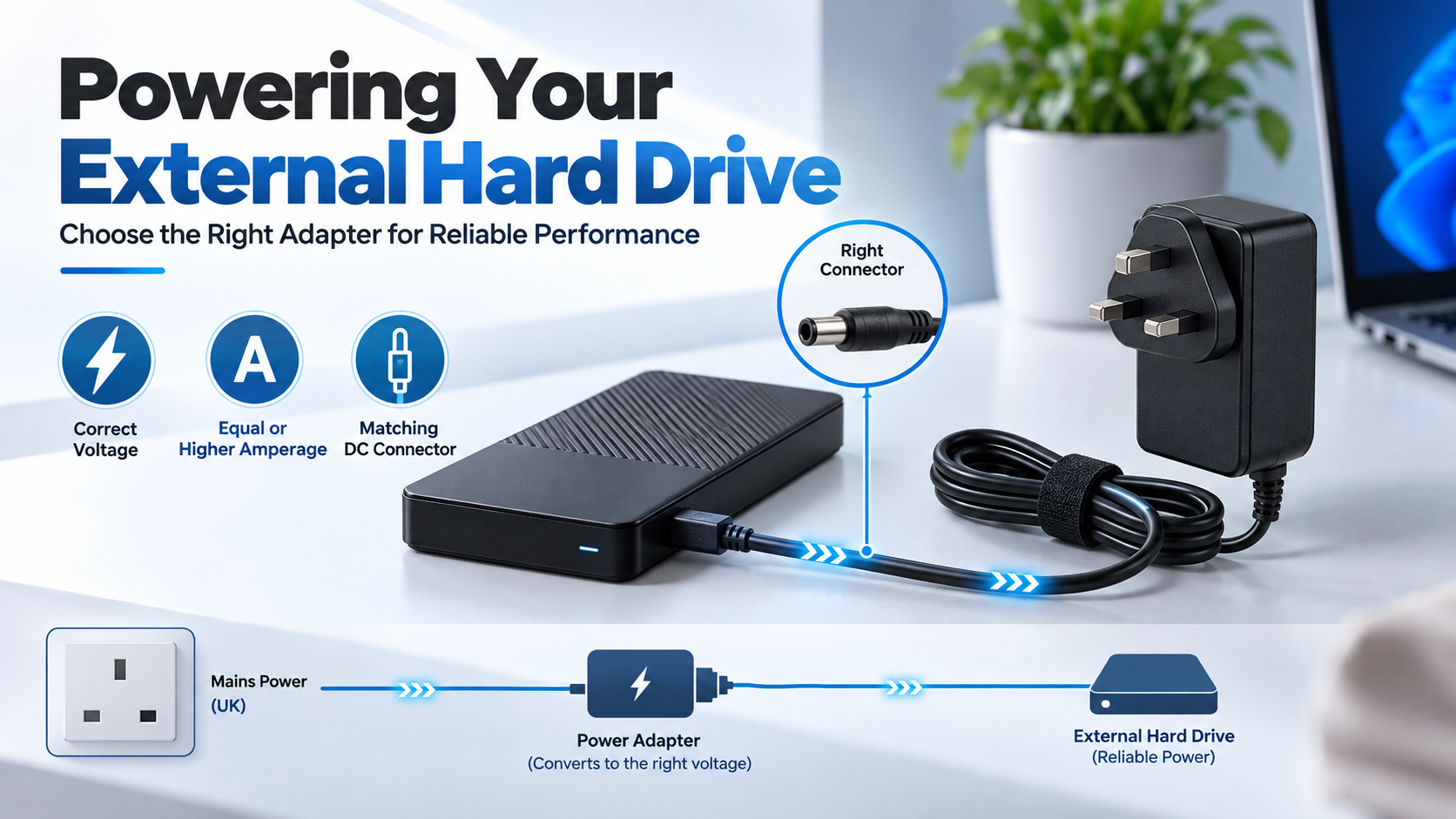
Dealing with a missing or broken power supply for an external hard drive can be frustrating, especially when you are worried about losing precious data. An external hard drive often relies on a separate AC/DC power adapter, particularly if it is a desktop-style unit or houses a larger 3.5-inch drive inside an enclosure. Getting a replacement isn’t just about finding something that plugs into the wall; the correct adapter strictly depends on the drive’s required voltage, current draw, DC connector size, and polarity. Before clicking buy on a random online listing, take a moment to look at the specification label on your drive or original adapter and match every detail carefully to prevent permanent hardware damage.

Read More »
monitor turns off with a replacement
Monitor Turns Off With a Replacement Adapter? Proven Fixes

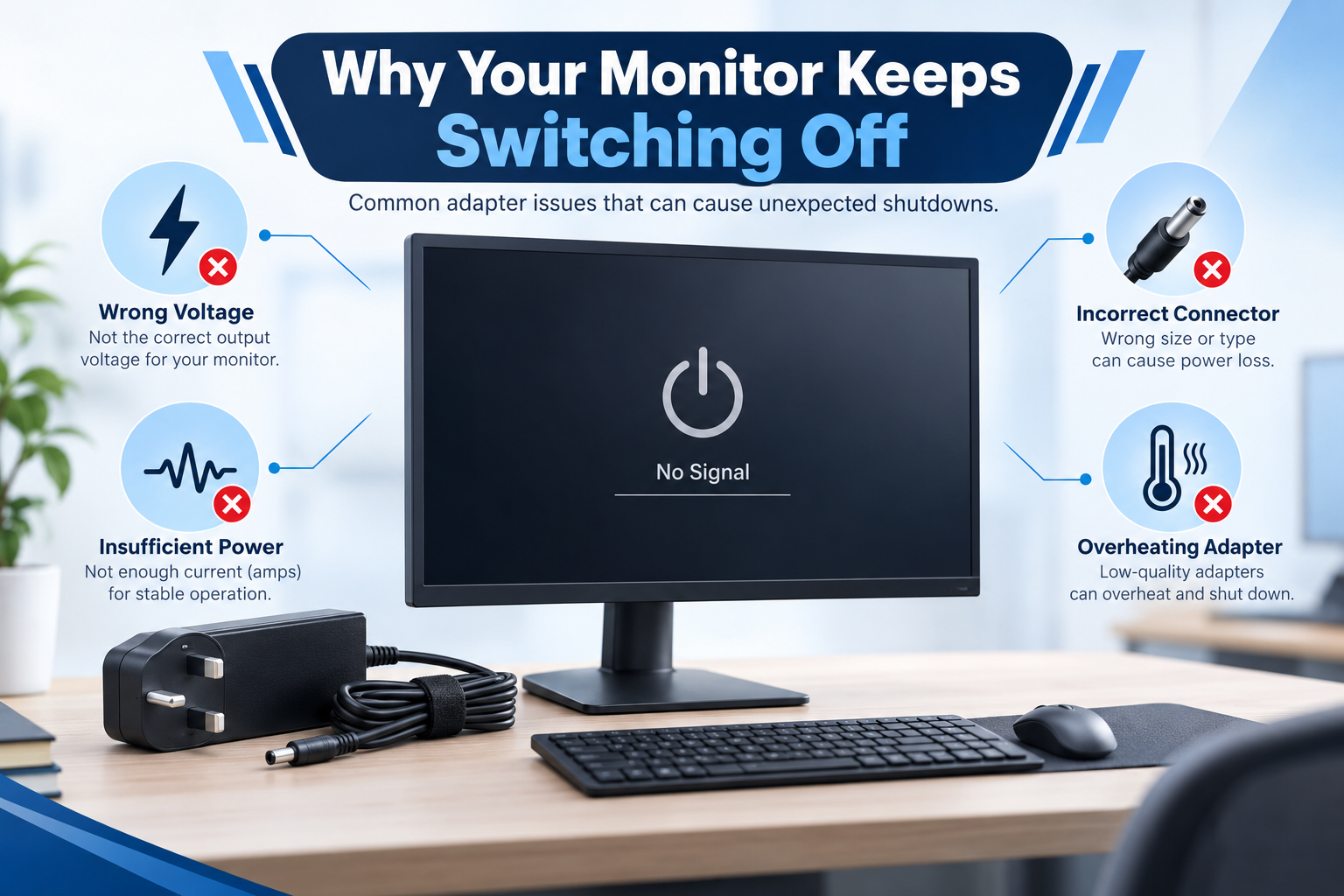
Dealing with a situation where your monitor turns off with a replacement power adapter is incredibly frustrating. While it is easy to assume the new brick is broken, the issue is usually a specification mismatch between what your screen demands and what the adapter delivers.

Traditional monitor chargers output a fixed stream of electricity; if any single variable is misaligned, the display’s internal logic board will shut down instantly to protect itself. To function safely, a replacement must perfectly match five critical criteria: exact output voltage, sufficient current capacity, a properly sized DC connector, matching polarity, and clean direct current.

Read More »
higher-amp monitor power adapter
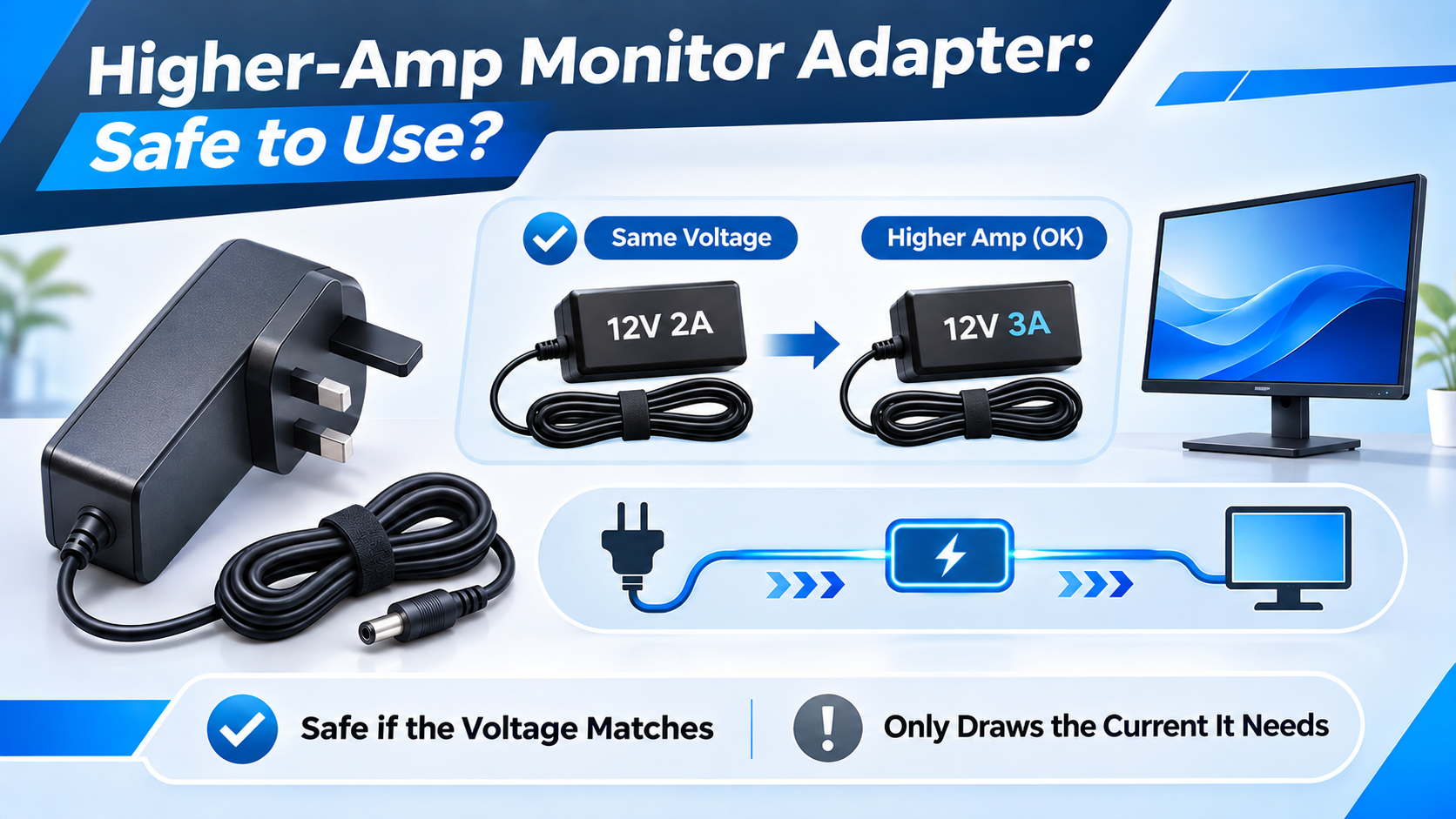
Can You Safely Use a Higher-Amp Monitor Power Adapter?

Yes, a higher-amp monitor power adapter can usually be used with a 12V screen if its output voltage, connector, polarity and supply type match the monitor’s requirements. The adapter’s current rating must be equal to or higher than the monitor’s stated requirement.

For example, if a monitor requires 12V DC and 2A, a compatible 12V DC, 3A adapter may be suitable. The 3A figure describes the maximum current the adapter can provide under specified conditions. It does not force 3A into the monitor.

However, a higher current rating does not make every 12V adapter interchangeable. Check the complete specification and the exact monitor model before connecting a replacement.

Read More »
19V power adapter does a monitor need
19V Monitor Power Adapter: Best Replacement Guide

Finding a completely compatible 19V monitor power adapter might seem straightforward, but picking up a random power brick can easily end in disappointment or a fried display. When you look at the back panel of your display and see a rating like “19V,” you are only looking at one piece of the puzzle. Finding a completely compatible power supply means you also need to ensure the adapter provides enough current, features the exact physical connector size, and uses the correct electrical polarity.

Whether you are looking to replace a lost power brick, swap out a failed adapter, or set up a second-hand display, taking the time to verify these specifications first will save you from major technical headaches and potential safety hazards.

Read More »
keyboard adapter voltage polarity
How to Match a Replacement Keyboard Adapter to Voltage and Polarity

Finding a replacement power supply is not simply about choosing a plug that fits. You must match the correct keyboard adapter voltage polarity, while also providing sufficient current and using the correct connector and output type. A visually identical adapter can still be electrically incompatible.

If your original adapter is missing or damaged, start with the keyboard model and its power requirements. Then compare the replacement specification carefully before connecting it.

Read More »
15v power adapter failure
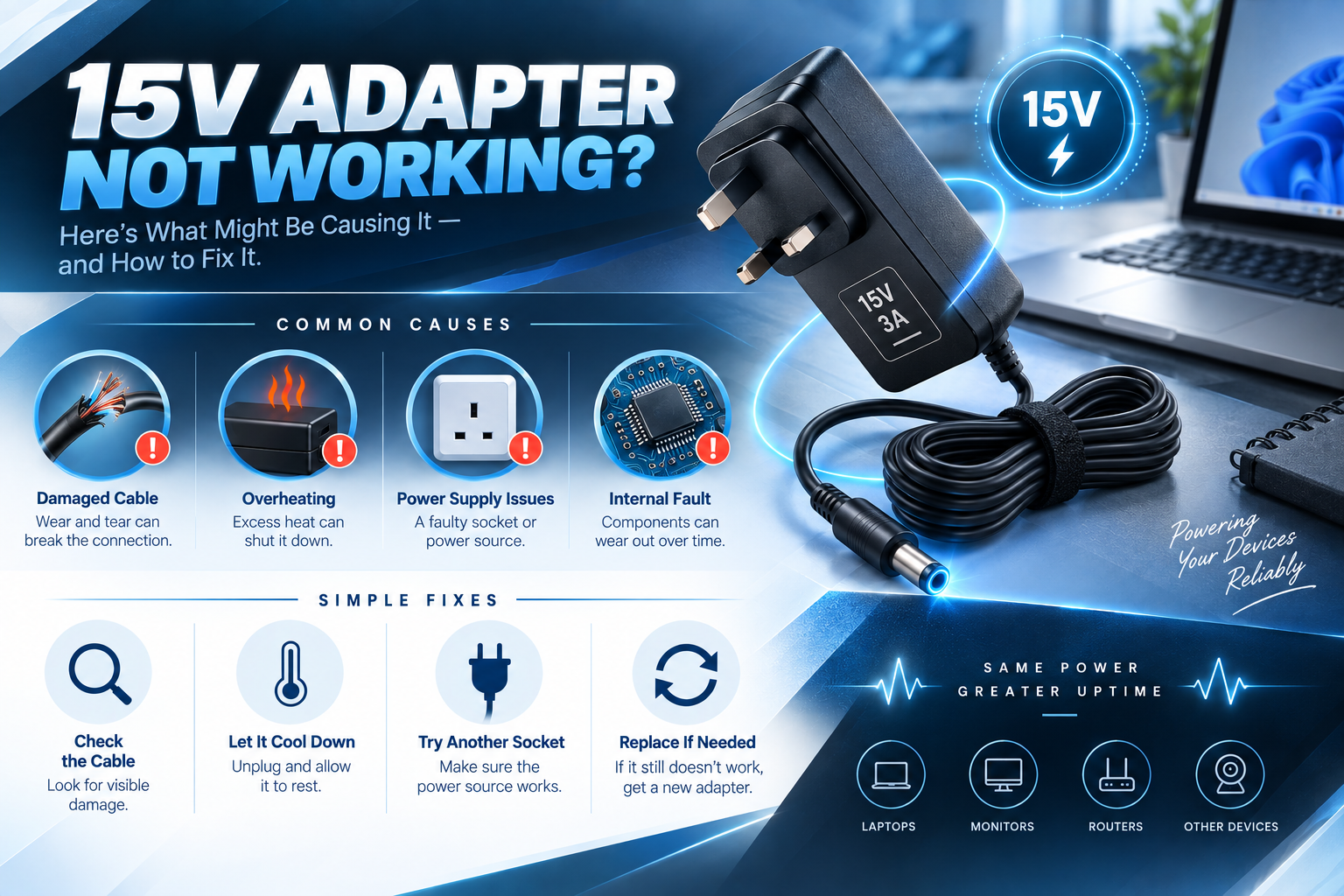
15V Power Adapter Failure: Why It Happens & Proven Fixes

A 15V power adapter failure usually happens because of overheating, overload, damaged cables or connectors, power surges, internal component failure, or age. Before replacing it, check whether the adapter or the equipment is actually at fault. Inspect the mains connection, cable, connector and device input first.

A failed adapter does not always mean the power supply itself is faulty. A damaged wall socket, overloaded supply, loose connector or problem inside the connected equipment can produce similar symptoms. Identifying the likely cause first can help you avoid buying the wrong replacement or continuing to use an unsafe adapter.

Read More »
15v 3a adapter instead of 15v 2a
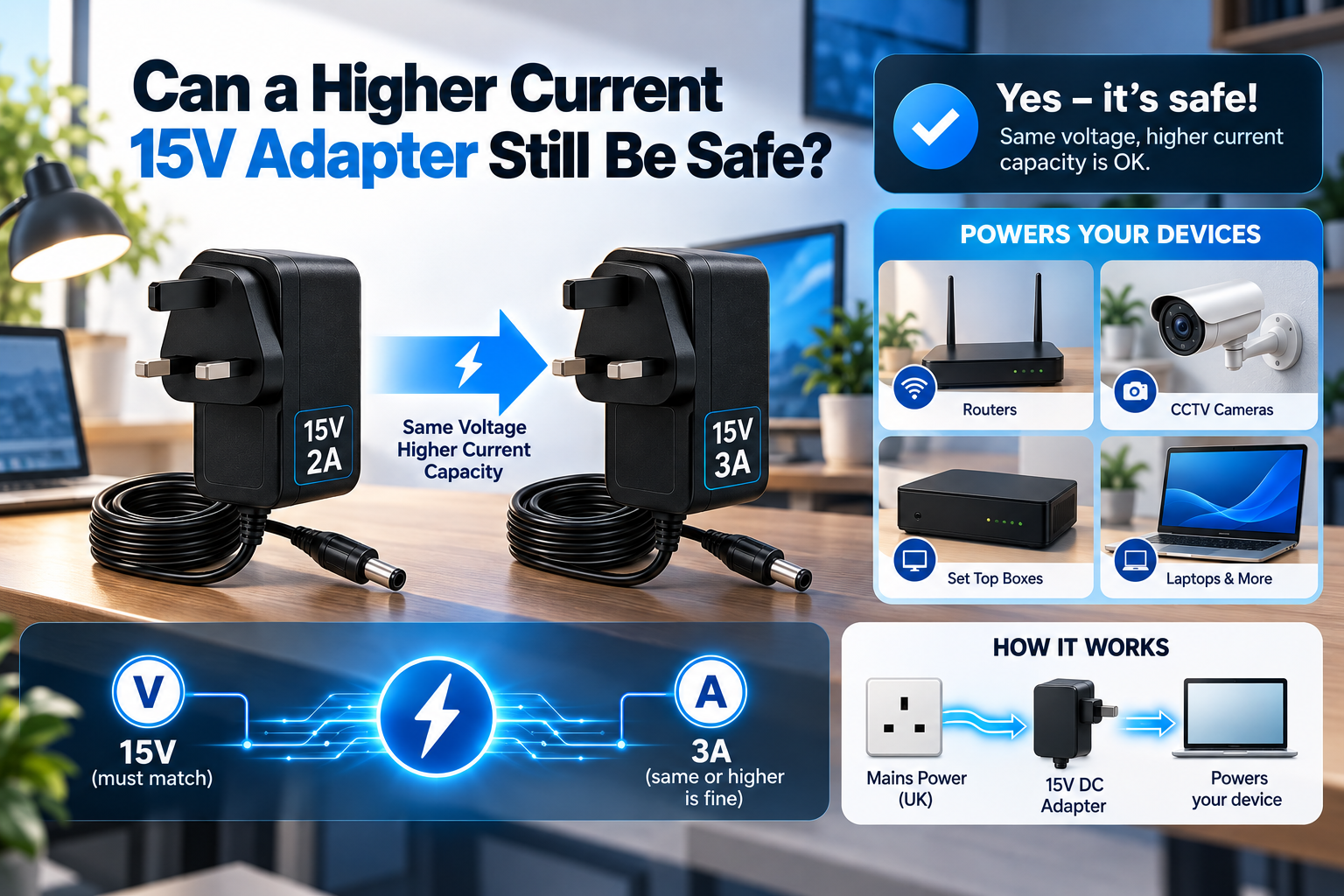
Can You Safely Use a 15V 3A Adapter Instead of 15V 2A?

Wondering if you can use a 15v 3a adapter instead of 15v 2a? Finding a safe replacement for your power supply is surprisingly easy. If your device requires a 15V 2A power adapter, you may wonder whether a 15V 3A adapter is safe to use. In many cases, yes. A 15V 3A adapter can replace a 15V 2A adapter when the voltage is exactly 15V and the connector, polarity, output type and device compatibility also match.

Read More »
15V power adapter connector
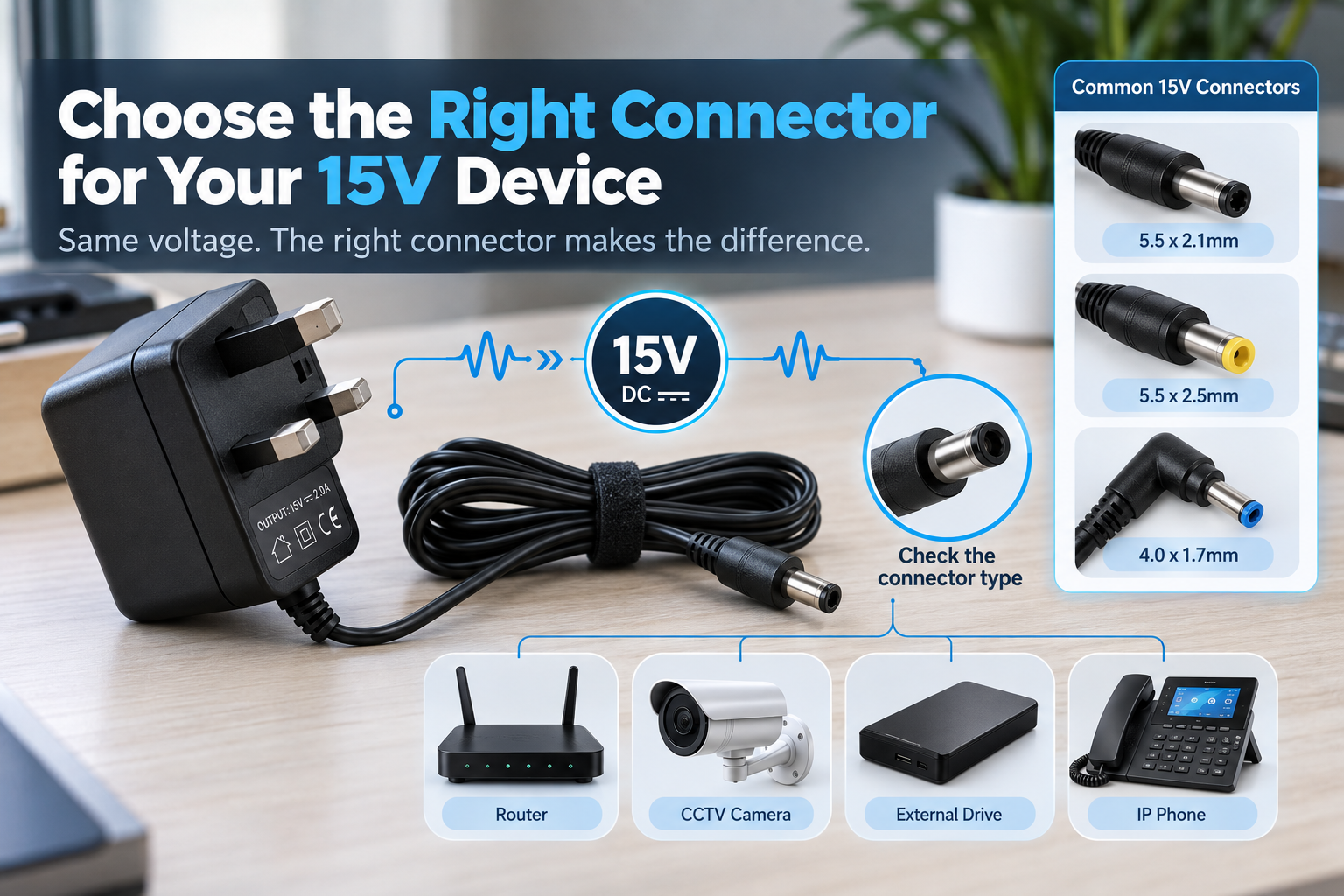
How to Find the Perfect 15V Power Adapter Connector

Finding the right 15v power adapter connector can be difficult, especially when replacing a lost or broken cord for your essential home electronics. Two adapters may both provide 15V and look almost identical, yet their plugs can have different dimensions or polarity. A connector that appears to fit can still be wrong. Before buying a replacement, check the plug size, polarity, output type and device requirements.

Read More »
15V 2A mean on a power adapter
What Does 15V 2A Mean on a Power Adapter? Safe Guide

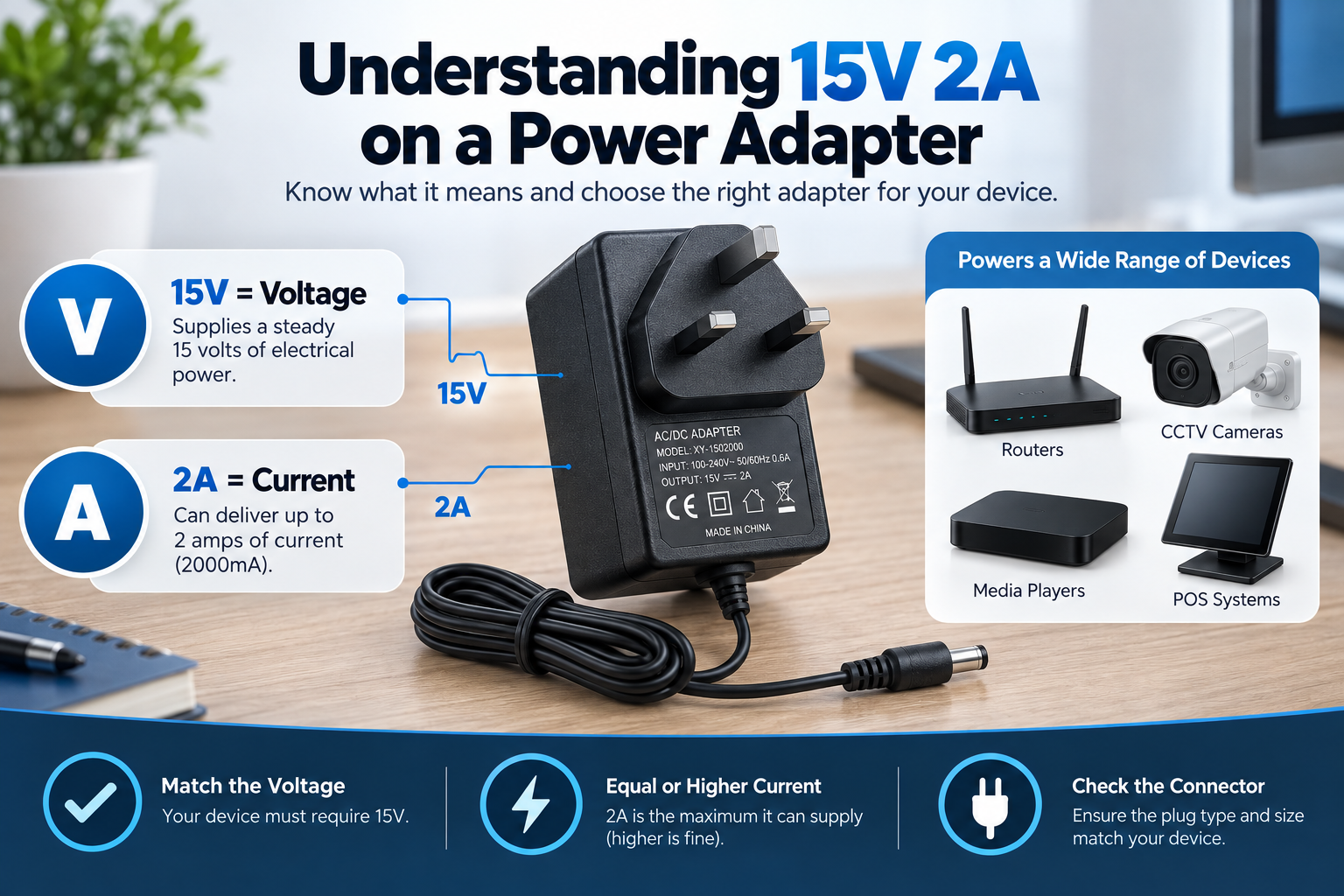
If you want to know what 15V 2A mean on a power adapter, these numbers describe two important electrical characteristics: output voltage and current capacity. 15V is the voltage the adapter is designed to provide, while 2A is the maximum current it can supply under its rated conditions. Together, they indicate a maximum rated output of 30 watts.

These figures matter when replacing an adapter. A plug that fits is not enough; voltage, current capacity, connector, polarity and output type must match the equipment.

Read More »
15V power adapter
15V Power Adapter: The Complete UK Buying Guide

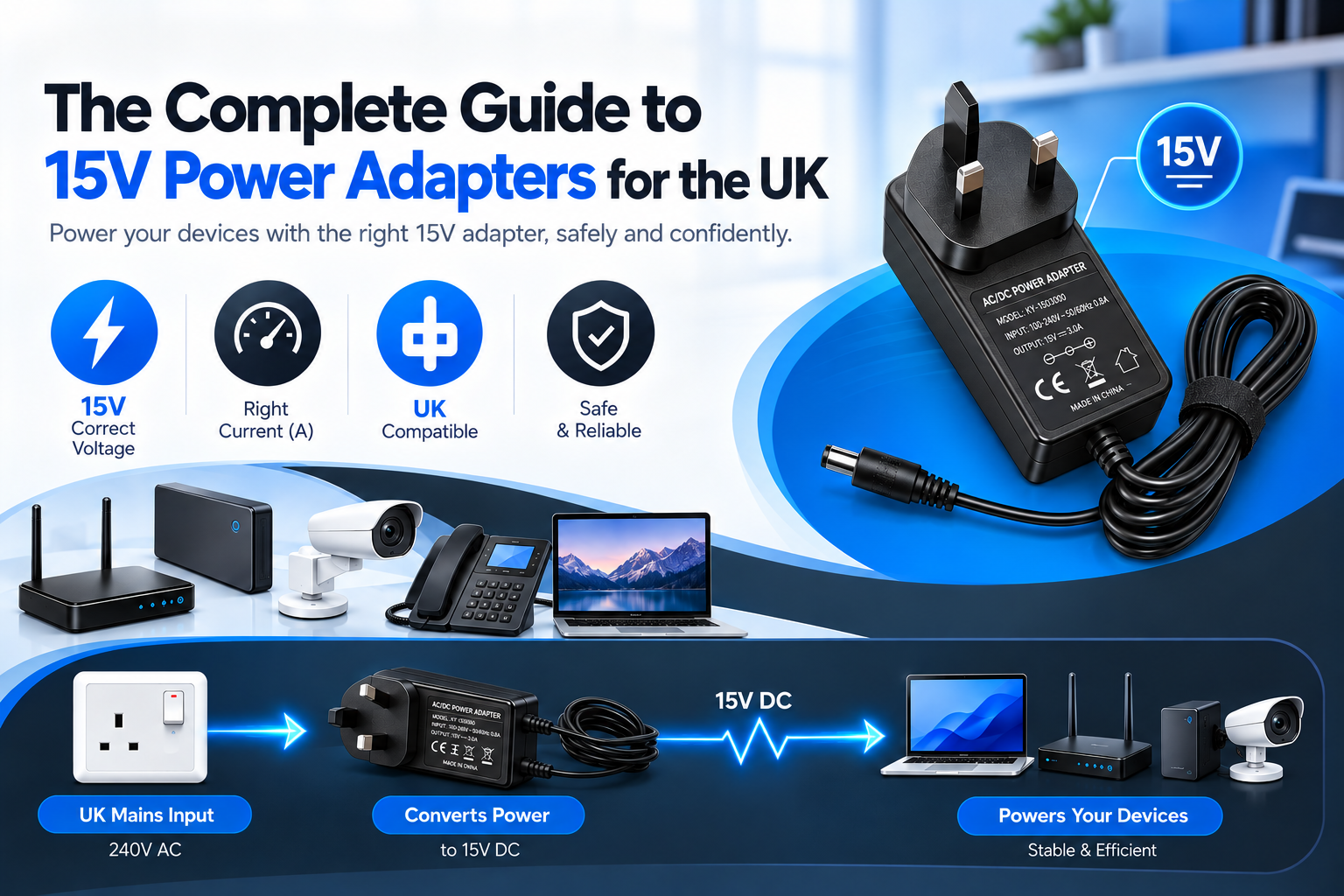
Replacing a power adapter is not simply a matter of finding another plug marked “15V”. A suitable replacement must provide the correct voltage, enough current capacity, the right connector, matching polarity and the correct output type. For UK users, the mains plug and product safety requirements also matter.

Read More »
24V power adapter overheat
Why Does a 24V Power Adapter Overheat? Causes & Proven Fixes

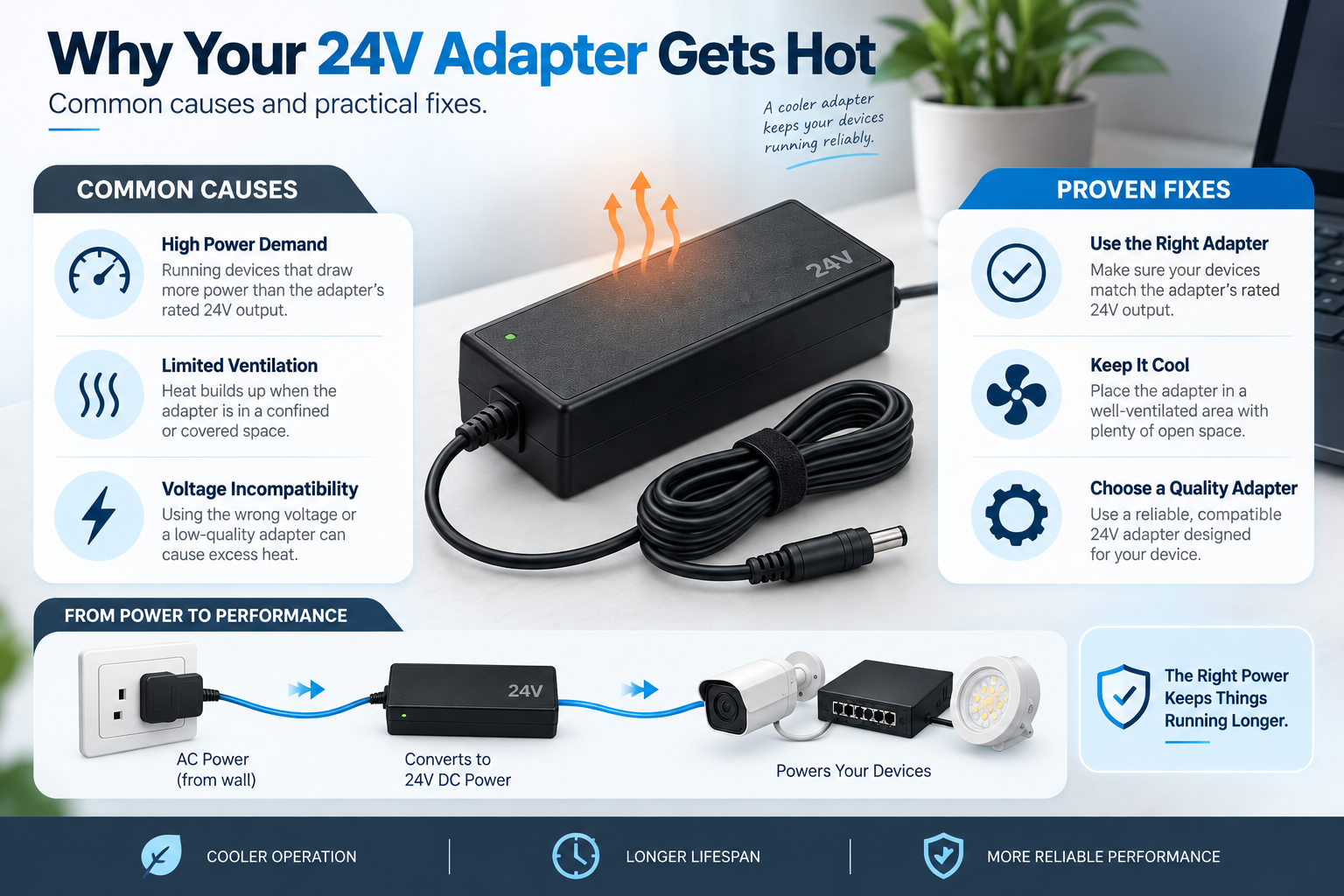
Why does a 24V power adapter overheat? While a 24V power adapter can become warm during normal operation because electrical energy conversion produces heat, an adapter that becomes excessively hot may be dealing with excessive load, insufficient current capacity, poor ventilation, high ambient temperature, inefficient operation, or an internal fault. Understanding the difference between normal warmth and overheating can help you decide when a power adapter needs attention or replacement.

Read More »
match a 24V power adapter
How to Match a 24V Power Adapter: Easy UK Guide

Finding the right replacement power supply can feel daunting when your original charger stops working unexpectedly. Whether you are powering a specialized audio interface, an LED lighting setup, or a home network router, picking an incorrect replacement can cause permanent hardware damage and costly equipment failures. For UK consumers, understanding how to properly match a 24V power adapter to your electronic equipment is essential for safety, device longevity, and peak operational performance. By breaking down key electrical specifications such as voltage, amperage, connector polarity, and physical barrel sizing, you can choose a reliable, high-performance accessory with complete confidence while avoiding unnecessary electronic waste. Taking the guesswork out of hardware replacements protects your sensitive electronics and ensures seamless daily operation.

Read More »
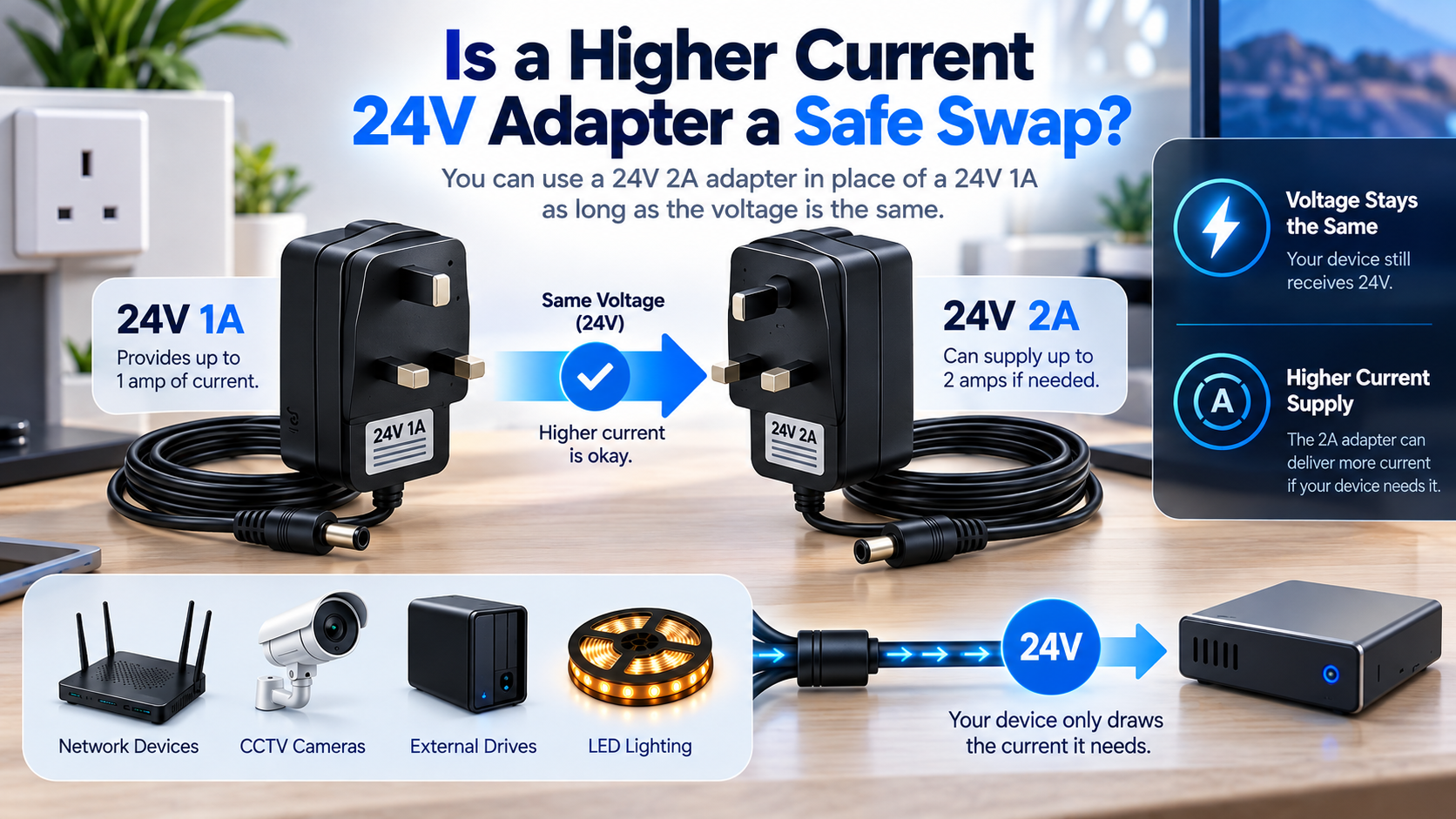
24V 2A adapter instead of 24V 1A
Can You Safely Use a 24V 2A Adapter Instead of 24V 1A?

Before you use a 24V 2A adapter instead of 1A, it helps to know that finding a replacement power supply for your electronics can feel like navigating a minefield of technical jargon. Whether you need a charger for a home router, a musical keyboard, or specialized audio gear, stumbling across a replacement with a higher amperage rating is common. A frequent dilemma for UK consumers is whether swapping out the original adapter for a more robust version will fry your equipment or offer a safer, cooler alternative. Understanding how electrical current flows between a power source and your appliance removes guesswork, ensuring you can restore power safely, affordably, and sustainably without generating e-waste.

Read More »
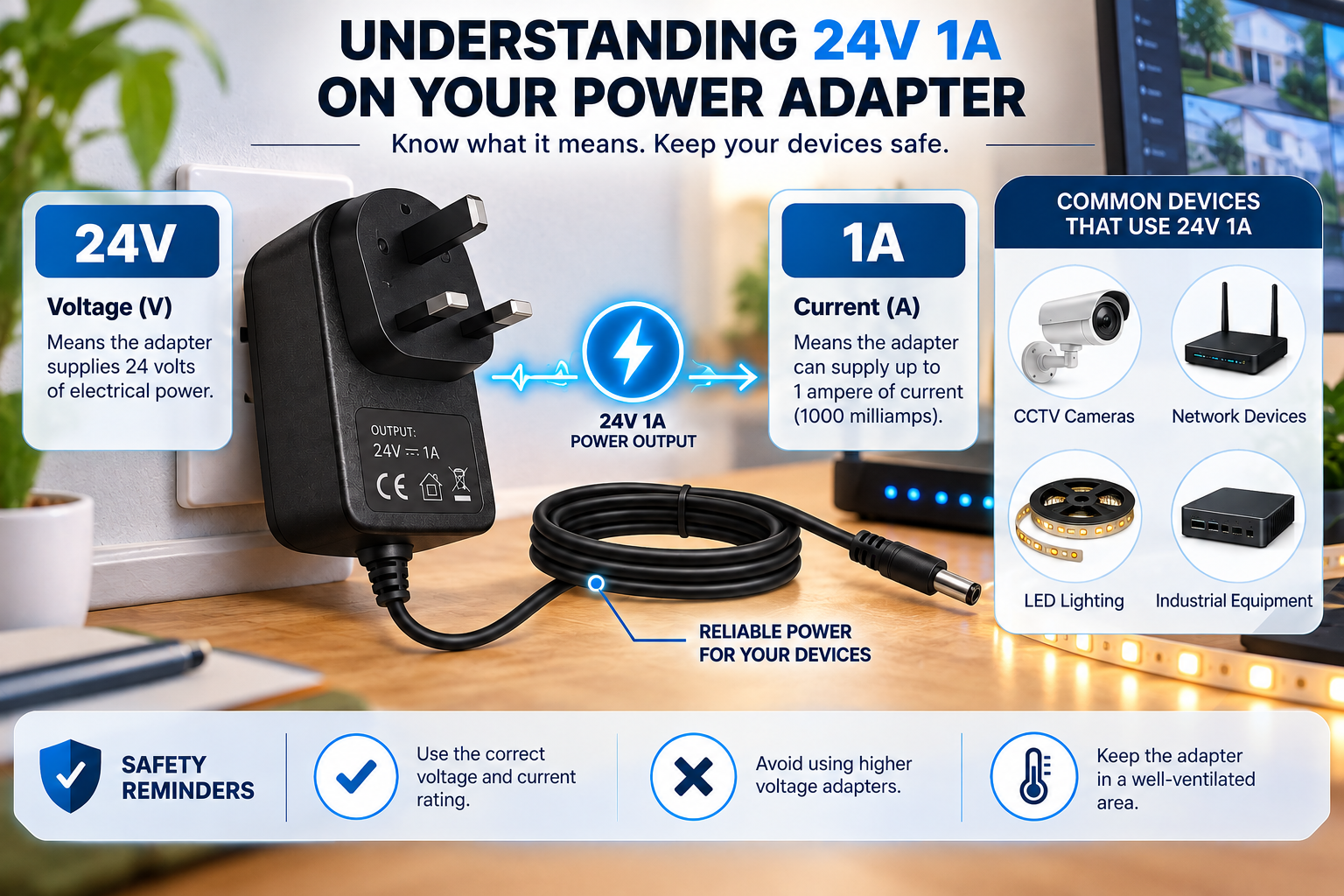
24v 1a mean on a power adapter
What Does 24V 1A Mean on a Power Adapter? Essential Guide

Wondering what does 24V 1A mean on a power adapter? Finding the right replacement power supply for your electronic equipment can feel confusing when faced with technical terms. If your device label or original charger reads 24V 1A, understanding these specifications is vital to prevent electrical damage and ensure reliable performance. Whether you are replacing a lost power unit for audio gear, LED lighting, or household electronics, knowing how voltage and current interact helps you shop with total confidence. At Power Adapter Warehouse, we specialise in helping UK customers find safe, compatible, and affordable replacement power supplies without the manufacturer price tag.

Read More »
24V power adapter
24V Power Adapter: How to Choose the Perfect Replacement

Finding a replacement 24V power adapter can look easy until you compare different products and realise that “24V” is only one part of the specification. Two adapters can provide the same voltage while having different current ratings, connectors or polarity.

If your original adapter has failed, been lost or become damaged, start with the information printed on its label or the input specification on the device. This gives you the electrical requirements you need to compare before purchasing a replacement.

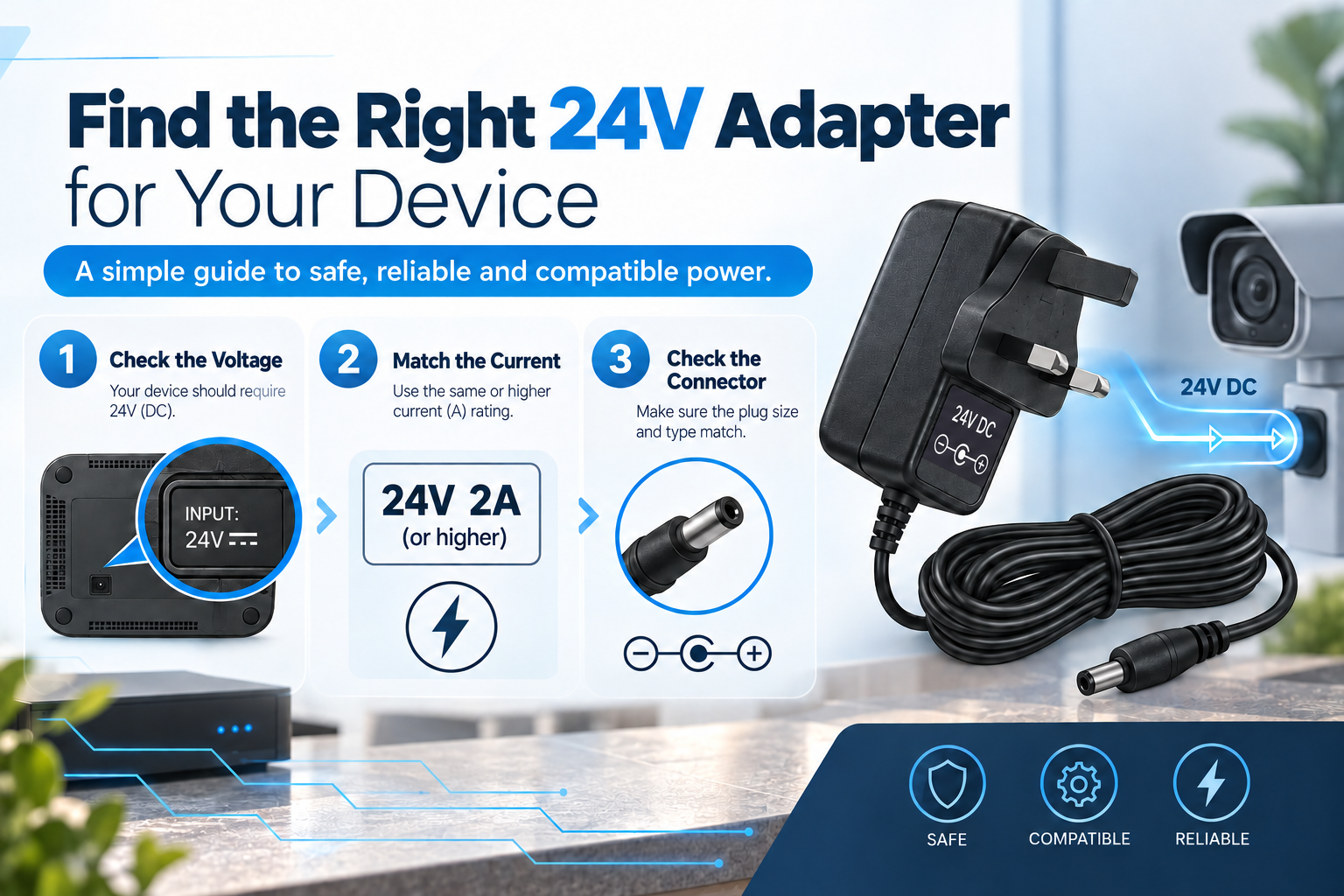
Before buying, check five key specifications: voltage, current, output type, connector and polarity. The device model or original adapter can provide additional confirmation. Matching only the 24V rating is not enough because different 24V adapters can have very different electrical and physical specifications.

Read More »
5V power adapter get hot
Why Does a 5V Power Adapter Get Hot? Causes & Safety Checks

Wondering what makes a 5V power adapter get hot? While some warmth is normal during operation, excessive heat can indicate heavy loading, poor ventilation, damage, or an unsuitable replacement. Understanding what makes a 5V power adapter get hot helps you determine whether the temperature is safe or if the power supply needs attention.

Read More »
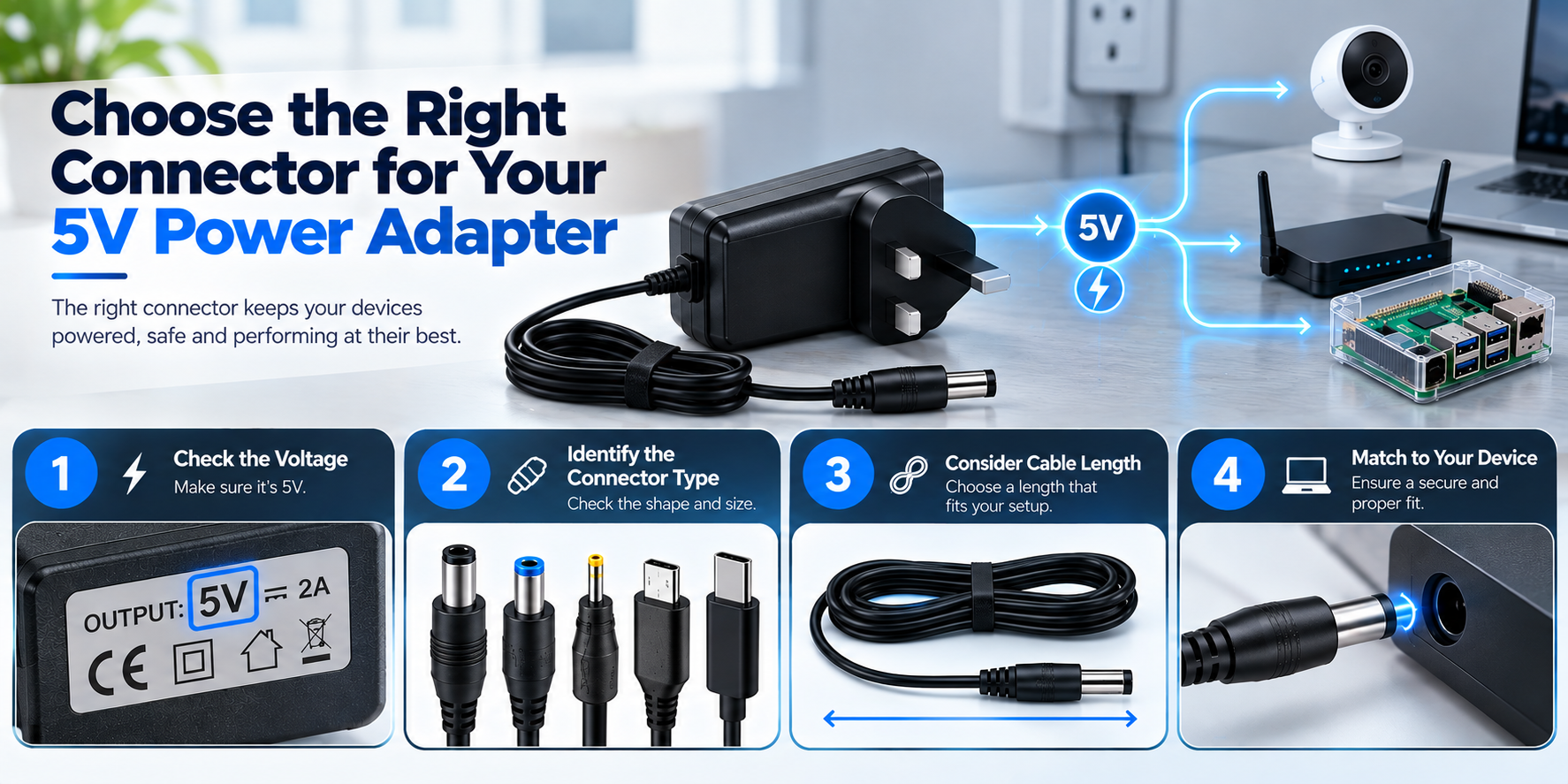
5v power adapter connector
How to Find the Perfect 5V Power Adapter Connector

Finding the correct 5V power adapter connector can seem simple until you discover that the plug does not fit your device. A matching 5V rating is important, but it is only one part of compatibility.
The connector must also be the correct type and size, and the polarity must match where applicable. For barrel plugs, both the outer and inner diameter matter. USB-powered devices require you to identify the correct USB connector and confirm the device’s power requirements.

This guide explains how to identify the right fit before buying a replacement.

Read More »
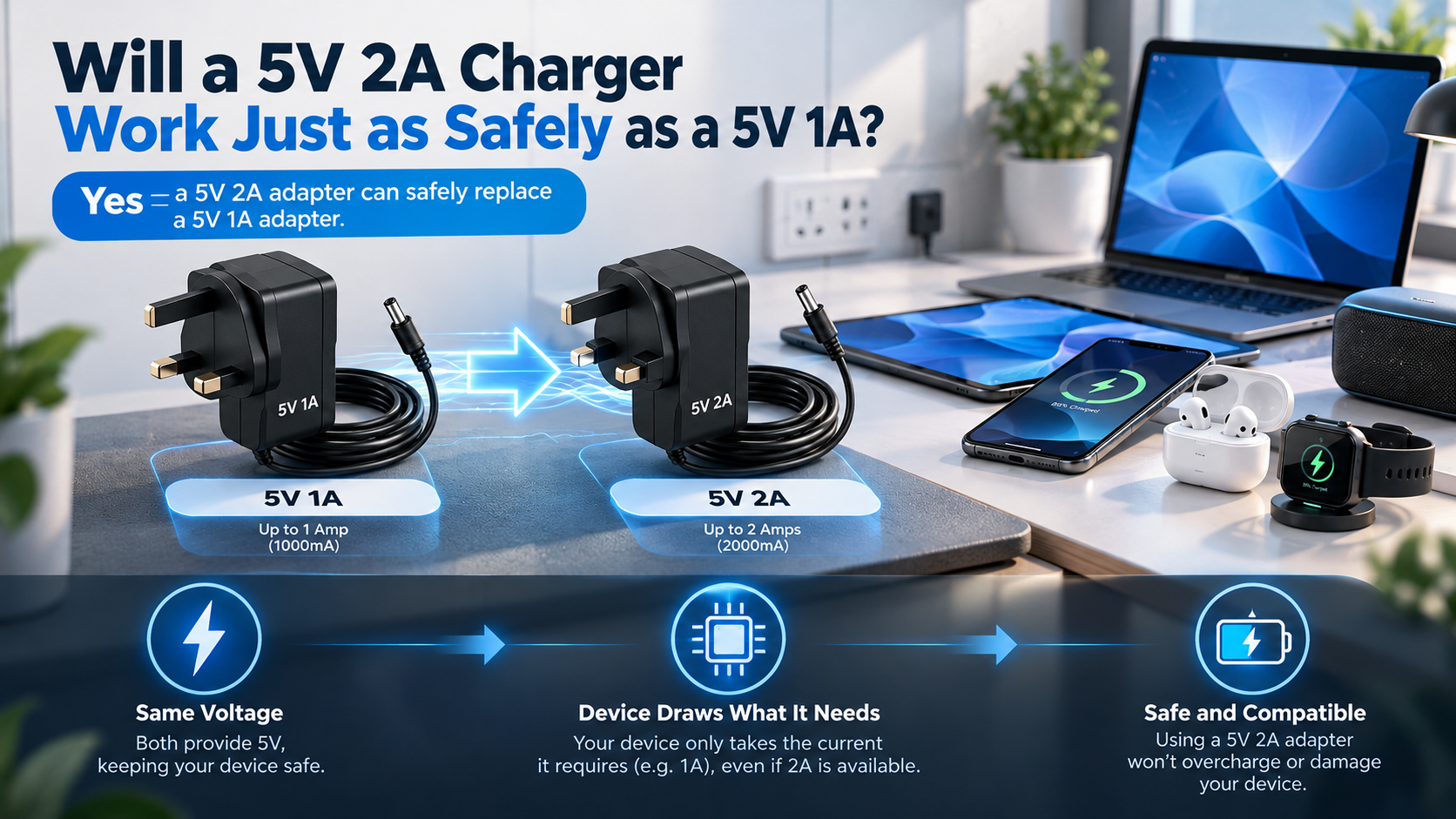
5V 2A adapter instead of a 5V 1A
Can You Safely Use a 5V 2A Adapter Instead of a 5V 1A?

If you want to use a 5V 2A adapter instead of a 5V 1A adapter, you may wonder whether the higher current rating is safe. Generally, yes. A 5V 2A adapter can safely replace a 5V 1A supply when the device requires 5V and the connector, polarity, output type and other specifications match.

Read More »
5v 1a mean on a power adapter
What Does 5V 1A Mean on a Power Adapter? Essential & Safe Guide

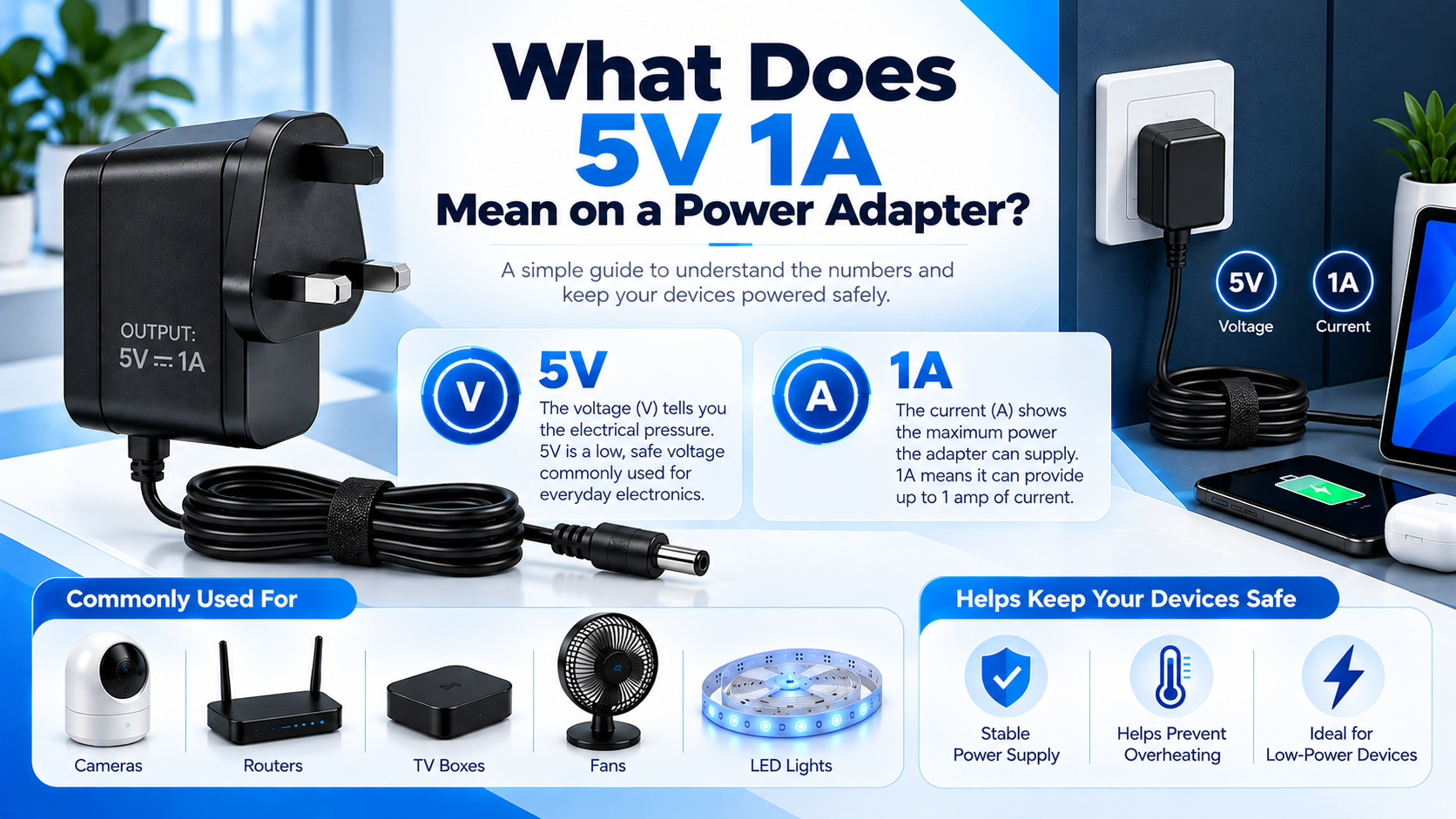
If you have ever looked at a power adapter and wondered what 5V 1A means, you are looking at two important electrical specifications. The 5V tells you the adapter’s output voltage, while 1A tells you the maximum current it is designed to supply.

Understanding these numbers helps ensure your everyday electronics run safely and efficiently. By learning to interpret these basic labels, you can avoid common charging issues and confidently select the right replacement when your original plug goes missing.

Read More »
5v replacement power adapter
5V Replacement Power Adapter: Best Complete Buying Guide

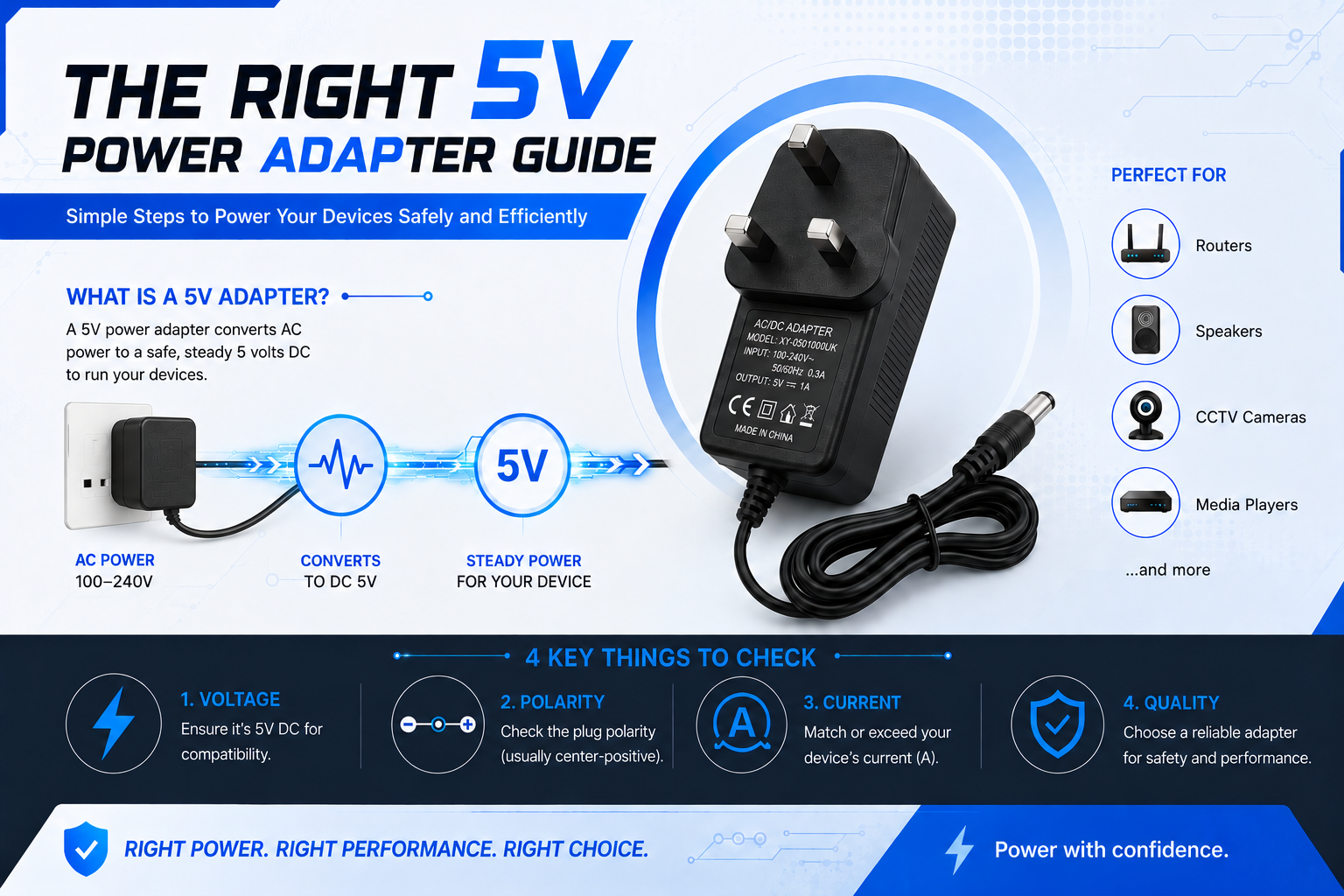
Finding the right 5v replacement power adapter can instantly turn an essential piece of household, office, or audio equipment back from an expensive paperweight into a fully functioning device. Among low-voltage electronics, 5V power supplies are widely used to drive everything from routers and media streamers to microcontrollers, synth gear, and USB hubs.

However, assuming that any 5V plug will fit your device is a risky gamble. Different electronics demand specific current ratings, connector sizes, and polarity configurations. This comprehensive guide will teach you how to decode your device specifications and source a safe, reliable, and noise-free UK replacement.

Read More »
wrong 9v adapter on a guitar pedal
Wrong 9V Adapter on a Guitar Pedal? Warning Signs & Safety Facts

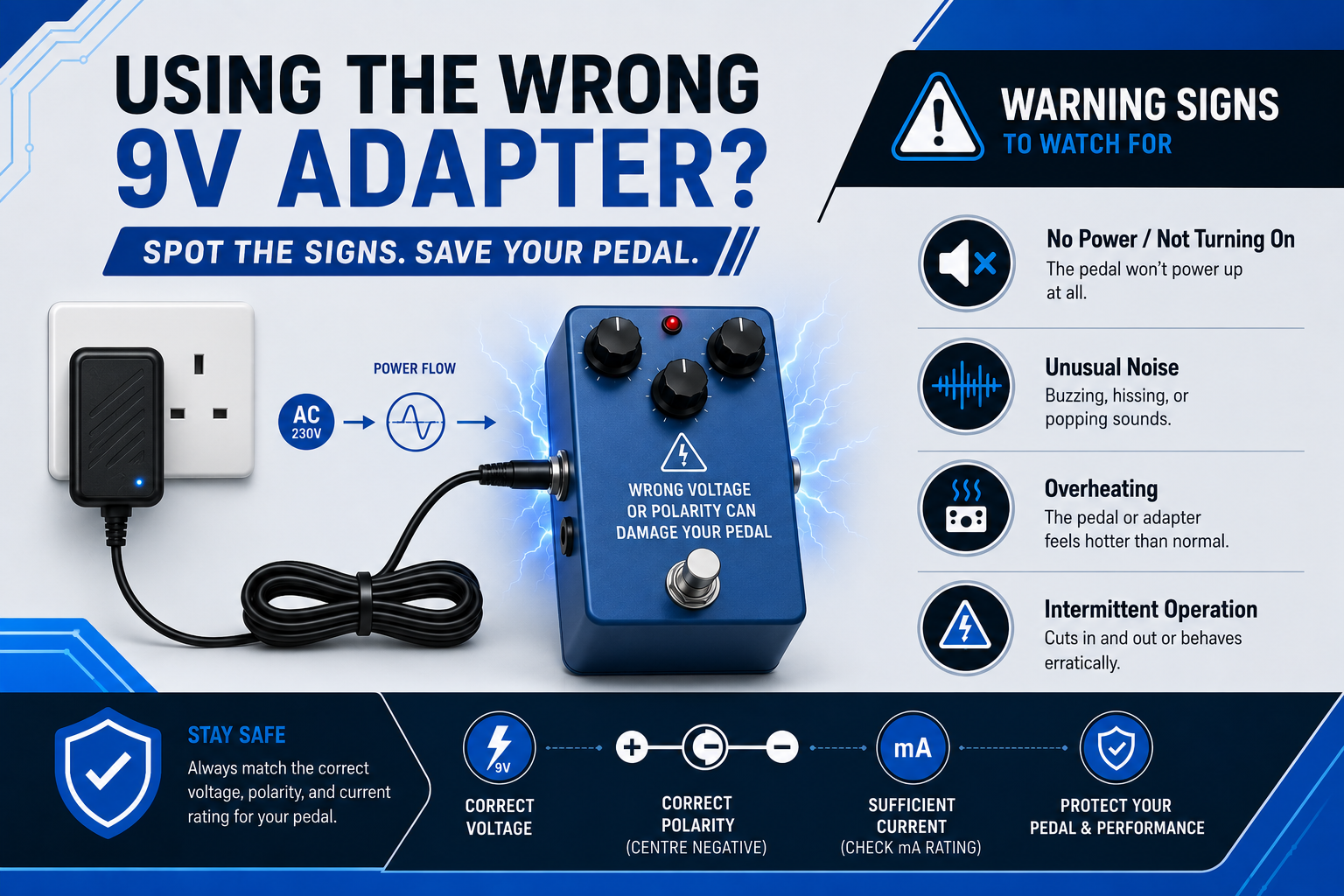
Every guitarist has experienced the panic of setting up for a gig or practice session, only to realise their dedicated power supply is missing. In a rush, it is tempting to grab the nearest household plug from a broadband router or electronic keyboard and hope for the best. However, using the wrong 9v adapter on a guitar pedal is one of the fastest ways to permanently destroy your favourite stompbox.

While some power mismatches might only cause a temporary loss of sound or an unbearable background hum, others will instantly fry sensitive internal processors and leave you with a costly repair bill. In this guide, we will break down exactly what happens when you mismatch voltage, polarity, or current, and how to safely power your rig without risking your hardware.

Read More »
9V 2A adapter for guitar effect pedals
Is It Safe to Use a 9V 2A Adapter for Guitar Effect Pedals?

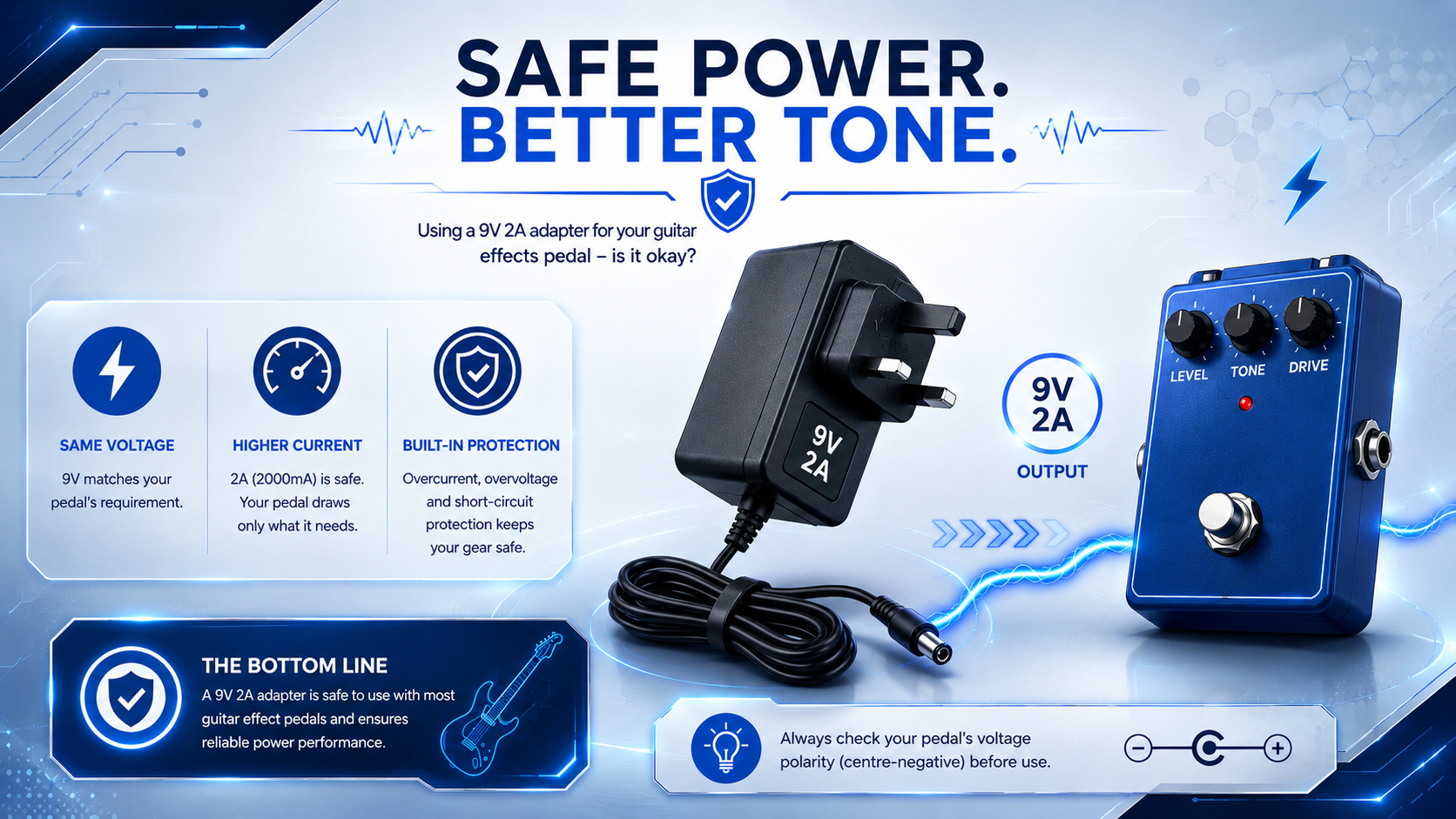
Using a 9V 2A adapter for guitar effect pedal is often perfectly safe if the pedal requires 9V DC, but the number “2A” is not enough to determine compatibility. The pedal and adapter must agree on voltage, polarity, connector type and current requirements. Understanding how these ratings work can prevent a simple replacement purchase from turning into a power problem.
A 2A adapter does not automatically push 2A into a pedal. The pedal normally draws the current its circuit requires.

Read More »
9v centre-negative guitar pedal
The Best 9V Centre-Negative Guitar Pedal Power Adapter: Why It’s Essential

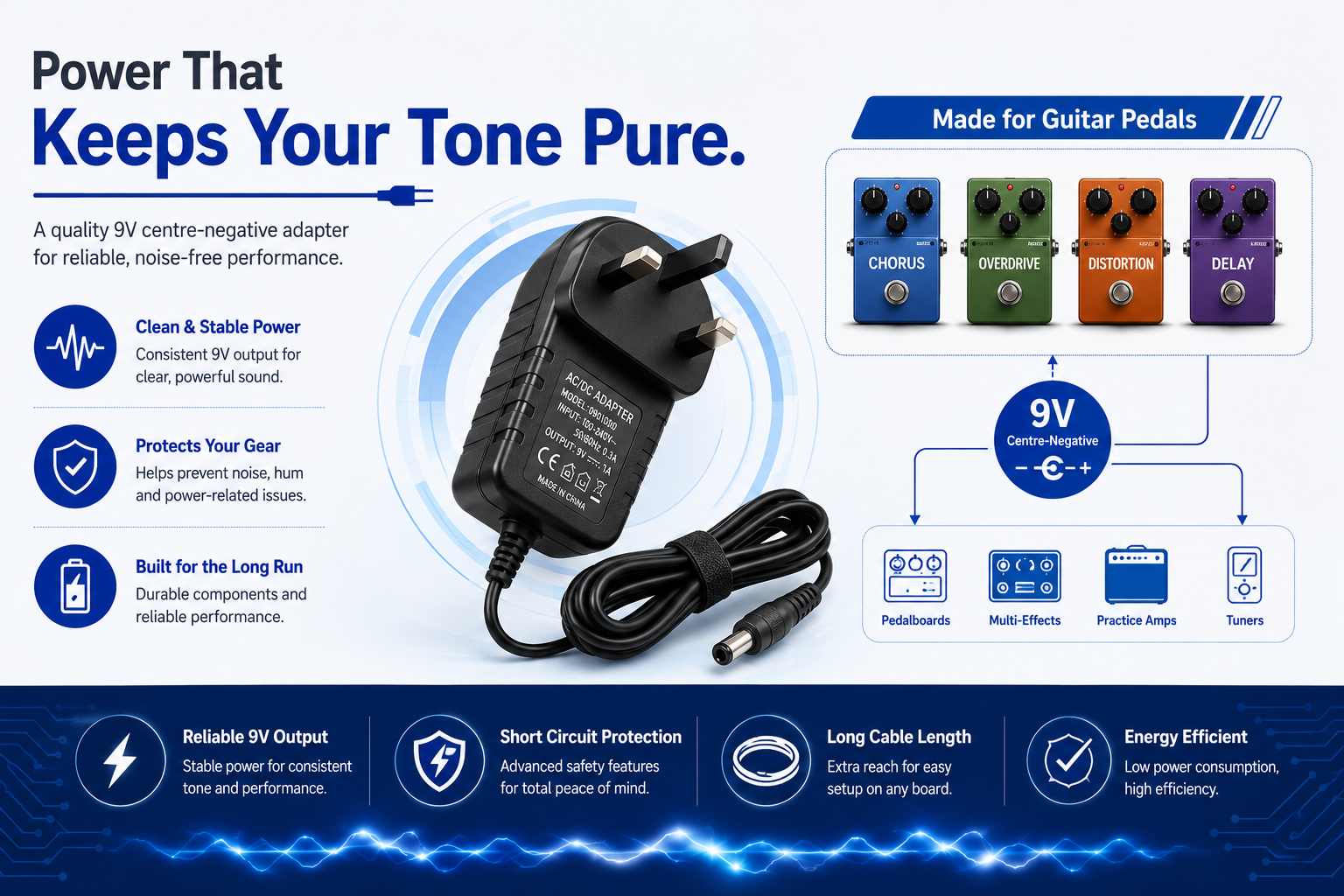
If you have searched for a 9V centre-negative guitar pedal power adapter, you have probably noticed how common this specification is. Many guitar effects pedals use 9V DC power with centre-negative polarity, making it one of the most familiar power configurations for musicians.

But why is centre-negative so common?

Centre-negative became widely adopted across guitar effects pedals and pedalboard power systems. As more manufacturers used the same configuration, compatible power supplies became easier to produce and use.

However, 9V centre-negative is not a universal rule. Some pedals require a different polarity, connector or current rating. Checking the complete power specification before connecting an adapter is essential.

Read More »
9V guitar effects pedal power adapter
Best 9V Guitar Effects Pedal Power Adapters: Complete Buying Guide

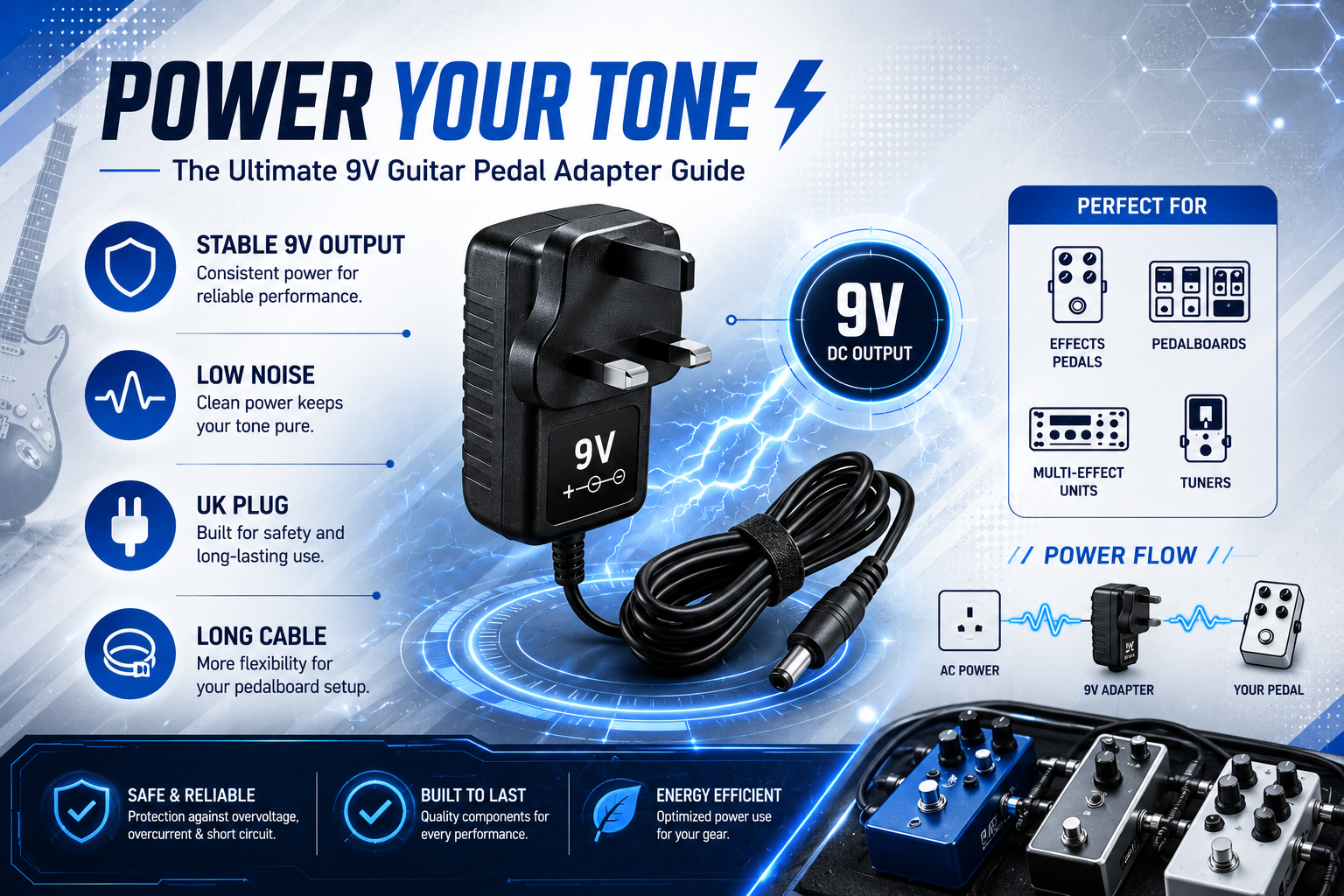
Choosing a 9V guitar effects pedal power adapter sounds simple until you discover that several pedals can use 9V while still needing different connector sizes, polarity arrangements, or current requirements. The voltage alone does not tell you whether an adapter is suitable.

If you are replacing a lost or damaged pedal power supply, start with the pedal model and its power requirements. Then check the voltage, current, connector size, polarity and UK mains plug.

Read More »
12V power adapter for an old router
Replacement 12V Power Adapter for an Old Router: Finding the Perfect Match

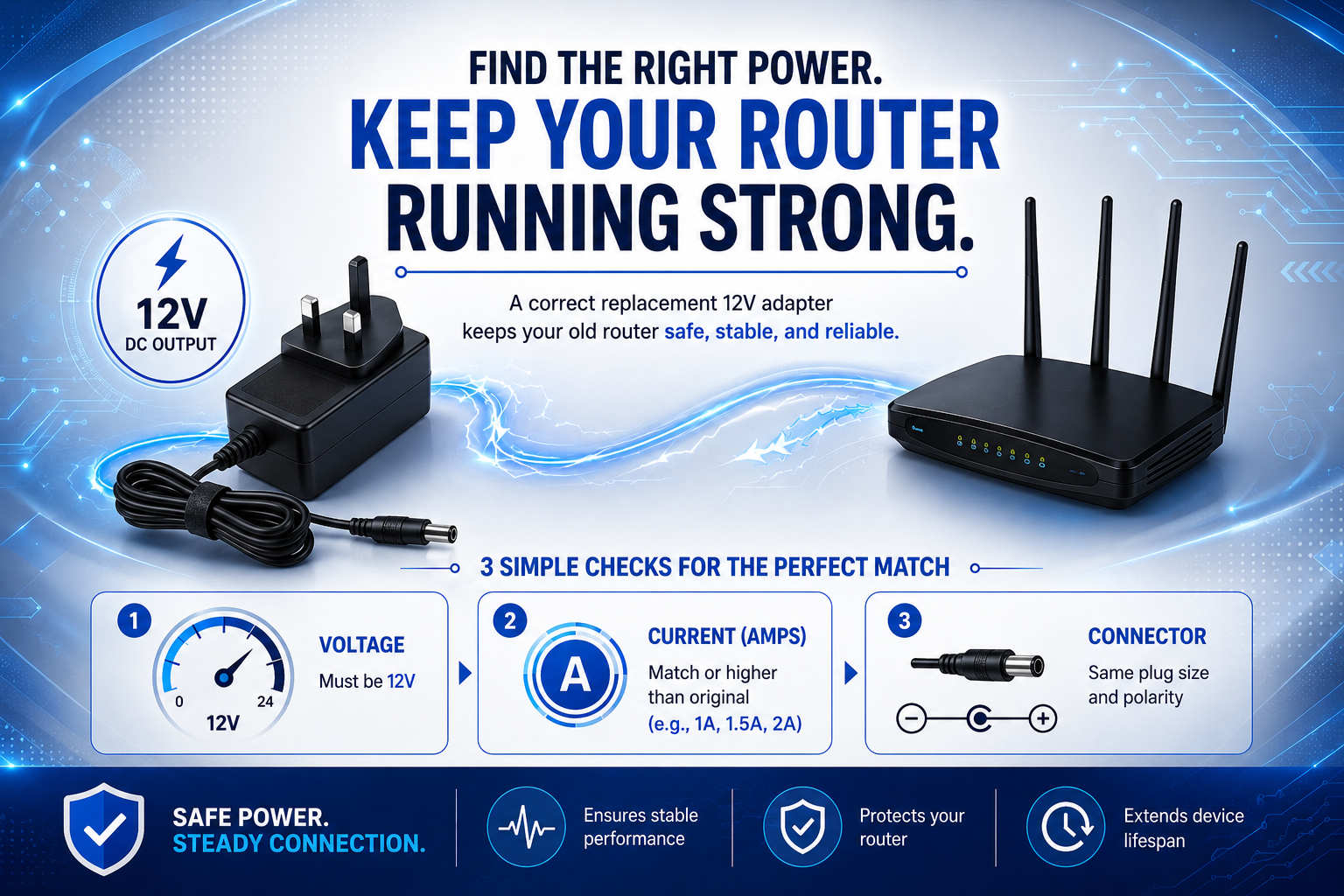
Finding a replacement 12V power adapter for an old router can be more difficult than it first appears. The router may still work perfectly, but its original adapter could be damaged, missing or no longer available.

Searching for “12V router adapter” can bring up dozens of similar-looking products. However, 12V is only one part of the specification. You also need to confirm the current rating, DC connector, polarity and router model.

Read More »
12V Router Suddenly Keep Losing Power?
Why Does a 12V Router Suddenly Keep Losing Power?

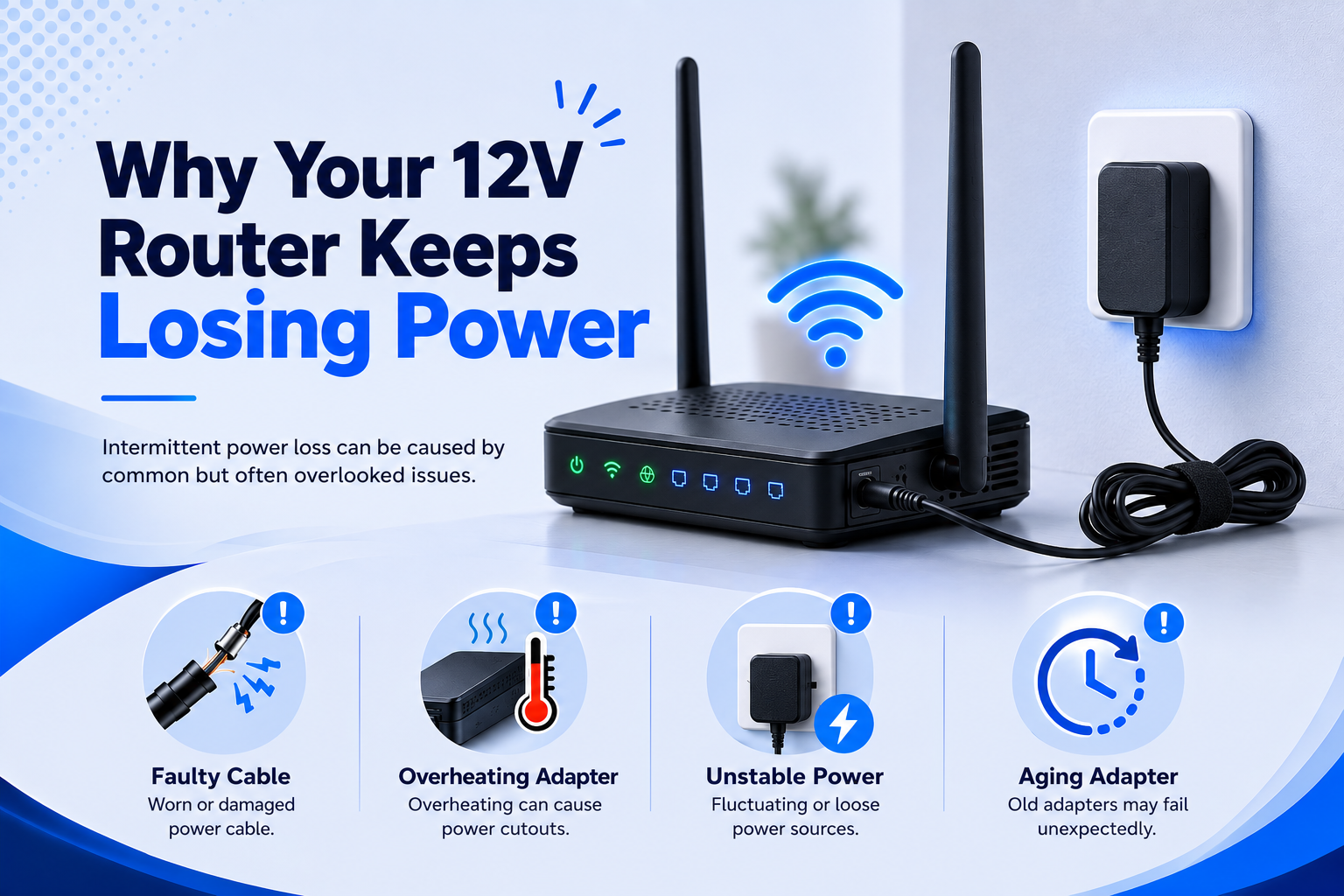
Why does a 12V router suddenly keep losing power? It can be frustrating, especially when it happens several times a day. You may notice the lights abruptly go off, the router restarts by itself or your internet connection disappears for a few minutes.

The problem is not always your internet provider. If the router is actually losing electrical power, the cause could be the power adapter, cable, connector, mains socket or the router itself.

A Wi-Fi router needs a suitable power supply to operate reliably. If the adapter is damaged, underpowered or making an unreliable connection, the router may repeatedly shut down and restart.

The good news is that you can check several things before replacing the router.

Read More »
Higher-Amp 12V Adapter With a Router?
Is It Safe to Use a Higher-Amp 12V Adapter With a Router?

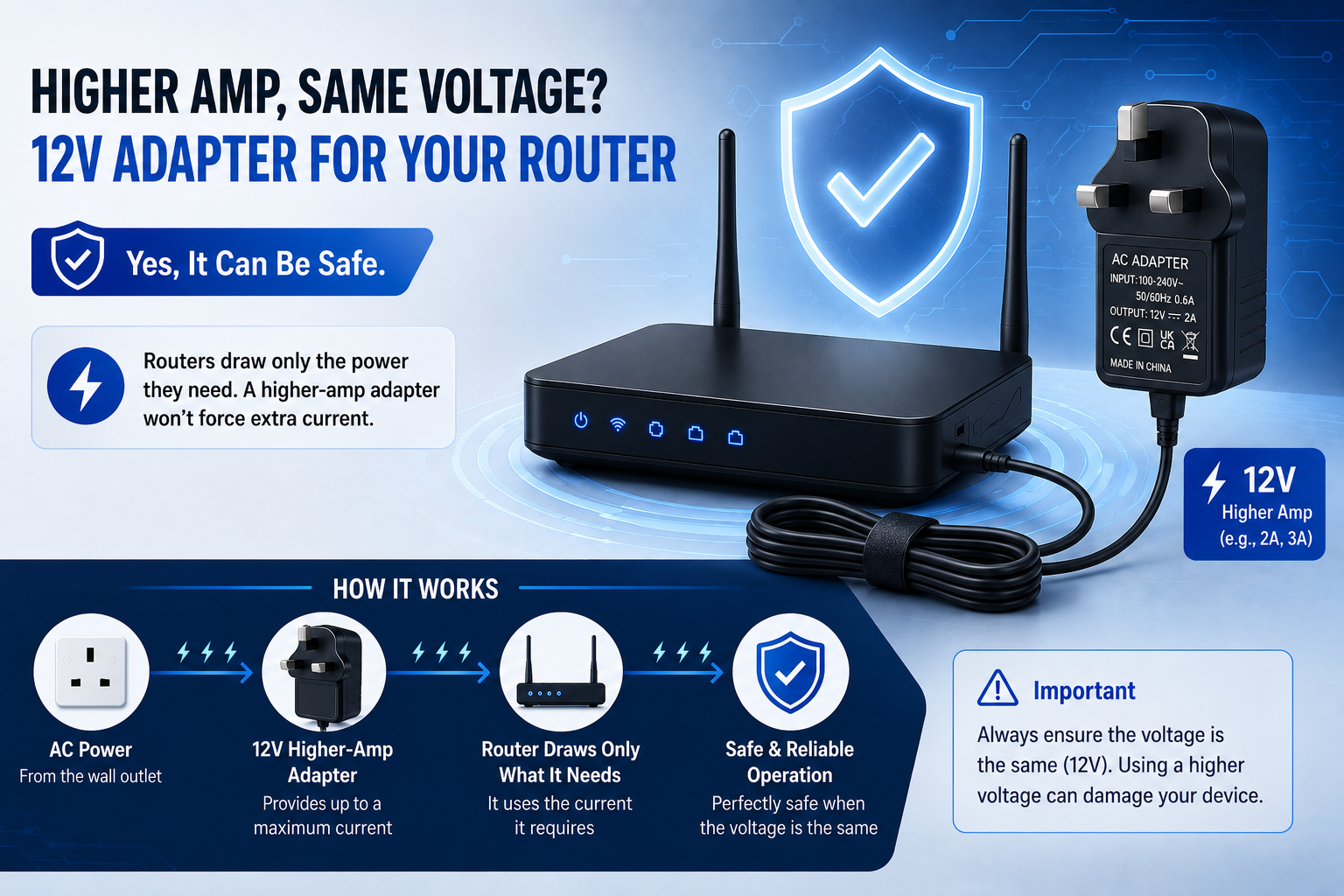
Before you plug in a higher-amp 12V adapter with a router, it helps to understand how power ratings work. You may have found a replacement adapter marked 12V 2A, while your router’s original adapter says 12V 1A. The obvious question is whether those extra amps could damage the router.

In most cases, a higher-amp 12V adapter can be suitable. The important part is that the voltage remains correct and the replacement also matches the router’s connector, polarity and other requirements.

A higher amp rating does not mean the adapter forces all of those amps into the router. It means the adapter has more current capacity available when the router needs it.

So, if your router requires 12V 1A, a compatible 12V 2A or 3A adapter can generally work. However, there are several checks you should make before connecting it.

Read More »
12V power adapter does a Wi-Fi router
What 12V Power Adapter Does a Wi-Fi Router Need for Perfect Performance?

When figuring out what 12V power adapter does a Wi-Fi router need, you might think replacing it is easy. Just find a charger that says 12V and plug it in.

It is not that simple.

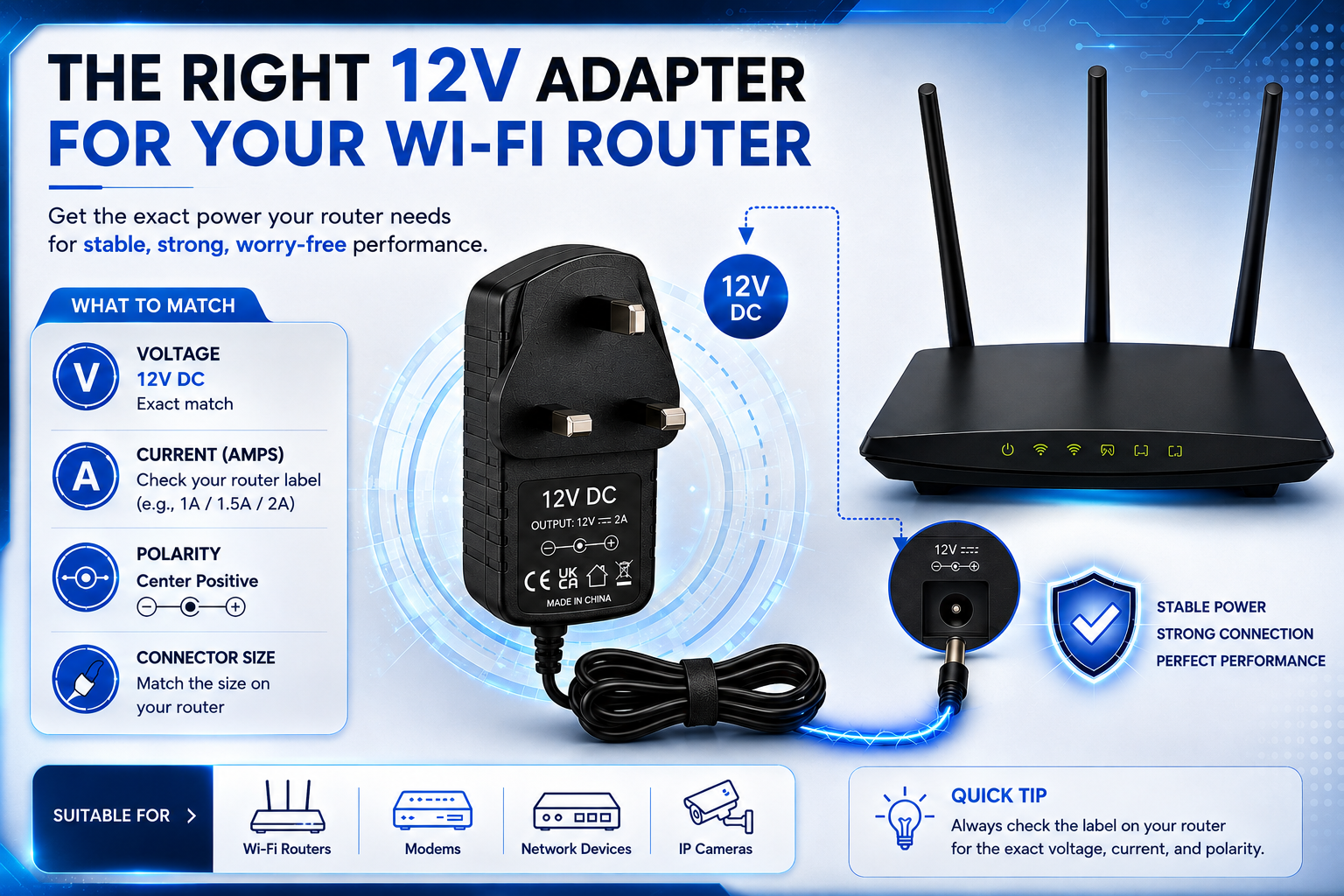
The 12V figure is important, but it is only one part of what you need to check. Your Wi-Fi router may also need a specific current rating, connector size and polarity. The exact router model matters too.

This is worth checking because a Wi-Fi router is usually switched on all day and night. Its power adapter is working for long periods too, so you want one that is properly matched to your router.

Read More »
12V router power adapter
12V Router Power Adapters: How to Choose the Perfect Replacement

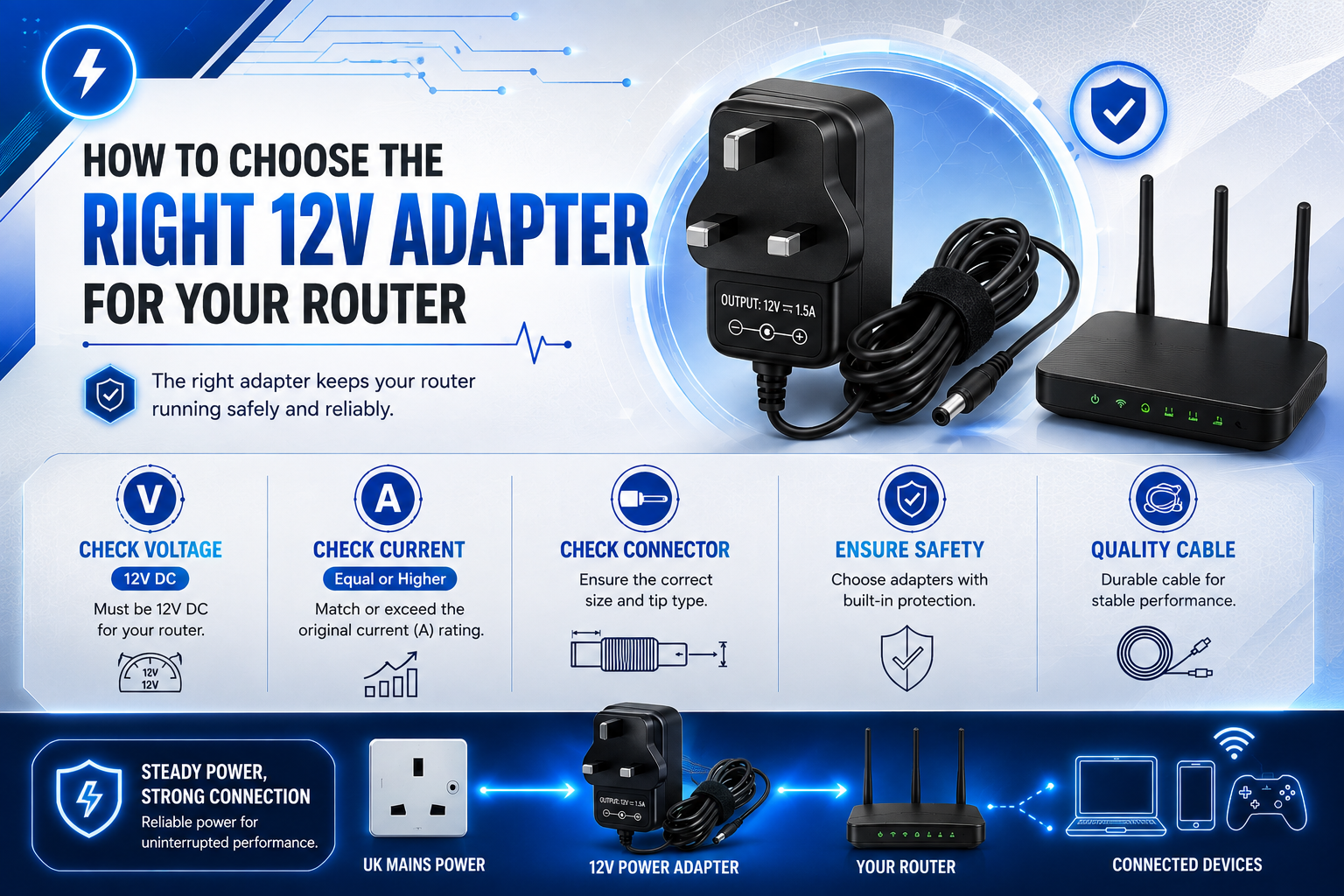
When you need a replacement 12V router power adapter, the voltage label is only the starting point. Different routers can require different current ratings, connector sizes and polarity configurations.

The safest approach is to start with the router model or original adapter. Then confirm the required voltage, connector and polarity. Wattage can help you compare adapters, but it should not replace those checks.

If your original adapter is missing or damaged, do not guess based on the plug alone. A replacement should be selected for the router’s electrical requirements.

Read More »