

What Power Adapter Does a Powered Speaker Need? Best Guide
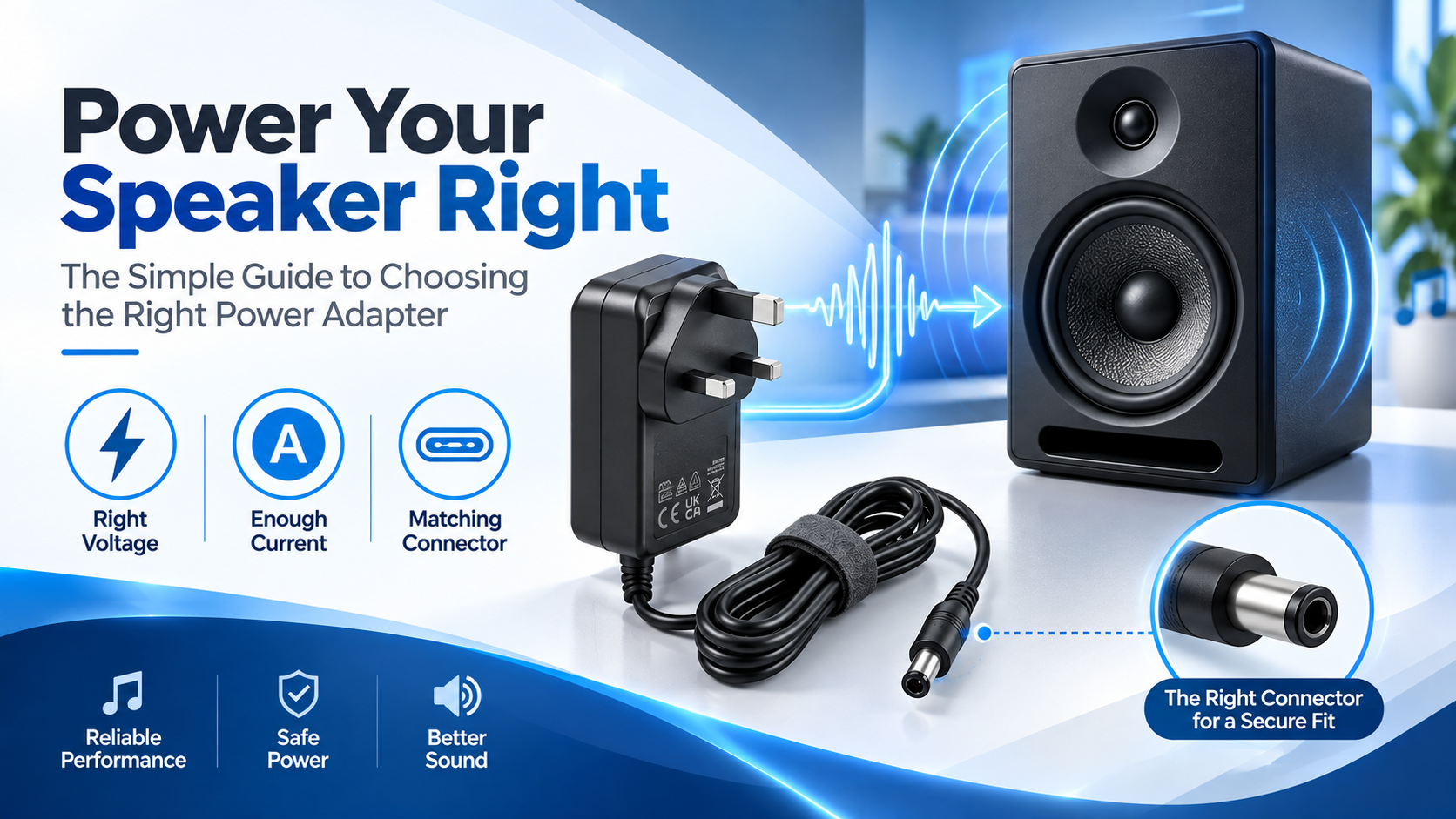
What power adapter does a powered speaker need? Finding the right replacement can be confusing, as numbers, connector sizes and polarity symbols all need to match correctly. Whether you are setting up a portable PA system or replacing a failed adapter, choosing the wrong power supply can cause poor performance or damage the equipment.
A powered speaker needs a power adapter that matches its specific electrical requirements. The four key specifications are voltage, current, connector size and polarity. Voltage must match the manufacturer’s requirement exactly, while the adapter’s current rating should normally meet or exceed the speaker’s requirement.
If the original adapter is missing or damaged, do not choose a replacement simply because the plug fits. Two adapters can use similar-looking barrel connectors while having completely different electrical specifications.
Check the Powered Speaker’s Voltage
Voltage is the first specification to check. Look for an input label on the back, bottom or side of the speaker. You may see requirements such as 12V DC, 15V DC, 19V DC or 20V DC.
For a DC-powered speaker, the replacement adapter should provide the exact voltage specified by the manufacturer. A speaker that requires 12V should use 12V, while a 19V speaker should use 19V.
Using the wrong voltage can cause the speaker to malfunction. A higher voltage can damage internal components, while an unsuitable lower voltage may cause unstable operation or prevent the speaker from working correctly.
How Much Amperage Does a Powered Speaker Need?
Amperage, measured in amps (A) or milliamps (mA), indicates how much current an adapter can supply. You may see specifications such as:
- 12V 2A
- 12V 3A
- 15V 2A
- 19V 3.42A
- 20V 2A
Unlike voltage, the current rating can generally be equal to or higher than the speaker’s stated requirement, as long as the voltage, connector and polarity are correct.
For example, if a powered speaker requires 12V 2A, a compatible 12V 3A adapter is generally suitable. The speaker draws the current it needs rather than automatically receiving the adapter’s full rated current.

What About Wattage?
Wattage shows an adapter’s power capacity and is calculated using:
Watts = Volts × Amps
For example, a 12V 2A adapter has a 24-watt rated capacity.
Do not use wattage alone to select a replacement. Always check voltage, current, connector size and polarity. A higher-wattage adapter may be suitable when the extra capacity comes from a higher current rating at the correct voltage and all other specifications match.
Check the DC Connector Size
The connector on the adapter cable must match the speaker’s DC input. Many powered speakers use barrel connectors, but these are available in different outer diameters and inner pin sizes.
A connector that looks similar may still be the wrong size. A loose connection can cause intermittent power or audio cut-outs, while an incorrectly sized connector may not power the speaker at all.
If you still have the original adapter, compare its connector with the replacement. If not, check the manufacturer’s specifications for the exact speaker model.
Confirm the Adapter Polarity
Polarity is another important specification. Many DC barrel adapters use centre-positive polarity, where the inner pin is positive and the outer sleeve is negative. Some audio equipment can use centre-negative polarity instead.
Check the polarity symbol on the speaker, original adapter or manufacturer documentation. A replacement can have the correct voltage and connector size but still be unsafe if its polarity is wrong.
Use the Speaker Model to Find the Right Adapter
When the label is faded or missing, the speaker’s brand and model number can make finding a compatible replacement much easier.
Check:
- Manufacturer and model number
- Required DC voltage
- Current requirement
- Connector dimensions
- Polarity
Powered speakers do not use one universal power supply. For example, a dedicated 12V replacement adapter for QTX QR10PA 100W portable PA speakers can be selected according to the model’s requirements. A replacement adapter for Pyle PPHP1044B can serve the same purpose for a compatible Bluetooth PA system. Other examples include a JBL Control 2.4G active speaker adapter and a Positive Grid Spark 40 power adapter. These examples show why the exact model matters before purchasing.
Can You Use a Higher-Amp Adapter?
In many cases, yes. A higher-current adapter can generally be used when the output voltage is exactly the same and the connector and polarity are correct.
For example, a speaker requiring 15V 2A can generally use a compatible 15V 3A adapter. The additional current capacity does not force 3A into the speaker. The equipment draws the amount of current it requires.
The important distinction is that current capacity can usually be higher, but voltage should match exactly. Do not use a higher-voltage adapter simply because it has a higher power rating.

Can the Wrong Adapter Damage a Powered Speaker?
Yes. An incorrect adapter can cause serious problems. The main risks include incorrect voltage, reversed polarity and unsuitable electrical characteristics. A plug fitting physically does not prove that an adapter is electrically compatible.
For UK electrical safety information, the Health and Safety Executive electrical guidance provides useful advice when working with mains-powered equipment.
What Is the Safest Way to Choose a Replacement?
The safest approach is to start with the speaker’s verified specifications. Check the input label or manufacturer documentation, then compare the replacement adapter’s voltage, current, connector and polarity.
For example, if your specific speaker version requires 15V, choose a compatible 15V supply rather than trying to increase performance with a higher voltage. A 15V replacement adapter for QTX QR10PA is one example of a model-specific replacement, as some units in the same series use different input voltages depending on the version.
If you are buying a power supply for use in the UK, also check that the product is appropriate for the UK market. The UKCA marking guidance can help you understand product conformity requirements. When disposing of a damaged or unwanted power adapter, follow applicable electrical waste responsibilities and recycling guidance.
Frequently Asked Questions
What power adapter does a powered speaker need?
A powered speaker needs an adapter with the exact required voltage, sufficient current capacity, the correct connector size and the correct polarity. Requirements vary by model.
Can I use a higher-amp adapter with my powered speaker?
Usually, yes. A higher-current adapter can be suitable when the voltage, connector and polarity all match the speaker’s requirements.
Does a higher-voltage adapter give a powered speaker more power?
No. Do not use a higher-voltage adapter to increase volume or performance. It can over-voltage the speaker’s internal circuits and cause damage.
Does a physical plug fitting mean the adapter is compatible?
No. A plug can fit while the voltage or polarity is wrong. Always check the complete electrical specifications.
How do I identify the correct replacement adapter?
Start with the speaker’s model number and input label. Confirm the voltage, current, connector dimensions and polarity before purchasing.
Final Thoughts
Choosing a power adapter for a powered speaker is about matching the complete electrical specification, not simply finding a plug that fits.
Check the voltage, current, connector size and polarity, and use the exact speaker model whenever possible. Verifying these details can help avoid compatibility problems, protect your equipment and choose a suitable replacement.