

What Does 15V 2A Mean on a Power Adapter? Safe Guide
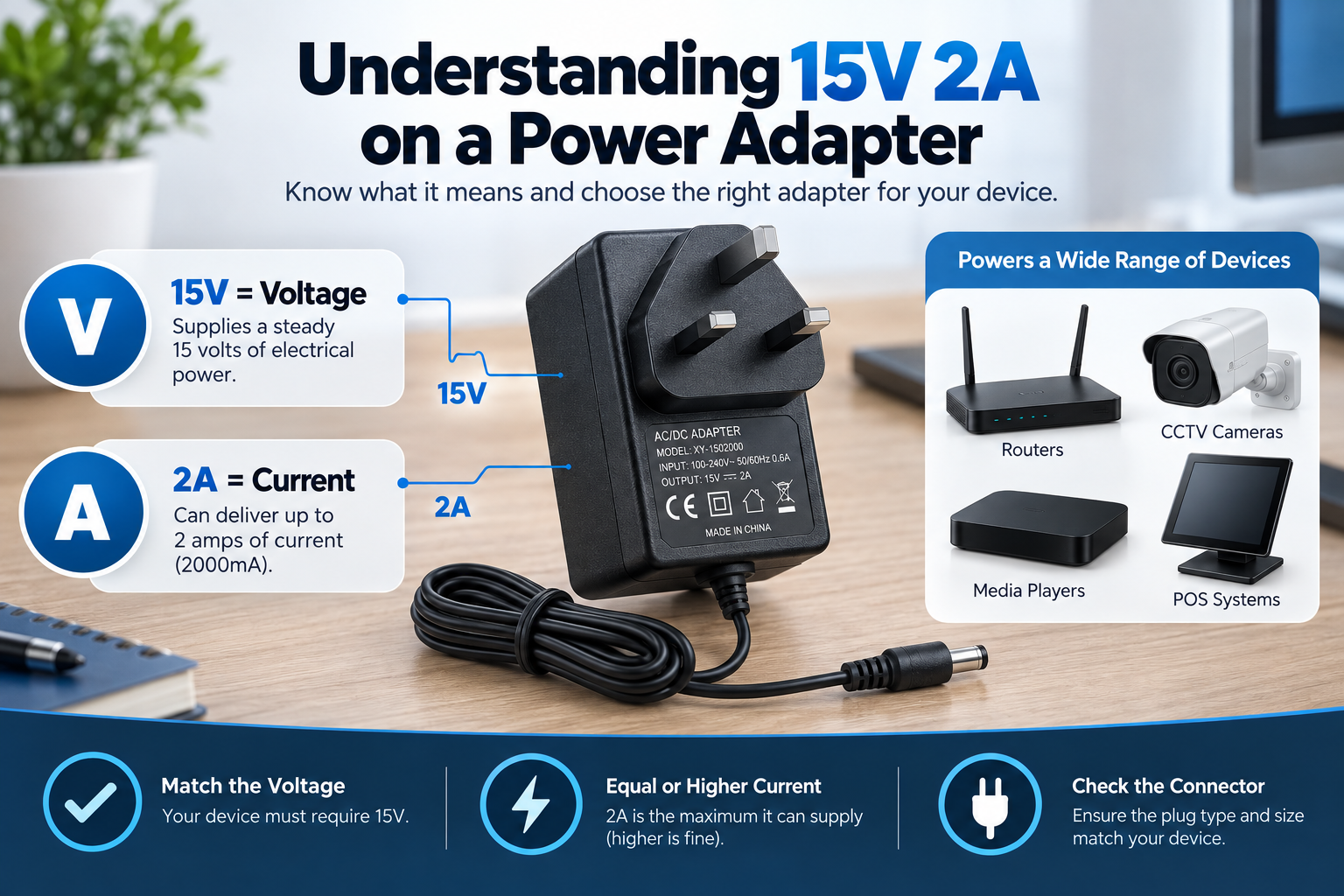
If you want to know what 15V 2A mean on a power adapter, these numbers describe two important electrical characteristics: output voltage and current capacity. 15V is the voltage the adapter is designed to provide, while 2A is the maximum current it can supply under its rated conditions. Together, they indicate a maximum rated output of 30 watts.
These figures matter when replacing an adapter. A plug that fits is not enough; voltage, current capacity, connector, polarity and output type must match the equipment.
What Does 15V Mean on a Power Adapter?
The “15V” refers to the adapter’s nominal output voltage. For a DC adapter, this means it is designed to deliver approximately 15 volts of direct current to the connected device.
Voltage must match the equipment’s requirements. Too much voltage can cause malfunction or damage, while too little may cause instability or prevent the device from working correctly. Check the original adapter label or manufacturer’s specifications before choosing a replacement.
What Does 2A Mean on a Power Adapter?
The “2A” refers to the adapter’s maximum rated output current. An adapter labelled 15V 2A can supply up to 2 amps at its specified output voltage, assuming the adapter is operating within its rated conditions.
This does not mean the device is automatically forced to receive 2A. The connected equipment draws the amount of current it needs. If a device requires 15V 1A, a compatible 15V 2A adapter can normally provide enough capacity without pushing the full 2A into the device.
The distinction is the adapter provides voltage, while the device draws current.
How Many Watts Is a 15V 2A Adapter?
You can calculate the rated output power using:
15V × 2A = 30W
Therefore, a 15V 2A adapter has a maximum rated output of 30 watts.
Wattage helps compare supplies, but it does not replace checking voltage, current, connector, polarity and output type. A 30W adapter is not automatically suitable for every device requiring 30W.
What Does 15V 2A Tell You About Adapter Capacity?
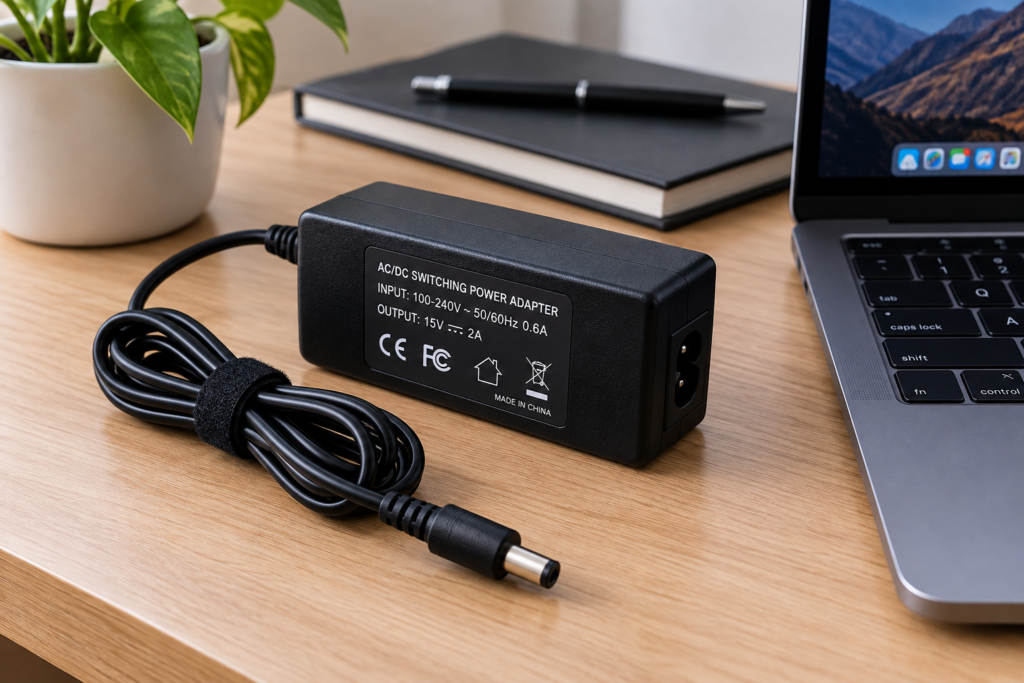
The label describes the adapter’s electrical capability. The 15V rating identifies the required output voltage, while 2A tells you the maximum rated current available. Together, they give you a 30W maximum output rating. These figures help compare a replacement with the original, but they do not confirm compatibility by themselves.
If you need an exact replacement, choosing a standard 15V 2A switching adapter will ensure you meet these baseline capacity requirements safely.
Does a 15V 2A Adapter Always Supply 2A?
No. The 2A figure represents available current capacity, not a fixed amount of current that is continuously pushed into the device.
For example, if equipment requires 15V 0.8A, a correctly matched 15V 2A adapter can have sufficient capacity for that load. The equipment normally draws only the current it needs.
This is why an adapter with equal or greater current capacity can be acceptable when the other specifications are correct. However, increasing the current rating does not make an incompatible adapter safe.
Can You Use a Higher-Amp 15V Adapter?
Often, yes, provided the replacement supplies the same 15V output and has the correct connector, polarity and output type. A higher current rating simply means the adapter has more available capacity.
For example, a 15V 3A adapter is rated for up to 45W, compared with 30W for a 15V 2A adapter. That extra capacity can be useful when the device needs more current, but it does not mean the device will automatically consume 3A.
If you want a power supply that runs a little cooler under load, upgrading to a 15V 3A replacement adapter gives you that safe, higher-current headroom.
Can You Use a Lower-Amp 15V Adapter?
A lower-current adapter is generally not suitable when equipment requires 2A. For example, using a 15V 1A adapter for equipment specified at 15V 2A leaves only half the rated current capacity required by the device.
The adapter may become stressed, run hot, shut down, or provide unstable power.
This is exactly why you must avoid using a 15V 1A replacement power supply for any device that demands a full 2 amps to function properly.
Why Must the Voltage Match?
If a device specifies 15V DC, its replacement should provide the required 15V. Current capacity works differently: the adapter should have enough capacity, while the device draws what it needs.
Always check the original adapter label and, where possible, the device manual.
Why Do Connector Size and Polarity Matter?
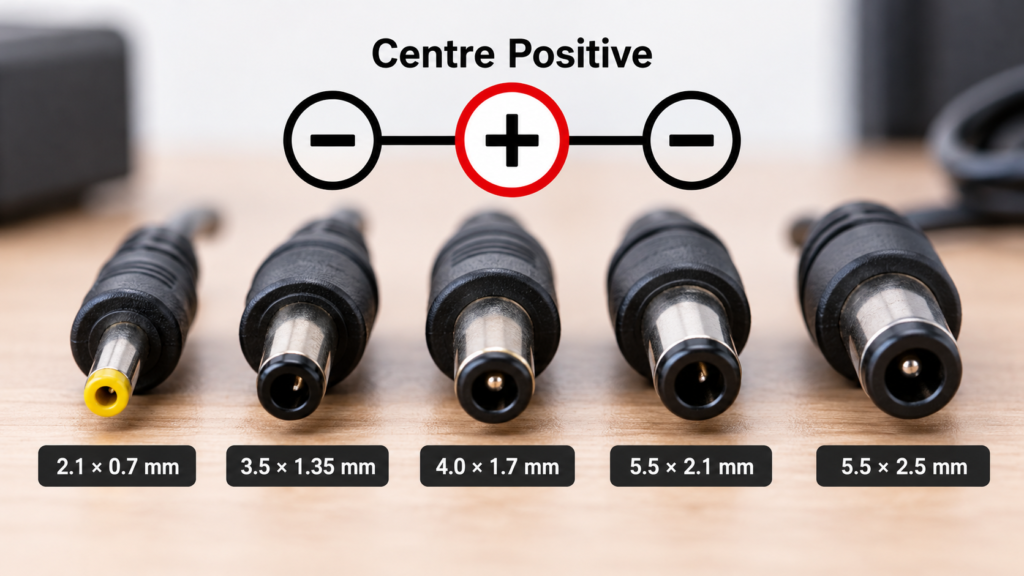
Even when an adapter says 15V 2A, it may not be compatible with your equipment. The DC plug must physically and electrically match the device.
Common barrel sizes include 5.5mm × 2.1mm and 5.5mm × 2.5mm, but many other sizes exist. A plug that appears to fit may still be incorrect.
Polarity is equally important. Many DC adapters use centre-positive polarity, while some equipment uses centre-negative. Reversing polarity can prevent operation and, with unsuitable equipment, may cause damage.
When browsing for a new 15V 2A AC/DC adapter, always check the product description to ensure the connector dimensions match your device perfectly.
How to Check Whether a 15V 2A Adapter Is Compatible
Start with the original adapter and note its voltage, current, output type, polarity and connector. Then compare these with the equipment’s label or documentation. Check:
- Output voltage: does it require 15V?
- Current: does it require 2A or less?
- Output type: AC or DC?
- Connector: does the plug size match?
- Polarity: does the centre pin have the correct polarity?
- Mains plug: is the replacement suitable for your location?
Finding the right 15V 2A mains AC/DC adapter means looking beyond the basic label and verifying every physical and electrical detail on this list.
15V 2A Adapter Compatibility Checklist
Before purchasing or connecting a replacement, confirm:
- The required output is 15V.
- The adapter provides at least the required current.
- The output is AC or DC as required.
- The connector size matches exactly.
- Polarity matches the equipment.
- The adapter is suitable for the mains supply.
- The replacement meets the device’s documented specifications.
FAQs
What does 15V 2A mean on a power adapter?
It means the adapter is designed to provide 15 volts and can supply up to 2 amps under its rated conditions. Its maximum rated output is 30 watts.
Is a 15V 2A adapter 30W?
Yes. Using the basic power formula, 15V × 2A equals 30W.
Can I use a 15V 3A adapter instead of 15V 2A?
Usually, yes, if the voltage, connector, polarity and output type all match. The higher current rating provides additional capacity.
Can I use a 15V 1A adapter instead of 15V 2A?
Generally, no when the equipment requires 2A. The lower current capacity may cause excessive loading and unstable operation.
Does the 2A rating mean my device receives 2A?
No. The 2A rating indicates the maximum current capacity available from the adapter. The connected device normally draws the current it requires.
Conclusion
A 15V 2A power adapter is designed to provide 15 volts with a maximum rated current capacity of 2 amps, giving it a rated output of 30 watts. The 2A figure does not mean the adapter forces 2A into every connected device.
When replacing a 15V 2A adapter, check the complete specification rather than relying on voltage and current alone. Confirm the voltage, current capacity, output type, connector size and polarity before connecting the replacement. These checks help ensure the adapter is electrically and physically compatible with the equipment.