

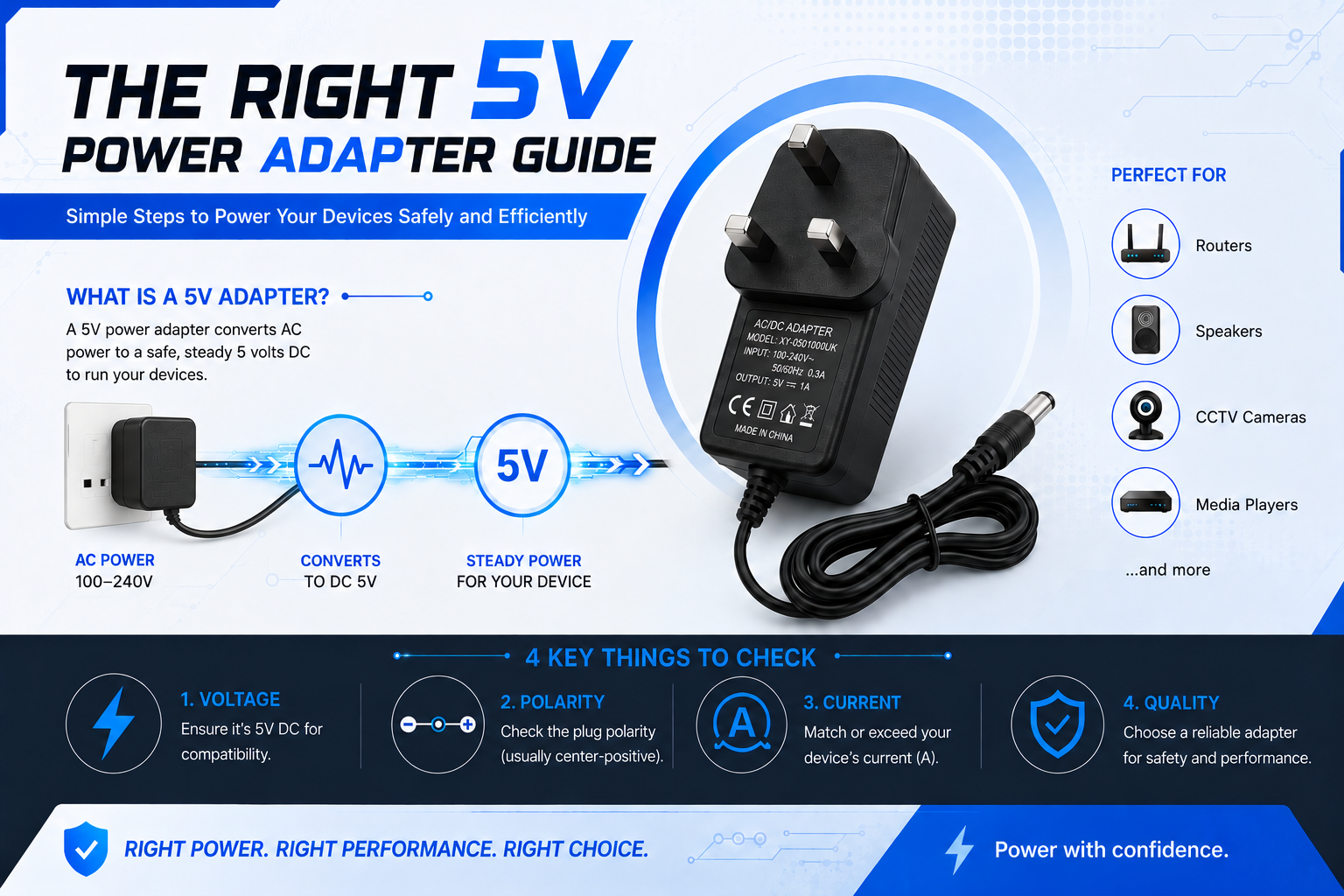
Finding the right 5v replacement power adapter can instantly turn an essential piece of household, office, or audio equipment back from an expensive paperweight into a fully functioning device. Among low-voltage electronics, 5V power supplies are widely used to drive everything from routers and media streamers to microcontrollers, synth gear, and USB hubs.
However, assuming that any 5V plug will fit your device is a risky gamble. Different electronics demand specific current ratings, connector sizes, and polarity configurations. This comprehensive guide will teach you how to decode your device specifications and source a safe, reliable, and noise-free UK replacement.
Why Voltage Precision Matters for 5V Devices
Unlike heavy-duty industrial machinery, low-voltage digital electronics are extremely sensitive to electrical deviations. When sourcing a replacement adapter, voltage is the single metric that must match with absolute precision.
- The 5V Strict Rule: Your equipment requires 5 Volts of Direct Current (5V DC). Never plug a 9V, 12V, or adjustable universal adapter into a 5V device unless you want to fry delicate internal microprocessors, logic gates, and surface-mount capacitors instantly.
- The Danger of Undervolting: Supplying significantly less than 5V causes erratic device behaviour, constant reboots, failed data transfers, or complete failure to switch on.
- AC vs. DC: Always check for the direct current symbol as outlined in the Electronics Hub Guide to DC Power Supplies. Almost all modern 5V electronics operate strictly on 5V DC, requiring a mains adapter that rectifies alternating household current into smooth DC power.
If you are looking for general foundational tips before choosing hardware, check our Best Power Adapter Buying Guide for expert recommendations.
Decoding Amperage: The “Headroom” Rule Explained
Once you have confirmed that your device requires 5V, your next step is looking at current draw, measured in Amperes (A) or Milliamperes (mA). This is where many consumers make costly mistakes.
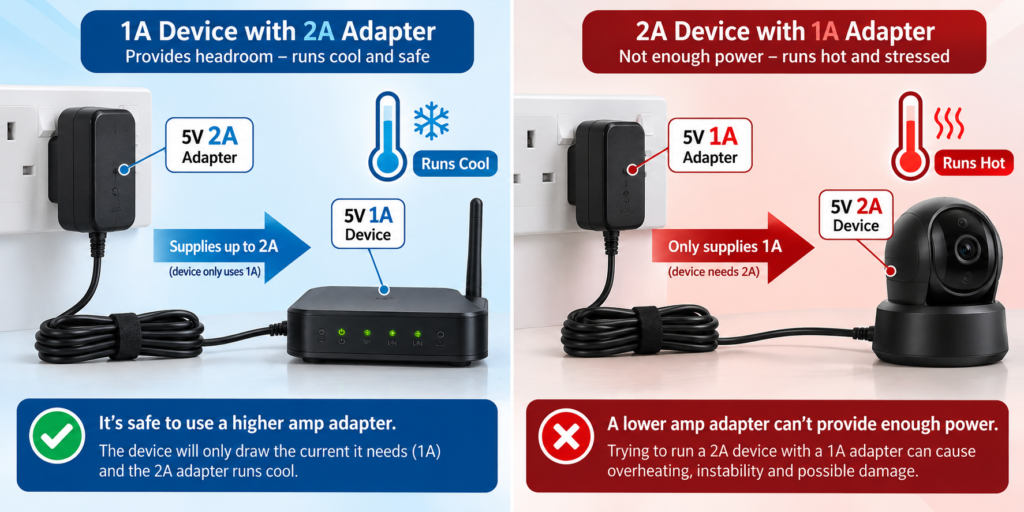
- Can you use an adapter with more Amps? Yes, absolutely. If your device requires 1A (1000mA), using a replacement power supply rated for 2A, 3A, or higher is 100% safe. Devices only draw the exact electrical current they require; the extra amperage capacity simply provides relaxed electrical headroom, keeping the transformer cool and efficient.
- Can you use an adapter with fewer Amps? No. If your hardware draws 2A under heavy load and you plug in a weak 1A adapter, the power supply will suffer from severe current starvation. This leads to overheating, voltage sag, audio distortion in powered audio gear, and potential thermal failure of the adapter itself.
For deeper technical specifications on matching current ratings safely, consult our Definitive Power Adapter Buying Guide.
Navigating Barrel Plug Dimensions & USB Standards
Even if your voltage and amperage match perfectly, your replacement adapter is useless if the physical connector does not fit the socket.
- The Barrel Plug Landscape: Unlike guitar pedals that stick rigidly to a single standard, 5V electronics utilise a wide variety of barrel plug sizes—most commonly 5.5mm x 2.1mm, 5.5mm x 2.5mm, or smaller micro-barrel variants like 3.5mm x 1.35mm. Always measure your old plug or check the equipment manual before ordering.
- High-Capacity Hardware Connections: For multi-port configurations or heavier setups, you may require units similar to our 12V 5A AC-DC Adaptor Power Supply when scaling beyond simple 5V peripherals.
Polarity and the Shift to Regulated Switching Power Supplies
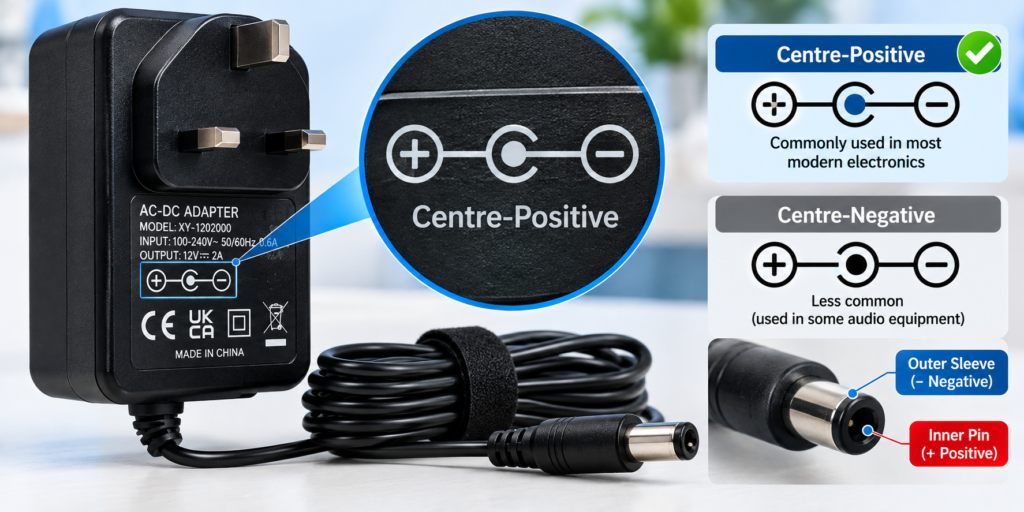
Polarity defines the direction of electrical flow through the connector tip. While guitar gear is almost universally centre-negative, general consumer electronics running on 5V usually feature centre-positive polarity (+ C -). Always inspect the graphic on your device label to verify the configuration before plugging in a generic barrel connector.
Furthermore, you should always insist on a regulated switching power supply:
- Unregulated Power Bricks: Older transformer-based blocks often output unregulated voltages that spike well above 5V when the device is idle, slowly degrading delicate microchips.
- Modern Regulated Switching Adapters: As detailed by the Wikipedia Power Supply Overview, these units maintain a steady, rock-solid DC output regardless of mains power fluctuations, protecting your hardware from power surges.
To protect your equipment from unexpected electrical anomalies, review our Beginner’s Power Protection Guide for more tips.
Browse our entire inventory directly on the Power Adapter Warehouse Store Homepage to find the exact match for your setup today.
Frequently Asked Questions
Can I use a phone charger as a 5V replacement power adapter?
Standard USB phone chargers output 5V DC, making them suitable for devices with matching USB ports. However, if your device uses a barrel jack, you cannot plug a USB cable into it without a specialised barrel-to-USB adapter cable that matches your device’s exact polarity and tip size.
What happens if the amperage (A) rating on my replacement adapter is higher?
Nothing bad! Amperage is drawn by the device, not forced by the adapter. A higher amp rating simply means the power supply is running with comfortable headroom and will stay cooler during extended operation.
Is 5V AC or DC?
Nearly all 5V electronics operate on Direct Current (DC). Always ensure your replacement adapter converts mains AC power into 5V DC.
How do I find my device’s power requirements if the label is worn off?
Check the manufacturer’s online user manual, look up the specific model specification sheet online, or inspect the original power brick if you still have it.
Can I use a multi-voltage universal adapter for my 5V equipment?
Yes, but you must exercise strict caution. If using a universal adapter, ensure the voltage selector switch is securely locked to exactly 5V and confirm the polarity tip matches your device before plugging it in to avoid permanent hardware damage.
Conclusion
Finding the perfect 5V replacement adapter doesn’t have to be a stressful guessing game. By strictly adhering to the 5V voltage rule, ensuring your replacement’s amperage meets or exceeds your device’s requirements, and double-checking the barrel connector size and polarity, you can safely bring your hardware back to life. Always prioritise modern, regulated switching power supplies to provide the clean, consistent power necessary to protect your sensitive electronics for years to come.