

15V Power Adapter: The Complete UK Buying Guide
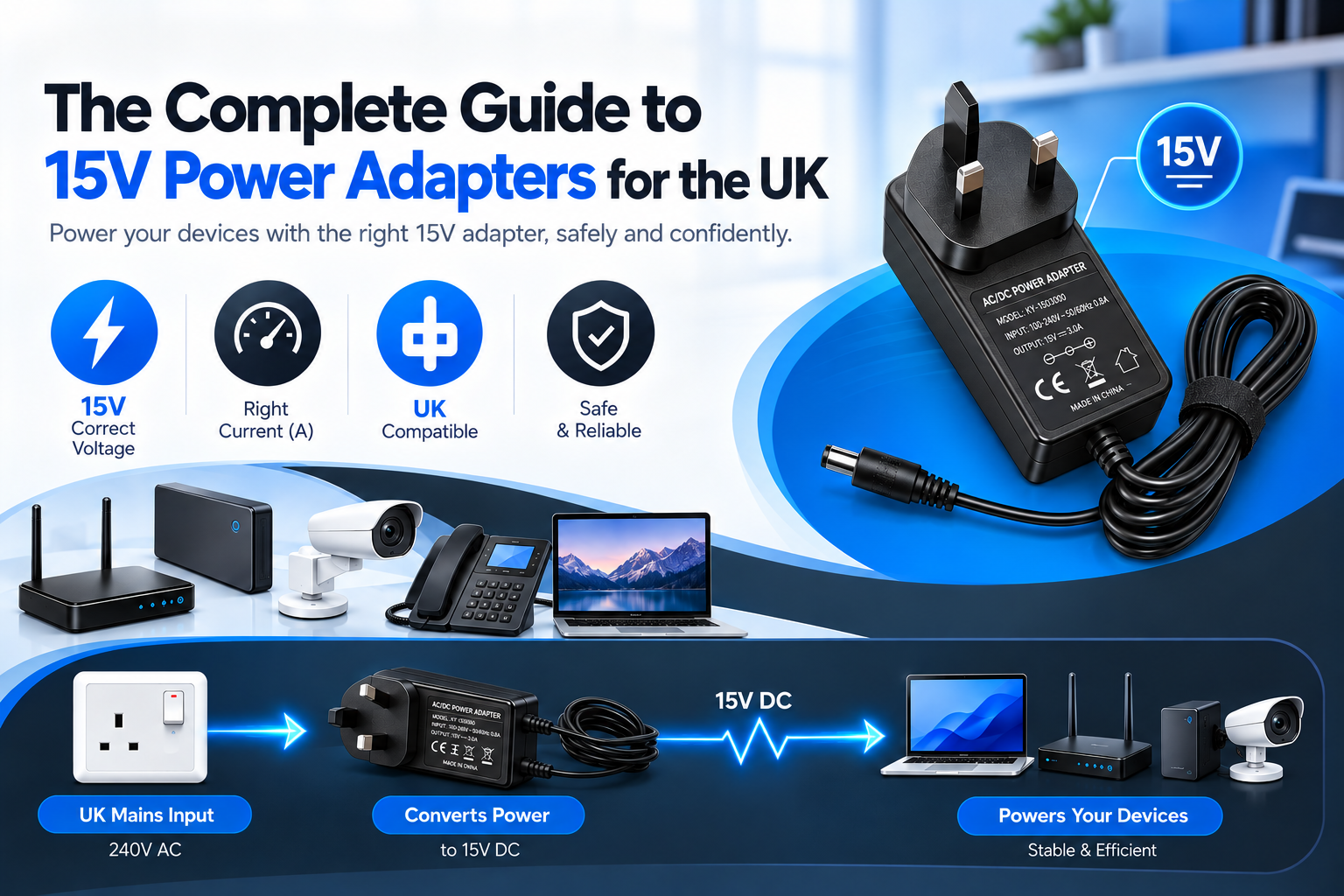
Replacing a power adapter is not simply a matter of finding another plug marked “15V”. A suitable replacement must provide the correct voltage, enough current capacity, the right connector, matching polarity and the correct output type. For UK users, the mains plug and product safety requirements also matter.
What Is a 15V Power Adapter?
A 15V power adapter converts mains electricity into the voltage required by compatible electronic equipment. It may provide 15V DC or another specified output, so the label should always be checked before connection.
The “15V” figure identifies the adapter’s nominal output voltage. Your device should be designed to accept that voltage. A connector that fits physically does not make an adapter electrically compatible.
How Much Current Should a 15V Replacement Adapter Provide?
The current rating tells you the maximum current the adapter can supply under its rated conditions. For example, a 15V 2A adapter can supply up to 2 amps.
The replacement should normally have a current capacity equal to or greater than the equipment’s requirement, assuming all other specifications match.
If a device requires 15V 1A, a compatible 15V 2A supply can generally provide enough available current. The device draws the current it needs; the adapter does not automatically force its full 2A into the equipment.
By contrast, using a supply with insufficient current capacity can cause unreliable operation and may place additional stress on the adapter.
How to Calculate the Wattage of a 15V Adapter
Wattage can be calculated using:
Voltage × Current = Power
A 15V 1A adapter is rated at up to 15W, while a 15V 2A adapter is rated at up to 30W. A 15V 3A adapter has a maximum rated output of 45W. If you want to understand the physics behind these formulas, you can explore general electric power and energy information.
Can You Use a Higher-Amp 15V Adapter?
In many situations, yes. If your equipment requires 15V 1A, a compatible 15V 2A adapter can generally be suitable because it has greater current capacity.
The voltage must still match, and the connector, polarity and output type must be correct.
For example, a 15V 2A switching adapter may be suitable for equipment requiring 15V when its complete specification matches.

Can You Use a Lower-Amp 15V Adapter?
If equipment requires 15V 2A, replacing it with a 15V 1A adapter means the supply has only half the required current capacity.
The result can include voltage dropping under load, intermittent operation, unexpected shutdowns or excessive adapter heat. The exact behaviour depends on the equipment and adapter design.
A 15V 1A replacement power supply may be appropriate for equipment specified for 15V 1A, but it should not be selected solely because the voltage matches.
How to Check the DC Connector Size
The DC connector must match the equipment’s input socket. Barrel plugs are available in different dimensions, including different outer and inner diameters.
For example, a 15V 2A AC/DC adapter with a 5.5mm x 2.1mm connector should only be used where that connector specification matches the equipment.
Do not force a plug into a socket. Compare the original connector with the replacement specifications whenever possible.
Why Adapter Polarity Matters
Polarity determines which part of the DC connector is positive and which is negative. Many DC devices use centre-positive polarity, but this should never be assumed.
The polarity symbol is usually printed on the adapter label or equipment. Check that the replacement has the same polarity as the device.
An adapter can have the correct 15V output and enough current capacity yet still be unsuitable because its polarity is different.
How to Check Whether Your Adapter Is AC or DC
Voltage alone does not tell you whether an adapter produces AC or DC. Look for the output symbol or wording on the label.
A device requiring 15V DC needs a compatible DC output. An AC output should not be treated as interchangeable simply because the number “15V” is the same.
This is especially important when buying generic replacements. Check the original adapter and equipment specifications rather than relying on a product title.
UK Mains Plug and Safety Considerations
A replacement adapter sold for UK use should be suitable for the UK’s mains supply and have the appropriate plug arrangement. The adapter’s input rating should also be compatible with the local mains supply.
For additional electrical safety information, see the Health and Safety Executive electricity guidance.
The UK Government product safety advice also provides information relevant to products placed on the UK market.
How to Choose the Correct 15V Replacement Adapter
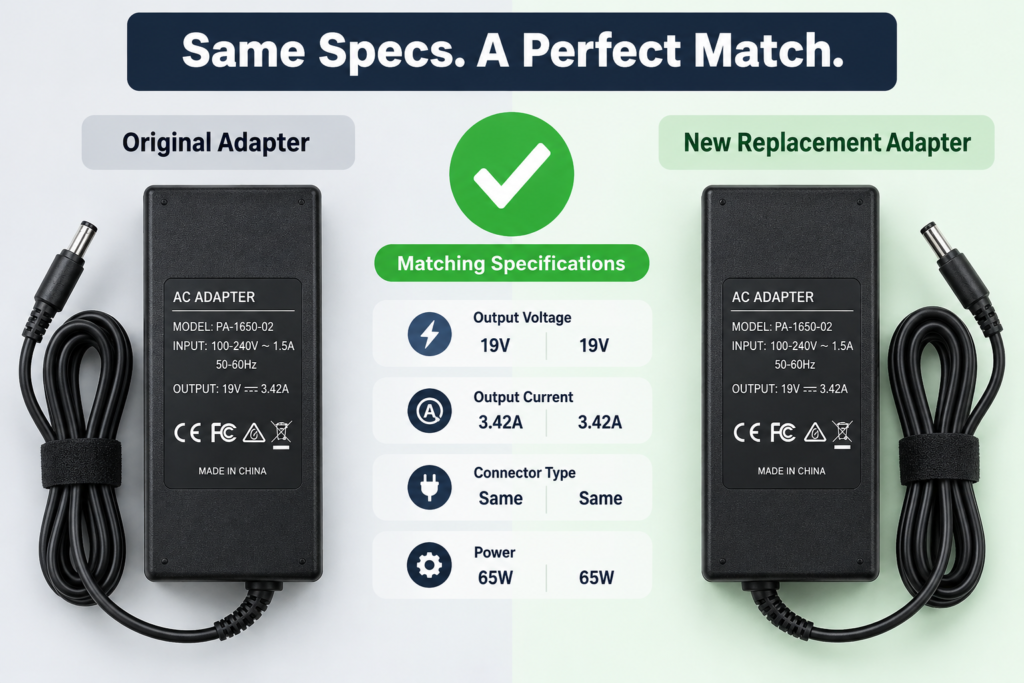
Use the original adapter as your starting reference. Write down its output voltage, current rating, connector dimensions, polarity and AC/DC output type.
Then compare each specification with the replacement. For instance, a 15V 3A replacement adapter provides more current capacity than a 15V 2A model, but that does not make it universally compatible.
Model-specific information can make selection easier, particularly when several devices use 15V but require different connectors or current ratings.
Common Mistakes When Replacing a 15V Adapter
Do not choose an adapter simply because the plug fits. Physical fit does not confirm voltage or polarity.
Also avoid assuming that the highest amp rating is always best. More current capacity can be useful, but the voltage, connector, polarity and output type must still match.
If the original specification is unclear, check the equipment documentation or look for model-specific replacements, such as a compatible 15V power adapter for a Vestax PMC-05Pro III, instead of guessing.
15V Power Adapter Replacement Checklist
Before buying or connecting a replacement, confirm:
- 15V output as required
- Sufficient current capacity
- Correct AC or DC output
- Correct connector size
- Matching polarity
- Suitable UK mains input
- No physical damage
FAQs
Can I use a 15V 2A adapter instead of a 15V 1A adapter?
Generally, yes, when the voltage, connector, polarity, output type and other requirements match. The higher current rating provides additional available capacity.
Can I use a 15V 1A adapter instead of a 15V 2A adapter?
Not when the equipment requires 2A. A lower-current supply may be unable to provide enough power for the device.
Is a 15V 2A adapter 30W?
Yes. Its maximum rated output is 30 watts because 15V multiplied by 2A equals 30W.
Does a higher amp rating damage a device?
Not normally, provided the voltage and all other compatibility specifications are correct. The device generally draws the current it requires.
What should I check before buying a 15V adapter?
Check the voltage, current capacity, AC/DC output, connector size, polarity and UK mains input requirements. Comparing the replacement against the original specification is the safest starting point.
Conclusion
Always compare every specification before choosing replacements.
Choosing a 15V replacement requires more than matching the number on the label. Check the voltage, current capacity, connector, polarity and output type.
A higher current rating can provide additional capacity, while a lower rating may be inadequate. For UK users, also check the mains input rating and product information.
Comparing the complete specification before buying helps avoid compatibility mistakes and makes it easier to choose an appropriate 15V adapter.