

Why Does a 24V Power Adapter Overheat? Causes & Proven Fixes
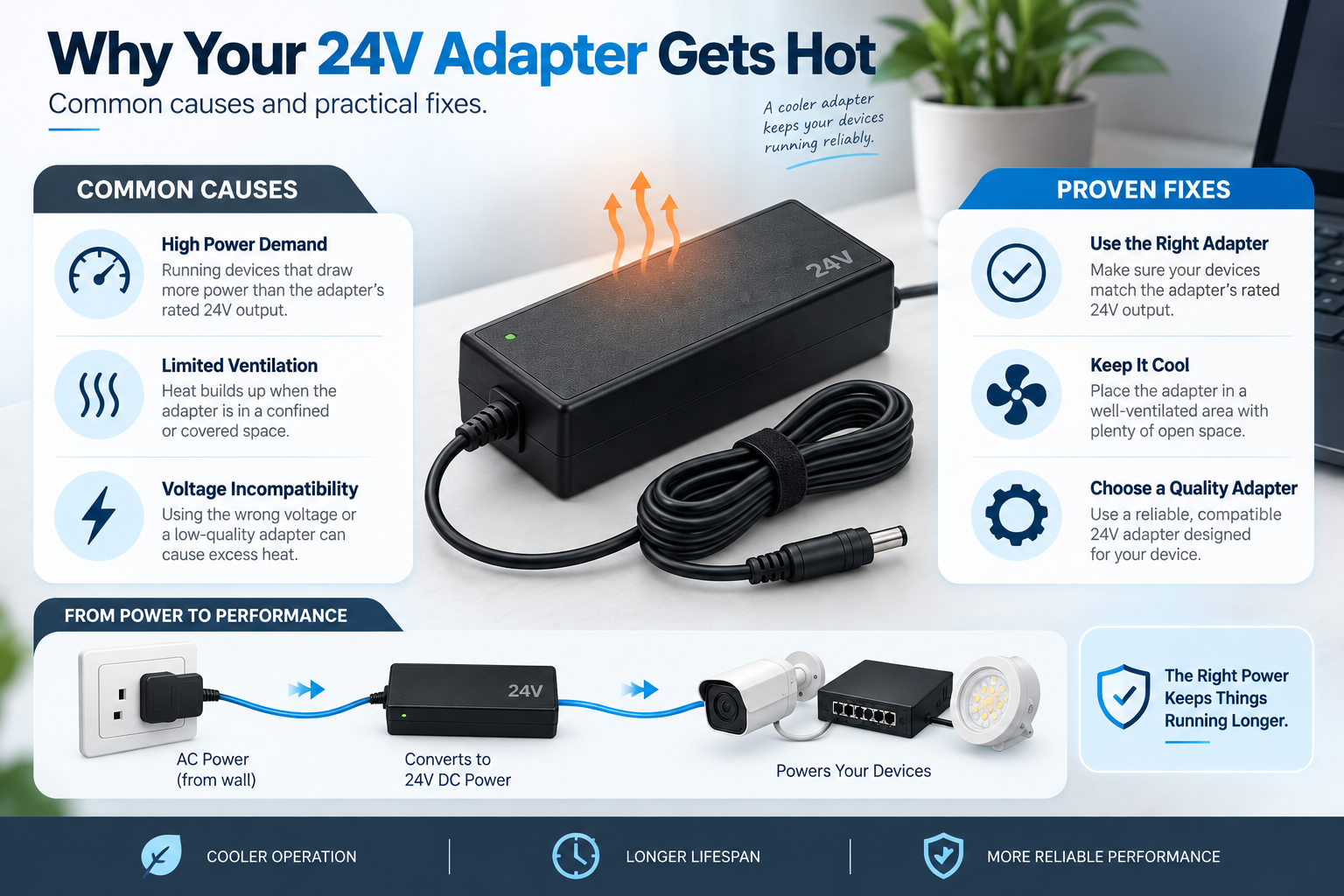
Why does a 24V power adapter overheat? While a 24V power adapter can become warm during normal operation because electrical energy conversion produces heat, an adapter that becomes excessively hot may be dealing with excessive load, insufficient current capacity, poor ventilation, high ambient temperature, inefficient operation, or an internal fault. Understanding the difference between normal warmth and overheating can help you decide when a power adapter needs attention or replacement.
Is It Normal for a 24V Power Adapter to Get Warm?
Yes. Some warmth is normal when a power adapter is operating. No power conversion process is perfectly efficient, so some energy is released as heat. The adapter may also become warmer when it is supplying a demanding device for an extended period.
The important point is that warm does not automatically mean faulty. A steady, moderate temperature without unusual smells, noises, damage, or unstable output is generally less concerning. If the housing becomes extremely hot or the temperature continues rising, however, investigate the cause rather than assuming it is normal.
Why Does a 24V Power Adapter Overheat?
Several factors can cause a 24V adapter power supply to overheat. The most common include excessive electrical load, an undersized power supply, restricted airflow, high surrounding temperatures, poor-quality components, age, and internal damage.
Power output can also help explain the workload. A 24V 1A adapter is rated for up to 24 watts, while a 24V 2A adapter is rated for up to 48 watts. These are maximum output capacities, not amounts the device automatically receives. The device draws the current it requires.
Can an Undersized 24V Adapter Overheat?
Yes. An undersized adapter may have difficulty supplying the current demanded by the connected equipment. When a power supply is repeatedly pushed close to or beyond its intended capacity, it can become hotter and may also experience voltage drops or unstable operation.
For example, a device requiring 24V 2A should not normally be powered by a 24V 1A adapter simply because the voltage matches. The current capacity is insufficient for the expected load.
Can Using the Wrong Current Rating Make a 24V Adapter Overheat?
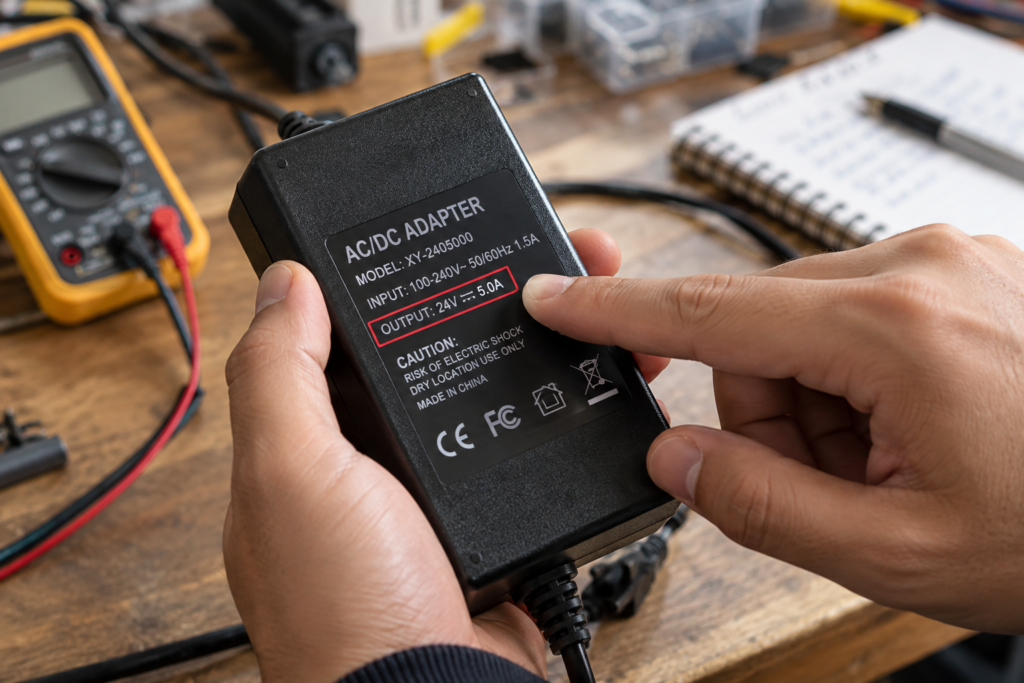
It can. Current rating describes the maximum current the adapter is designed to provide under its specified conditions. Using a supply with too little capacity can place it under excessive stress, particularly when the connected equipment operates continuously or reaches a high demand.
A higher current rating can be acceptable when the voltage and other specifications match. For example, a compatible 24V 2A adapter can generally supply a device that requires 24V 1A without forcing 2A into the device. The equipment determines its current draw.
However, a higher rating does not guarantee a cooler adapter. Efficiency, design, component quality, ventilation, and ambient temperature also affect operating temperature.
Can Poor Ventilation Cause a 24V Adapter to Overheat?
Absolutely. Heat must be able to escape from the adapter housing. If the power brick is covered by clothing, placed inside a tightly enclosed cabinet, positioned against another heat source, or surrounded by objects that restrict airflow, heat can accumulate.
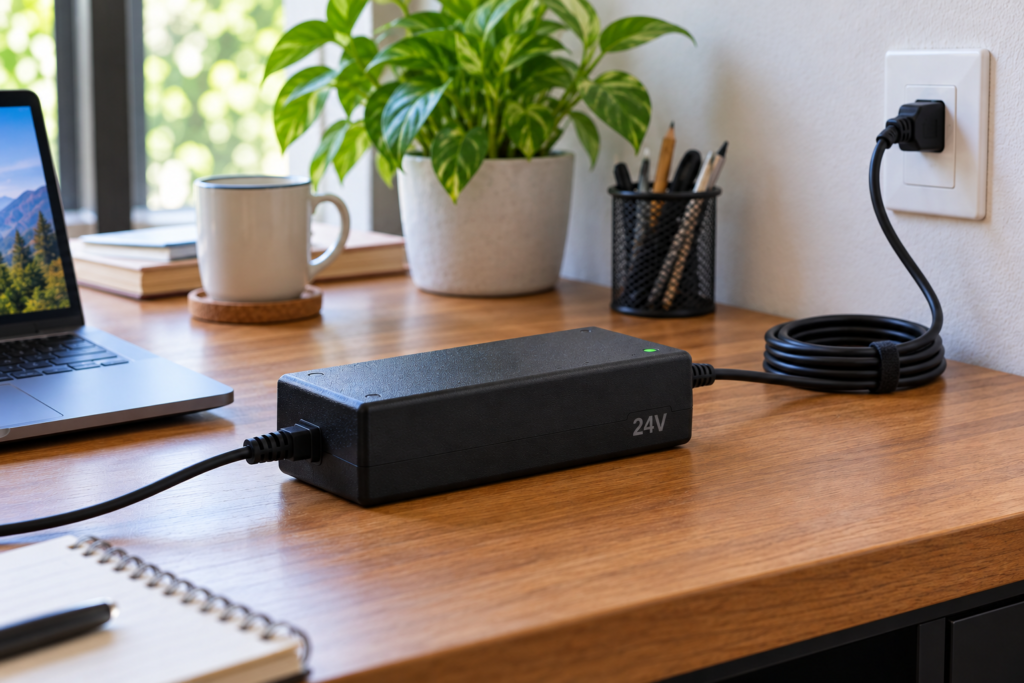
This can become particularly noticeable when the adapter operates continuously. Place it on a hard, open surface with reasonable airflow around the housing. Keep it away from radiators, heaters and other equipment that produces significant heat.
Can an Overloaded 24V Power Adapter Overheat?
Yes. An overloaded adapter is one of the most important causes to consider. The connected device may draw more current than the adapter is designed to provide, especially during startup, peak operation, or when additional components are connected.
Check the original adapter label and the device specifications. Compare the required voltage and current with the replacement adapter’s output ratings before connecting it.
What Are the Warning Signs of an Overheating 24V Adapter?
Excessive temperature is more concerning when it appears alongside other symptoms. Warning signs include a burning or chemical smell, buzzing, crackling, smoke, melted or warped plastic, damaged insulation, discolouration, intermittent power, or unexpected shutdowns.
If an adapter shows these symptoms, disconnect it from the mains and stop using it until the cause has been identified. Do not open a mains-powered adapter yourself, because internal components can present electrical hazards even after the unit has been unplugged.
For general electrical safety information, see the Health and Safety Executive’s electricity at work guidance.
How Can You Stop a 24V Power Adapter From Getting Too Hot?
Start with the basics. Confirm that the adapter provides the correct 24V output and sufficient current capacity. Then check that the connector, polarity, and output type match the equipment.
Next, look at the operating environment. Remove anything covering the adapter and move it away from direct heat sources. Check the cable and housing for signs of damage.
If the adapter remains excessively hot despite having the correct rating and adequate ventilation, replacement may be the safest option. Do not continue using a supply that repeatedly overheats simply because the connected device still appears to work.
24V Power Adapter Overheating Checklist
Before deciding whether a 24V adapter needs replacement, check:
- Is it mildly warm or excessively hot?
- Is the connected equipment drawing more current than the adapter can provide?
- Is the adapter operating continuously under a heavy load?
- Is airflow around the housing restricted?
- Is the surrounding temperature unusually high?
- Are the cable, connector and housing damaged?
- Does the replacement have the correct voltage, current, connector and polarity?
FAQs
Is it normal for a 24V power adapter to get warm?
Yes. Some warmth is expected during power conversion. Excessive heat or heat combined with unusual smells, noise, damage or unstable operation requires investigation.
Why does my 24V adapter get extremely hot?
Possible causes include excessive load, insufficient current capacity, poor ventilation, high ambient temperature, inefficient operation, ageing, or internal component failure.
Can I use a higher-amp 24V adapter?
Usually, provided the voltage, connector, polarity, output type and other specifications are compatible. A higher current rating provides greater available capacity.
Should I unplug an overheating 24V adapter?
Yes. If it becomes excessively hot or develops warning signs such as burning smells, smoke, buzzing or damaged plastic, disconnect it from the mains and stop using it.
Can an overheating adapter damage my device?
An overheating adapter can indicate an underlying power or compatibility problem. Continued use may increase the risk of equipment failure or damage, so an abnormally hot supply should be investigated.
Conclusion
A 24V power adapter can become warm during normal operation, but excessive heat should not be ignored. The main causes include excessive load, inadequate current capacity, restricted ventilation, high ambient temperature, inefficient operation, and internal faults.
Start by checking the adapter’s complete specification and the equipment’s power requirements. Make sure the supply has adequate current capacity and that the voltage, connector, polarity and output type are correct. Then ensure the adapter has enough space for heat to escape.
If the adapter remains unusually hot or shows warning signs such as burning smells, buzzing, smoke or physical damage, stop using it and replace it with a correctly specified supply.