

Can You Safely Use a 15V 3A Adapter Instead of 15V 2A?
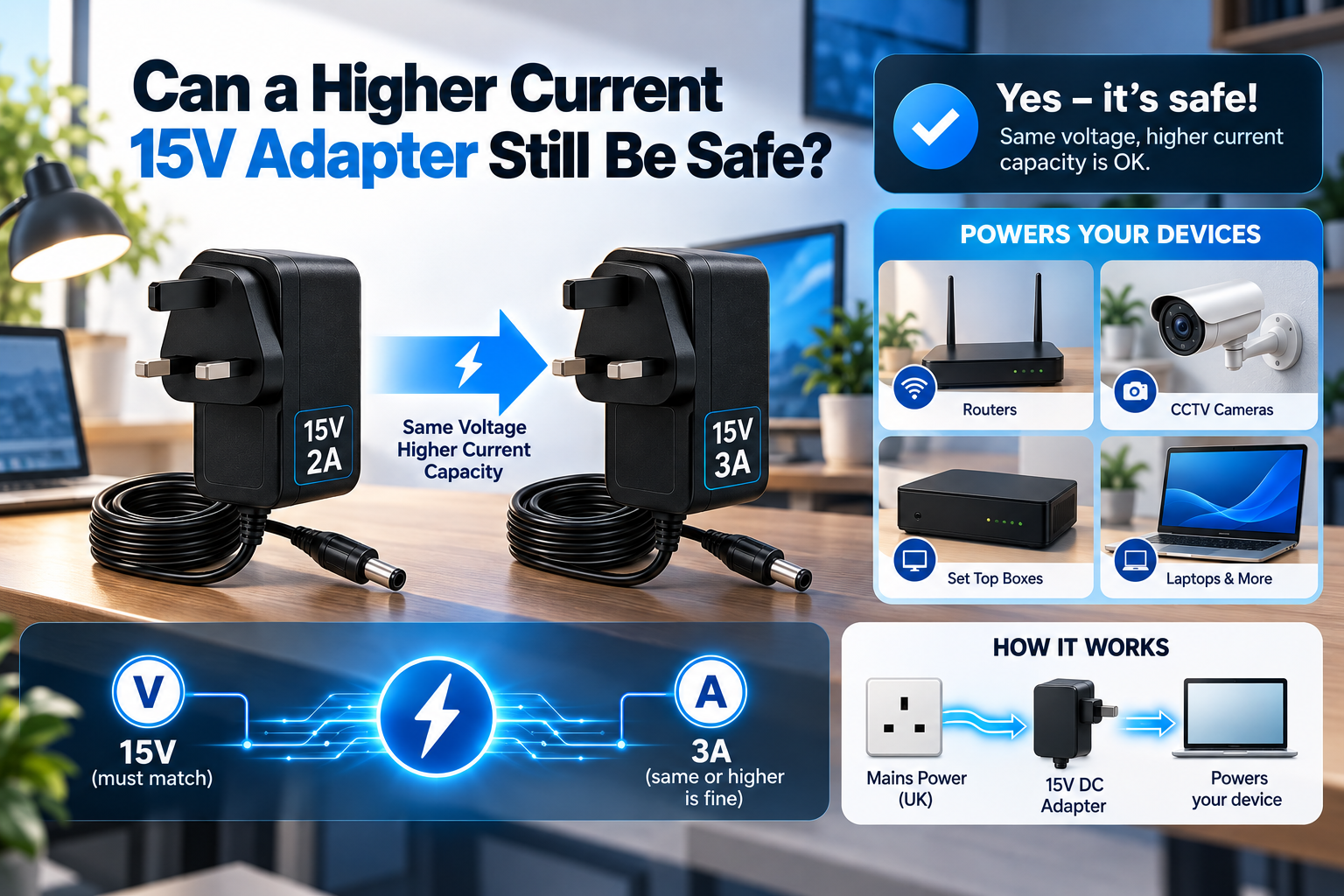
Wondering if you can use a 15v 3a adapter instead of 15v 2a? Finding a safe replacement for your power supply is surprisingly easy. If your device requires a 15V 2A power adapter, you may wonder whether a 15V 3A adapter is safe to use. In many cases, yes. A 15V 3A adapter can replace a 15V 2A adapter when the voltage is exactly 15V and the connector, polarity, output type and device compatibility also match.
Is a 15V 3A Adapter Safe for a 15V 2A Device?
Generally, yes, a compatible 15V 3A adapter can be used instead of a 15V 2A adapter. The voltage remains 15V, whilst the available current capacity increases from 2A to 3A.
Think of the current rating as the adapter’s available capacity. A device rated at 15V 2A does not automatically consume 3A because you connected a 3A supply. If the device needs 1.5A during normal operation, it draws what its circuit requires.
The replacement must provide the correct 15V output and meet the device’s other electrical and physical requirements before connecting it.
What Does 15V 2A vs 15V 3A Mean?
The numbers describe two different parts of the power supply specification.
- 15V is the output voltage.
- 2A is the maximum current capacity of the original adapter.
- 3A is the maximum current capacity of the replacement adapter.
You can also calculate the rated power capacity using voltage × current:
- 15V × 2A = 30W
- 15V × 3A = 45W
So a 15V 3A power supply has a higher rated power capacity than a 15V 2A power adapter. The adapter’s rating describes what it can supply, whilst the actual load depends on the device.
Why the Voltage Must Still Be 15V
Current capacity can usually be higher, but voltage is different. If your equipment specifies 15V DC, the replacement should provide 15V DC unless the manufacturer explicitly states another acceptable input.
Do not assume that a higher voltage is better. For example, replacing a 15V 2A adapter with a 18V 3A adapter is not equivalent to moving from 2A to 3A. The voltage has changed, which can cause malfunction or damage.
Look for wording such as INPUT: 15V DC 2A and compare it with the replacement adapter’s output label.
A higher current rating can provide additional capacity. A higher voltage changes the electrical conditions the device receives.
What Happens If You Use a Lower-Amp 15V Adapter?
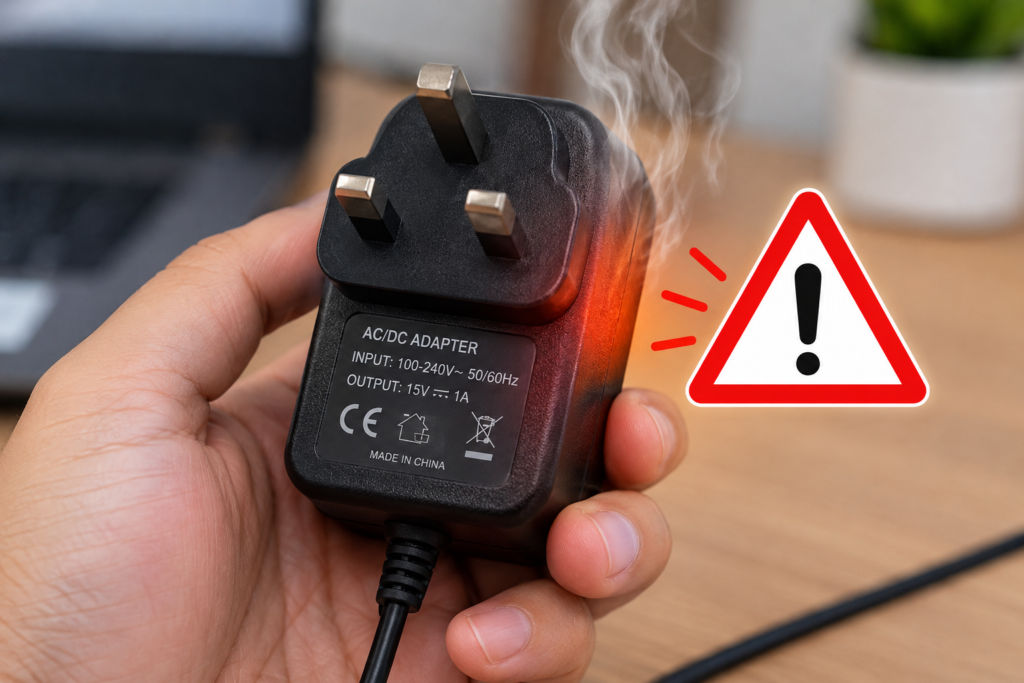
The opposite situation deserves attention. If your device requires 15V 2A and you connect a 15V 1A adapter, the adapter may not have enough current capacity for the load.
Possible symptoms include:
- The device repeatedly restarting
- Intermittent operation
- The adapter becoming unusually hot
- The equipment shutting down during heavier use
- Voltage dropping under load
The exact symptoms depend on the equipment and power supply design, but an undersized adapter is not a good replacement.
That is why a 15V 3A adapter can be a useful replacement for a 15V 2A unit, whilst a 15V 1A adapter should not be treated as an equivalent substitute.
Check the DC Connector Before Connecting It
Voltage and current are only part of compatibility. The DC connector must also fit correctly.
Many 15V adapters use barrel-style DC plugs, but these are available in different sizes. For instance, a standard 15V adapter with 5.5mm connector often refers to a 5.5mm × 2.1mm plug, whilst a 15V adapter with 5.5mm × 2.5mm connector is also widely used. They can look very similar, yet they are not necessarily interchangeable.
A plug that is too loose may create an unreliable connection. A plug that is too large may not enter the socket correctly. Never force a connector into the device.
If you still have the original 15V 2A adapter, use its plug as a reference and compare the replacement specification carefully.
Check the Polarity Too
Polarity is another specification that must match. A DC barrel connector can physically fit whilst still having the wrong electrical polarity.
You may see a polarity symbol showing whether the centre pin is positive or negative. Many consumer electronics use centre-positive connections, but you should never rely on that assumption.
Check the original adapter label, device label or manufacturer documentation. A 15V 3A adapter with the wrong polarity is not a safe replacement for a 15V 2A adapter simply because the voltage and current ratings look suitable.
When checking a replacement, confirm:
Voltage → current capacity → connector → polarity → device model
Every part of that chain matters.
Why a Higher Current Rating Is Usually Acceptable
The adapter’s current rating represents what the supply can provide at its rated output. It does not mean the connected device receives the full rating continuously. If the device needs 2A or less, a 3A supply has enough capacity to meet that demand.
This is different from voltage, which affects the electrical potential supplied to the device. That is why increasing current capacity is generally less concerning than increasing voltage.
When Should You Avoid a 15V 3A Replacement?
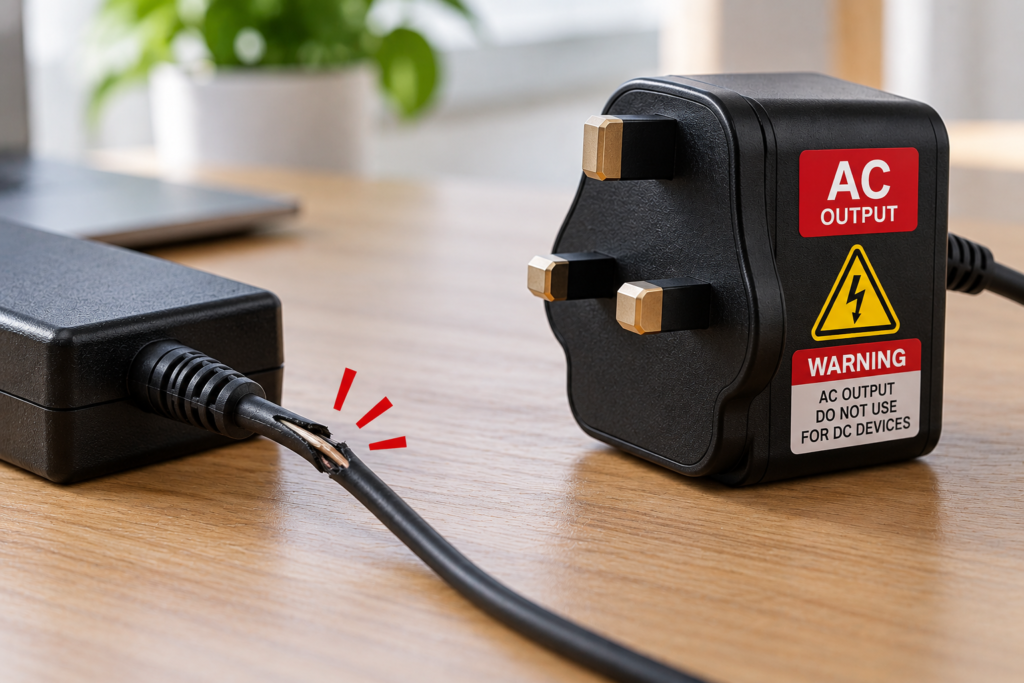
Do not use the replacement until you have checked the full specification if:
- The voltage is different from 15V
- The output is AC when the device requires DC
- The connector size is uncertain
- The polarity does not match
- The adapter has insufficient current capacity
- The product listing does not identify compatible equipment
- The adapter, cable or plug shows signs of damage
A product described only as a ’15V 3A power adapter’ does not automatically suit every 15V device. Different equipment can use the same voltage but require different connectors, polarity or power characteristics.
15V 3A Adapter Buying Checklist
Before ordering a 15V replacement power adapter, compare the original adapter and the new one using this checklist:
- Output voltage: 15V
- Output type: DC if required by the device
- Current capacity: 3A is sufficient for a 2A requirement
- Connector: Exact size and type
- Polarity: Must match
- Device compatibility: Confirm the model or equipment type
- Mains input: Suitable for your intended UK installation
- Condition: No damaged cable, plug or housing
For UK buyers, also consider the product information and safety requirements associated with electrical equipment.
Frequently Asked Questions
Can I use a 15V 3A adapter instead of 15V 2A?
Yes, generally. A 15V 3A adapter can replace a 15V 2A adapter when the voltage, connector, polarity, output type and device compatibility all match.
Will a 15V 3A adapter damage my device?
Not simply because it is rated at 3A. The higher current capacity is generally acceptable when the device requires 15V and the rest of the specification is correct.
Is 15V 3A better than 15V 2A?
It has greater current capacity, but ‘better’ depends on the device. If the equipment requires 2A, a compatible 3A adapter can provide additional capacity without forcing the equipment to consume 3A.
Can I use a 15V 1A adapter instead?
It is generally not recommended when the device requires 2A. A 1A adapter may not provide enough current capacity and can cause unstable operation.
Does 15V 3A mean 45 watts?
Yes, the adapter’s rated output capacity is 45W because 15V × 3A = 45W. The connected device may consume less than that.
Conclusion
Yes, you can generally use a 15V 3A adapter instead of a 15V 2A adapter, provided the replacement delivers the correct 15V output and has the correct connector, polarity, output type and device compatibility.
The extra 1A is available capacity, not current that is automatically forced into the equipment. The real mistake is choosing an adapter based only on the amp rating. Always compare the complete specification before connecting a replacement power supply.