

How to Find the Perfect 15V Power Adapter Connector
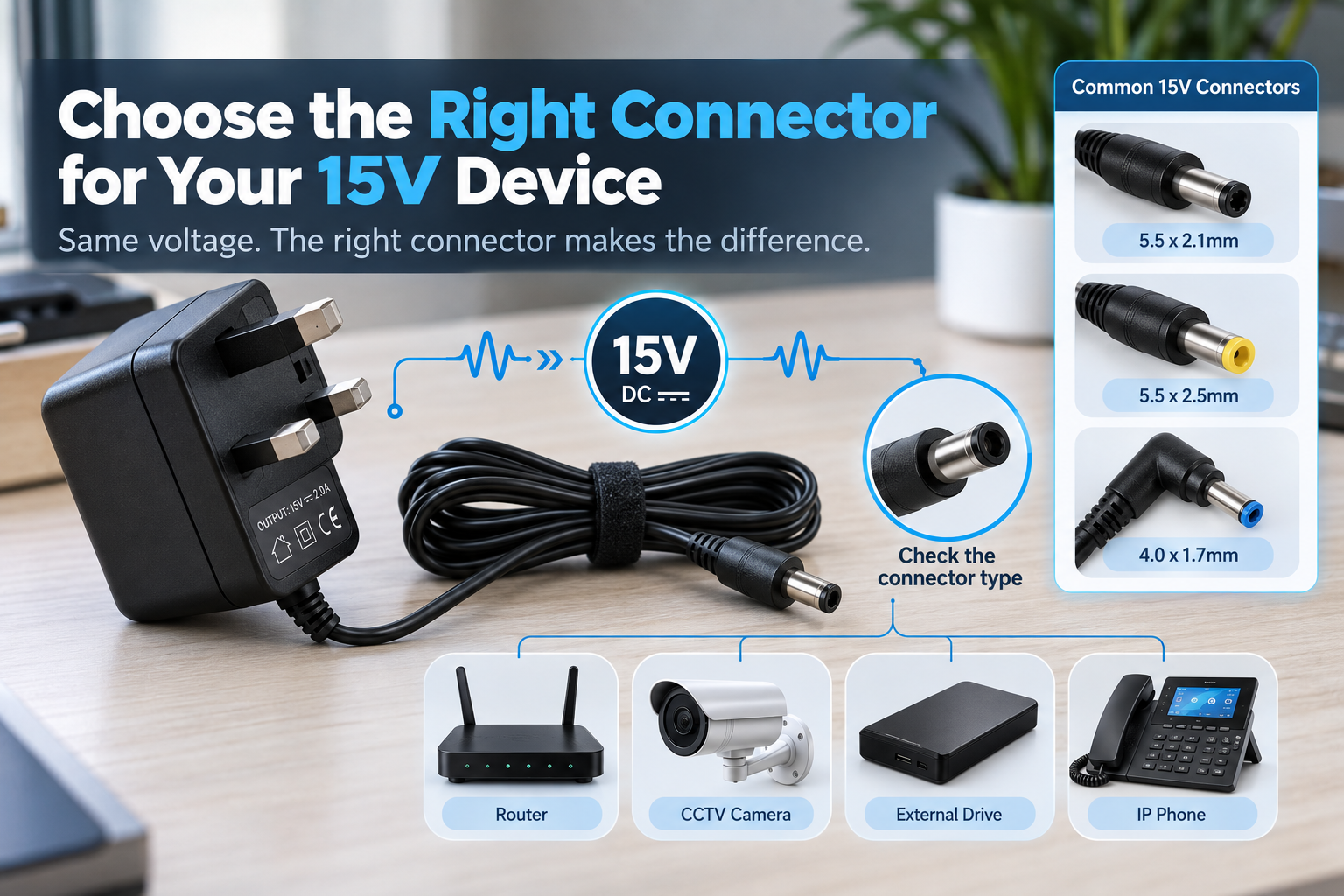
Finding the right 15V power adapter connector can be difficult, especially when replacing a lost or broken cable for your essential home electronics. Two adapters may both provide 15V and look almost identical, yet their plugs can have different dimensions or polarity. A connector that appears to fit can still be wrong. Before buying a replacement, check the plug size, polarity, output type and device requirements.
Why Does the 15V Adapter Connector Matter?
The connector is the physical link between the power adapter and your equipment. It must fit the device’s input socket correctly and make the required electrical connection. Many 15V adapters use DC barrel connectors.
A common mistake is assuming that any connector that slides into the socket is suitable. A plug can be too loose, too tight or have the wrong internal dimensions. Even when it connects, the polarity may be incorrect.
That is why connector compatibility should be checked alongside the 15V output specification.
How to Find the Connector Size on Your Original Adapter
Start with the original adapter if you still have it. Look for a label showing the output voltage, current, polarity symbol and, sometimes, the connector dimensions. The connector itself may not have its size printed on it.
For a barrel connector, you normally need two measurements: the outer diameter and the inner diameter. These are often written in millimetres, such as 5.5mm x 2.1mm.
If the original specification is not available, measure the plug with a digital calliper. Measuring only the outside diameter is not enough because two plugs can share the same outer diameter but have different inner diameters.
What Does 5.5mm x 2.1mm Mean?
A connector described as 5.5mm x 2.1mm normally refers to a barrel plug with a 5.5mm outer diameter and a 2.1mm inner diameter. Both dimensions matter.
A 5.5mm x 2.5mm connector, for example, can look very similar to a 5.5mm x 2.1mm plug. However, the internal diameter is different. This difference can affect the electrical contact and whether the plug fits securely.
Do not choose a connector because it looks like the original. Check both measurements whenever the information is available.
How Can You Measure a 15V Adapter Plug?
A digital calliper is the most reliable option for checking connector dimensions. Measure the outside diameter of the barrel first, then measure the inside diameter.
Take the measurements at the metal plug rather than the plastic housing. If the connector has been worn or damaged, compare your measurements with the device manufacturer’s specification before ordering.
If you cannot measure the connector, search for the exact device model and check its documentation or the original adapter specification. A model-specific replacement can be safer than guessing the plug dimensions.
How to Check the Adapter’s Polarity
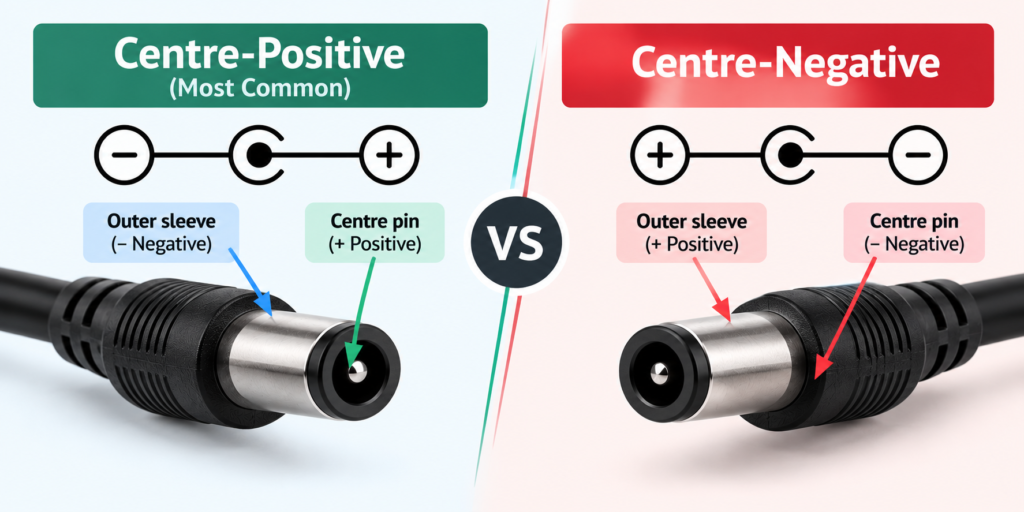
Connector size is only half of the compatibility check. You also need to confirm polarity.
Many DC barrel connectors use centre-positive polarity, meaning the inner pin is positive and the outer sleeve is negative. Centre-negative designs also exist.
Look for the polarity symbol on the original adapter or equipment. The symbol normally shows whether the centre contact is connected to positive or negative.
Never assume that a 15V adapter with the correct plug size has the correct polarity. Reversed polarity can prevent equipment from working and, depending on the design, may cause damage. For additional electrical safety guidance, consult the UK Health and Safety Executive.
How to Check Whether the Adapter Uses DC Output
A connector can look correct while the adapter provides the wrong type of output. Check whether your equipment requires 15V DC or 15V AC.
DC output is commonly shown with the direct-current symbol or a DC marking on the label. Do not rely on the “15V” number alone.
The replacement should match the original output type and the equipment’s requirements. A DC device should not be connected to an AC adapter simply because both are labelled 15V.
Can You Use a Different 15V Connector Size?
Generally, you should use the connector size specified for the equipment. Do not modify a plug just to make an incompatible adapter fit.
For example, a 15V 2A adapter with a 5.5mm x 2.1mm connector should not automatically replace another 15V adapter with a different connector. The voltage and current rating may be suitable while the physical connection is not.
A compatible 15V 2A AC/DC adapter with a 5.5mm x 2.1mm connector shows why connector dimensions should be included in your comparison.
How to Match the Connector to Your Device
The safest approach is to compare the replacement against the original adapter and the device socket.
Check these details:
- Output voltage: 15V if required by the equipment
- Current capacity: equal to or greater than the device requirement
- Output type: AC or DC
- Connector: exact outer and inner dimensions
- Polarity: matching positive and negative arrangement
- Plug and cable condition: no damage or exposed conductors
A 15V 2A replacement adapter can be considered only after its connector and electrical specifications have been compared with the equipment. The IEC Electropedia can also be used as a reference for electrical and electronic terminology.
What If You Cannot Identify the Connector?
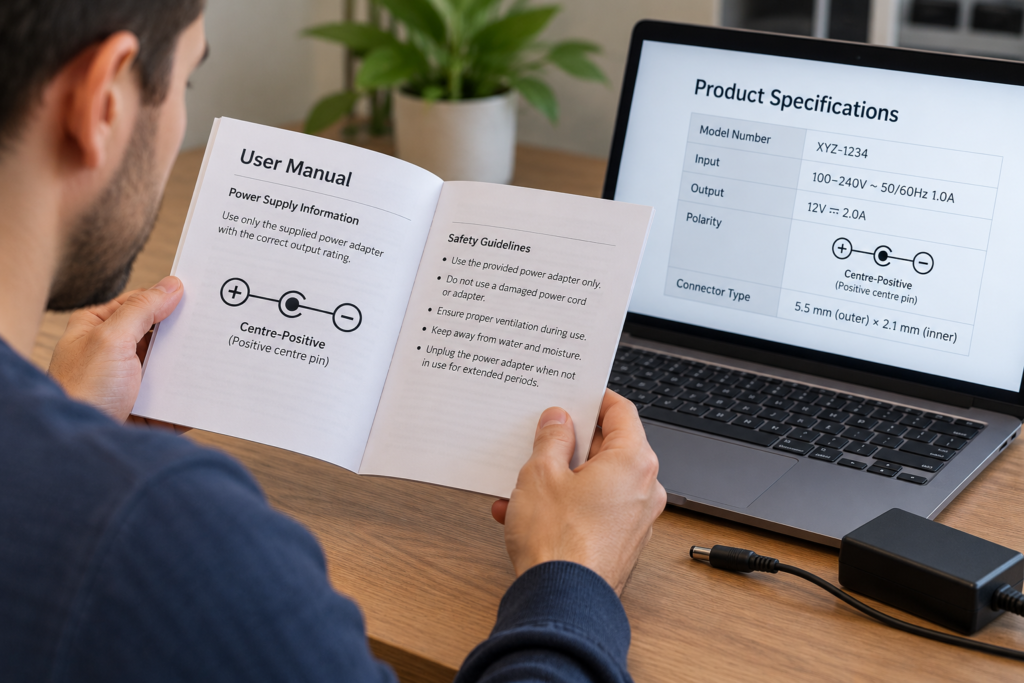
Do not guess if the connector is unclear. Check the original adapter label, device manual or manufacturer’s specifications first.
You can also measure the plug with a calliper or compare it with a known connector, but visual comparison alone is not always reliable.
If you are replacing a missing adapter, the equipment model number can be especially useful. Search for the manufacturer’s recommended power supply specification and confirm the connector details before ordering.
Common Mistakes When Choosing a 15V Connector
One of the most common mistakes is choosing an adapter because the plug looks right. Another is checking only the outer diameter while ignoring the inner diameter.
It is also easy to overlook polarity or assume that every 15V adapter provides DC output. These shortcuts can lead to an adapter that does not work correctly or may damage equipment.
Avoid forcing a connector into a socket. If it does not fit naturally, stop and recheck the dimensions.
15V Power Adapter Connector Checklist
Before buying a replacement, confirm:
- The equipment requires 15V
- The adapter provides the required current capacity
- The output is the correct AC or DC type
- The connector’s outer diameter matches
- The connector’s inner diameter matches
- Polarity matches the original
- The plug fits securely without force
- The replacement specification is suitable for the device
For UK product-safety considerations, you can also refer to the UK product safety guidance published by the UK Government.
FAQs
How do I know what size my 15V adapter connector is?
Check the original adapter specifications or measure the barrel plug’s outer and inner diameters with a digital calliper.
Is 5.5mm x 2.1mm a common connector size?
Yes. It is a common DC barrel connector size, but it should only be used when it matches the equipment’s specified connector.
Can a 5.5mm x 2.5mm plug replace a 5.5mm x 2.1mm plug?
Not automatically. Although the outer diameter is the same, the inner diameter differs. Confirm the equipment’s required connector before using either plug.
Does connector polarity matter on a 15V adapter?
Yes. The connector must have the correct polarity. A correctly sized plug with reversed polarity can cause malfunction or damage.
What should I do if I cannot identify the connector?
Check the device model, original adapter label and manufacturer documentation. If necessary, measure the connector with a digital calliper rather than guessing.
Conclusion
Finding the correct 15V power adapter connector requires more than matching voltage. Check the connector’s outer and inner dimensions, polarity, output type and current requirement.
A 5.5mm x 2.1mm plug may look almost identical to another barrel connector, but small dimensional differences can affect compatibility. The safest replacement matches the original’s complete electrical and physical specification.
If you cannot identify the connector confidently, use the equipment model and manufacturer’s specifications before purchasing. Taking a few minutes to verify the details can prevent compatibility problems and help you choose the right 15V replacement adapter.