
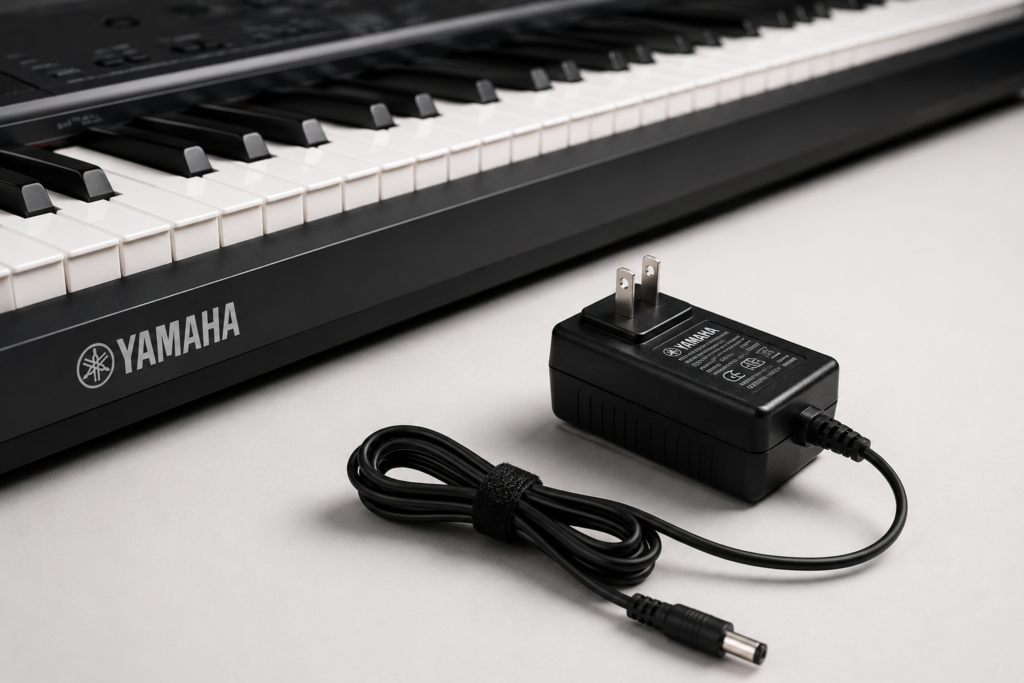

Losing or breaking your musical instrument charger can bring your creative flow to a sudden, frustrating halt. One minute you are mid-composition, and the next, you are staring at a dark screen and a silent keybed. Finding a reliable Yamaha keyboard power adapter does not have to be a high-stakes guessing game.
Many UK musicians struggle to understand the dense technical specifications, like voltage ratings, milliamp limits, or barrel sizes, that vary wildly from one piece of audio gear to another. This widespread confusion leaves players worried about choosing an incompatible power unit that might cause permanent electronic damage.
This comprehensive guide will simplify the technical details. You will learn exactly how to identify your keyboard’s unique power specifications, read its back-panel chassis markings, and bypass overpriced original equipment manufacturer (OEM) listings. By demystifying the jargon, this guide ensures you can confidently choose a high-quality, safe, and fully finding the right adapter to get back to playing without skipping a beat.
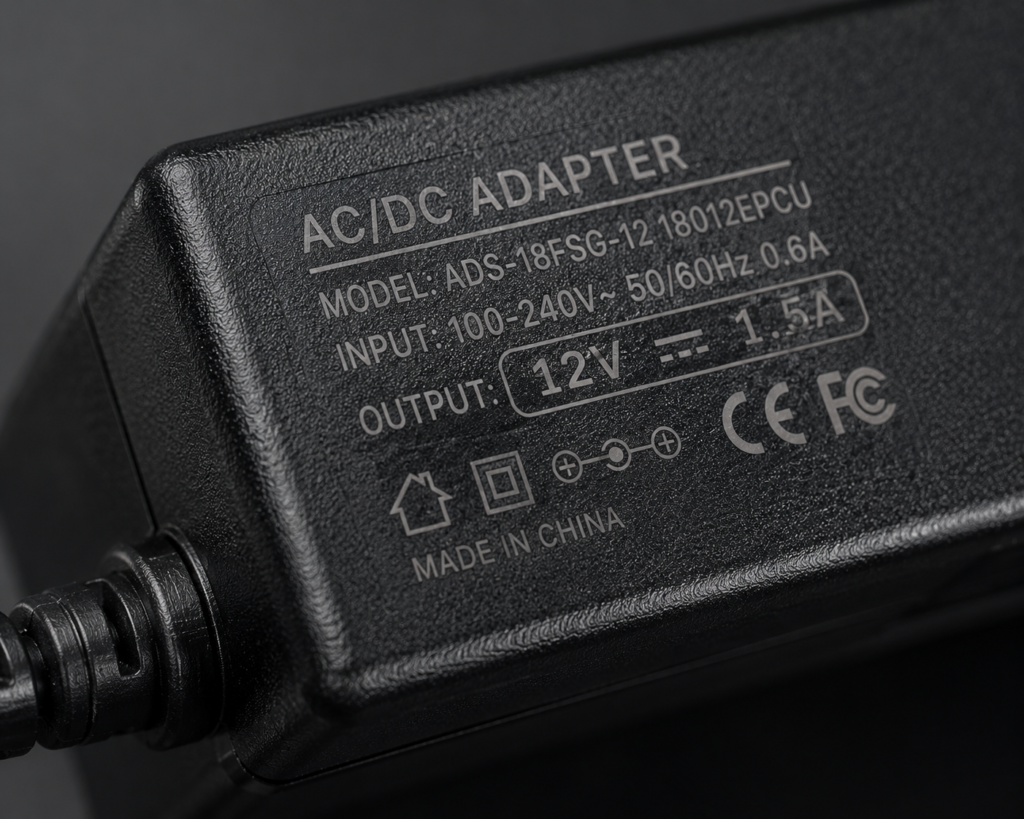
Every electronic musical instrument has specific electrical parameters that must be met to function safely and optimally. To find a perfectly matched replacement Yamaha keyboard power adapter, your first step should always be to look at the manufacturer label stamped on the underside of your keyboard’s casing, or look directly next to the DC input jack.
The first metric you must check is the voltage, measured in Volts (V). A massive majority of portable digital pianos, workstations, and arrangers use a 12V Yamaha keyboard power adapter. It is absolutely vital that you match this number precisely.
Voltage is non-negotiable—if your keyboard demands 12V, you must give it exactly 12V.
The second major factor is current, which is measured in amperes (A) or milliamperes (mA), where 1.0A equals 1000mA. You will typically see values like 1.0A, 1.5A, or 1500mA on your gear.
Unlike voltage, the current rating on your new adapter does not need to be an exact match. It simply needs to meet or exceed what the device demands. Think of current as a reservoir: your instrument will only draw the electrical current it actively needs to drive its speakers and processors.
If your keyboard requires a 1.0A feed, using a 1.5A or 2.0A power brick is perfectly safe. In fact, opting for an adapter with a higher current ceiling is highly recommended. It creates a stable, cool-running power solution that will not overheat during extended, high-volume rehearsal sessions.
To help you cross-reference your specific model, review the official baseline profiles below based on standard Yamaha PA-150 official specifications:
| Keyboard Series Type | Typical Model Examples | Required Voltage | Minimum Current Required | Common OEM Reference |
| Piaggero / Slimline | NP-12, NP-32, NP-15 | 12V DC | 0.7A (700mA) | PA-130 / PA-130B |
| PSR-E Mid-Range | PSR-E373, PSR-E473, YPT-260 | 12V DC | 0.7A – 1.5A | PA-130 / PA-150 |
| P-Series Digital Pianos | P-45, P-125, P-145, P-225 | 12V DC | 1.5A (1500mA) | PA-150 / PA-150B |
| Synthesizers & Modern Workstations | MX49, MX61, MODX6, MODX7 | 12V DC | 1.5A – 2.0A | PA-150B |
Getting the electrical numbers right is only half the battle; you must also ensure the physical connection is correct. Yamaha power supply designs rely heavily on standard barrel connector shapes, but looks can be deceiving. You must pay incredibly close attention to polarity before plugging anything into your wall.
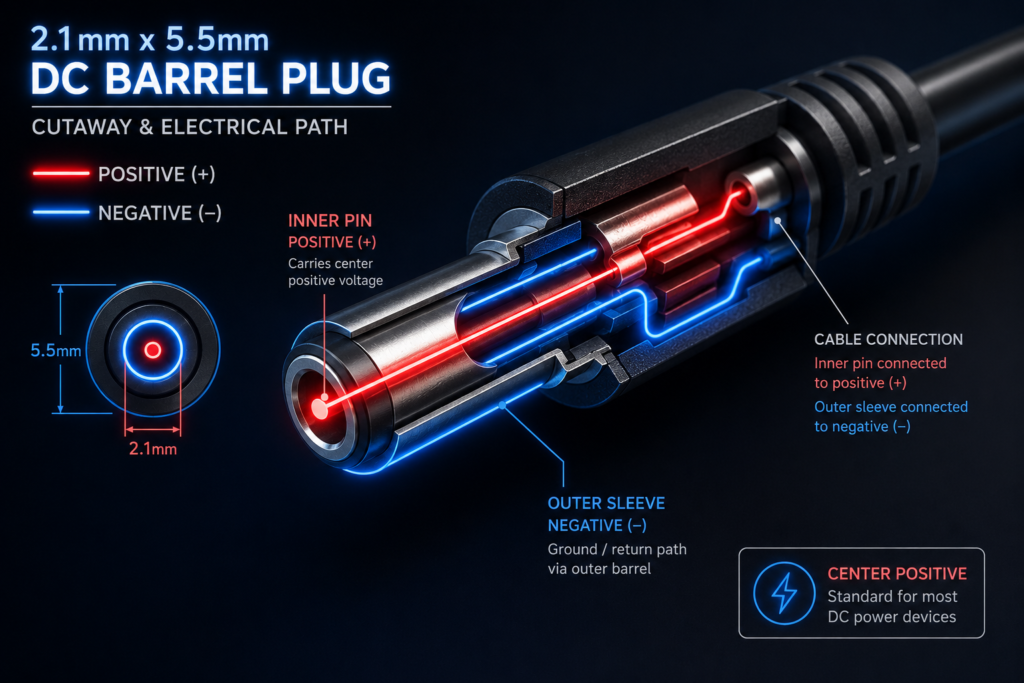
Polarity refers to how the positive and negative electrical paths are arranged inside the plug tip. Look for a small schematic diagram on your keyboard showing a solid circle inside a broken outer ring. Most modern consumer models utilize a center-positive configuration. This means the internal pin carries the positive charge, while the outer sleeve acts as the negative ground.
Connecting a center-negative adapter to a device explicitly built for center-positive power can destroy the internal protective diodes and main processing chips instantly. Always verify the diagram matches the one shown below before turning on the mains switches.
Physical plug size is another vital factor that determines connection stability. The standard connector used for a modern Yamaha keyboard power adapter is a 2.1mm by 5.5mm barrel plug.
Sourcing a high-quality, compatible alternative ensures a snug, flush fit. This eliminates loose connections that cut out or generate loud pops through your speakers when you press down heavily on the keys or move the instrument on its stand.
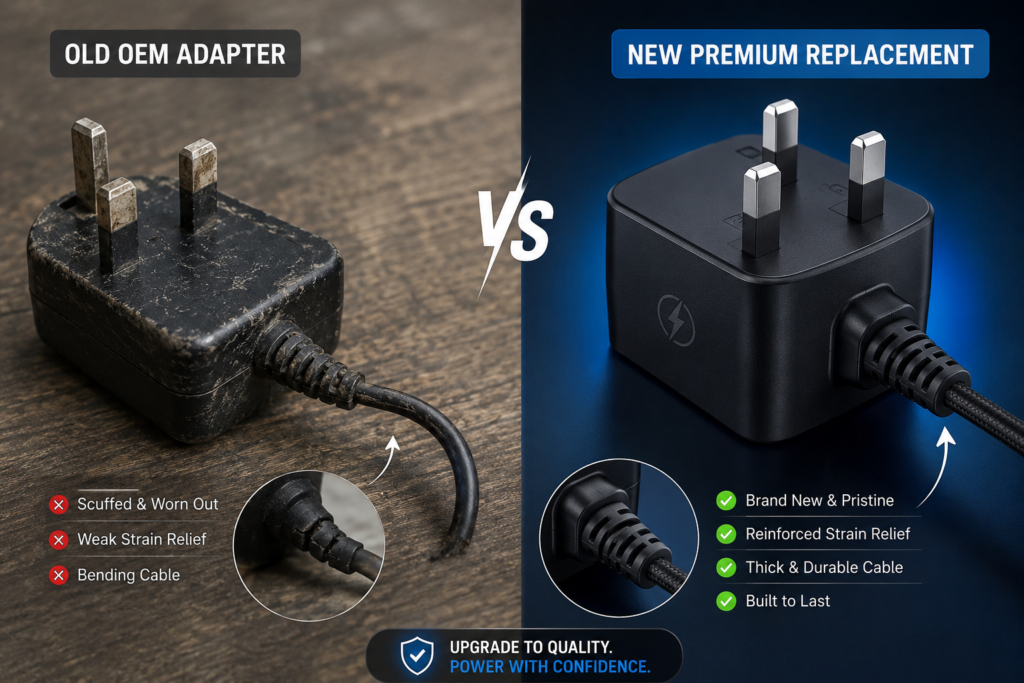
You do not need to spend weeks hunting down expensive original manufacturer units to get safe, studio-grade performance. High-quality third-party UK mains adapter options offer fantastic value while delivering exact electrical compatibility.
When searching for the ideal Yamaha keyboard power adapter replacement, look for units built explicitly to satisfy rigorous UK 3-pin plug and electrical standards. Choosing a premium alternative offers several major operational and environmental benefits:
Always ensure the retailer you choose focuses specifically on electronic power accessories. Look for suppliers who back their inventory with local UK support, verify their designs against current CE marking requirements and UK electrical safety standards, and provide clear product warranties. This ensures you receive a thoroughly tested accessory that keeps your instrument performing safely for years to come.
If you run a home studio or a multi-instrument live rig, you are likely managing more than just a keyboard. Electronic musicians often accumulate a diverse collection of gear, from synthesizers to legacy digital audio interfaces.
While verifying your 12V setup for your Yamaha gear, take a quick inventory of your other hardware. For instance, if you happen to run a vintage desktop recording setup, you might also be looking for a replacement TASCAM audio interface adapter. Consolidating your power supplies from a single, trusted supplier ensures your entire workflow remains hum-free, perfectly grounded, and ready to record at a moment’s notice.
No, you should never use a lower-voltage power accessory. An underpowered 12V Yamaha keyboard power adapter will cause severe performance drops, distorted audio signals, digital crashes, or a complete failure to boot up. Always match the voltage specification exactly to protect the internal components.
Using an adapter with a higher current rating is completely safe. Your instrument controls the electrical flow and only draws what it requires. A 2.0A adapter can safely power a keyboard that only requires a 0.7A or 1.0A feed without overheating or overcharging the system.
Most modern portable keyboards require a center-positive barrel plug. However, certain vintage models or specialized rack mount synthesizers from previous decades might use different standards. Always verify the polarity symbol printed on your unit’s casing. If you need help translating the diagram, you can brush up on the fundamentals by studying this technical guide on understanding DC power supply polarity.
Yes. Utilizing a cheap adapter that lacks proper voltage regulation or using an incorrect polarity orientation can fry internal mainboards instantly. Investing in a regulated, safety-certified replacement protects your gear from catastrophic electrical failure.
If you have an uncommon, legacy, or older model and are unsure which plug tip or current capacity matches your setup, please do not guess. You can always contact our expert team directly for a personalized compatibility check before placing an order.
Finding the ideal Yamaha keyboard power adapter comes down to verifying three clear parameters: a matching 12V output, an equal or higher current rating, and a center-positive barrel configuration. By choosing a reliable, compatible alternative, you save money while ensuring your instrument remains protected against power fluctuations.
Do not let a broken or misplaced cord silence your music. Explore our full range of durable, certified compatible keyboard power adapters today to keep your musical setup powered up safely.