


Power adapters are essential components that supply the correct electrical power to countless everyday devices, from routers and CCTV cameras to monitors, keyboards, smart speakers, networking equipment and audio systems. Although often overlooked, using the correct power adapter is vital for maintaining stable performance, protecting sensitive electronics, and ensuring safe operation.
Understanding power adapter basics makes it much easier to choose a compatible replacement power supply when your original adapter is lost, damaged, or no longer working. By learning how voltage, current, polarity, connector size and safety certifications work together, you can avoid common compatibility mistakes and help extend the lifespan of your equipment.
This guide explains how power adapters work, how to read their specifications, and what to look for when selecting a reliable replacement power adapter for your device.
What Is a Power Adapter?
A power adapter is a device that converts alternating current (AC) electricity from a plug socket into the direct current (DC) required by electronic devices. Most devices require a specific voltage and current level to operate correctly. The adapter regulates and delivers power through a connector designed for the equipment.
Without the correct adapter, a device may:
- Fail to power on
- Operate unreliably
- Experience performance issues
- Overheat
- Become permanently damaged
Common devices that rely on power adapters include:
- Electronic keyboards
- Audio equipment
- CCTV systems
- Routers and networking devices
- LED lighting systems
- Computer accessories
Understanding these power adapter basics also makes it easier to compare replacement power supplies, verify compatibility, and reduce the risk of purchasing an adapter with the wrong voltage, polarity or connector size. Taking a few moments to check the specifications can help protect your electronics and avoid unnecessary replacement costs.
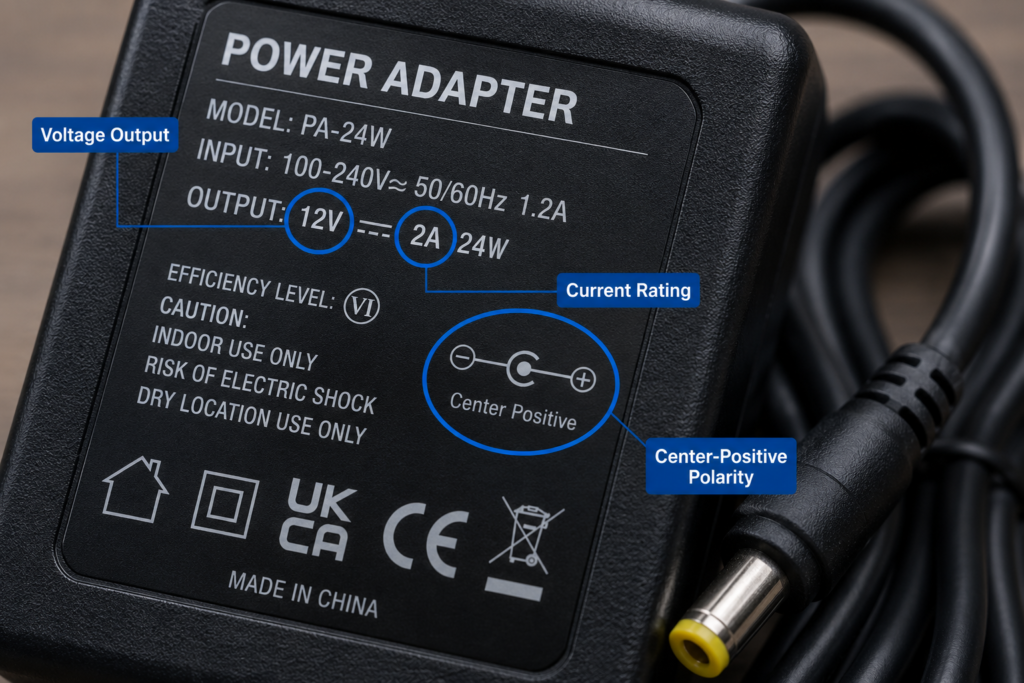
Understanding Power Adapter Specifications
When choosing a replacement adapter, there are four key specifications you should always check.
Voltage
Voltage is the most important specification shown on a power adapter. The replacement adapter must match the voltage required by your device. Common adapter voltages include:
- 5V power adapters
- 9V power adapters
- 12V power adapters
- 15V power adapters
- 19V power adapters
- 24V power adapters
Each voltage is intended for specific devices and applications. Selecting a replacement unit with the wrong output voltage may prevent your equipment from operating correctly, cause unstable performance, or permanently damage sensitive internal components. Always match the output voltage exactly with the requirements shown on your original adapter or device label.
Current Rating (Amps)
Current is measured in amps (A) or milliamps (mA). When replacing an adapter:
- The voltage must match exactly.
- The current rating can be the same or higher.
For example:
- Original Adapter: 12V 2A
- Replacement Adapter: 12V 3A
This is generally safe because the device only draws the amount of current it requires, provided the output voltage and polarity are correct. However, using an adapter with a lower current rating than recommended may cause overheating, instability, or unexpected shutdowns.
Polarity
Polarity determines the direction of electrical flow. Most modern devices use centre-positive polarity, but this is not universal. Using the wrong polarity can damage internal components and may permanently affect the device.
Most DC power adapter models include a polarity diagram on the adapter label. Choosing the correct replacement power supply is essential for safe operation.
Connector Size
Even if voltage and current ratings match, the connector must physically fit the device. Connector sizes vary significantly between manufacturers and products.
Before purchasing a power supply, verify the connector dimensions carefully and compare them with the original specifications. Many replacement power adapters use different connector sizes despite having identical voltage ratings.
How to Choose a Compatible Replacement Power Adapter
Choosing a replacement adapter doesn’t need to be complicated.
Step 1: Check the Device Label
Look for:
- Required voltage
- Current rating
- Polarity symbol
- Model number
Step 2: Match the Specifications
The replacement should match:
- Voltage exactly
- Polarity exactly
- Connector size exactly
Step 3: Choose a Reliable Supplier
When browsing new adapters, look for products that provide:
- Stable power output
- Overcurrent protection
- Overvoltage protection
- Quality construction
- UK compatibility
For UK users, always ensure the replacement adapter carries the UKCA (UK Conformity Assessed) or CE mark. These symbols indicate that the product meets strict environmental, health, and safety standards.
A quality replacement power supply helps protect your equipment and ensures reliable long-term performance.
Power Adapter Safety Tips
Following proper power adapter safety practices can significantly extend the lifespan of both your adapter and your equipment.
Recommended safety tips include:
- Avoid covering adapters during use.
- Keep adapters away from moisture.
- Use surge protection where possible.
- Avoid sharply bending cables.
- Inspect adapters regularly.
- Replace damaged adapters promptly.
Common warning signs of adapter failure include:
- Excessive heat
- Burning smells
- Intermittent power
- Frayed cables
- Buzzing noises
- Loose connectors
If you notice any of these issues, replacing the unit with a compatible replacement power adapter can help prevent further equipment problems.
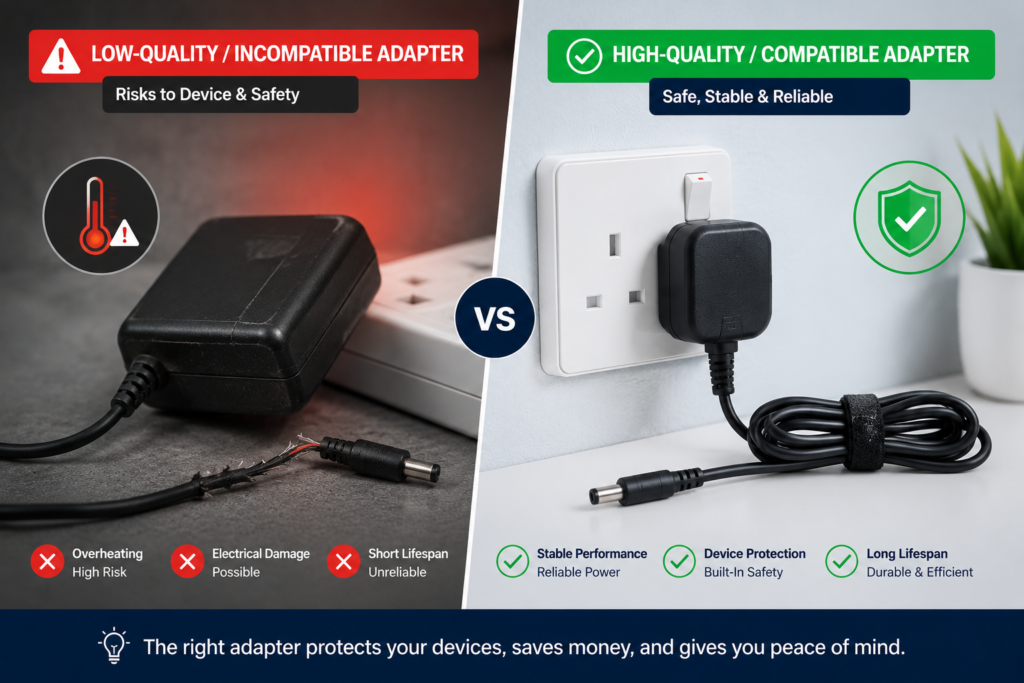
Why Choosing the Right Replacement Matters
Using the correct replacement adapter does more than simply power your device. A properly matched adapter helps maintain stable performance, protects sensitive electronic components, and reduces the risk of overheating or electrical faults.
Low-quality or incompatible adapters may cause:
- Unexpected shutdowns
- Reduced equipment lifespan
- Charging or power issues
- Excessive heat generation
- Potential damage to internal circuitry
Investing in a quality replacement adapter that matches your device’s specifications can save money and prevent avoidable repairs in the future.
FAQ Section
What does a power adapter do?
A power adapter converts electricity from a power socket into the voltage and current required by a device.
Can I use a higher amp power adapter?
Yes. As long as the voltage and polarity match, a higher current rating is generally acceptable.
What happens if I use the wrong voltage?
Using the wrong voltage can cause equipment malfunction or permanent damage.
Why is polarity important?
Incorrect polarity can damage sensitive electronic components.
How do I know if an adapter is compatible?
Check the voltage, current rating, polarity and connector size against the device specifications.
Conclusion
Selecting the correct replacement power adapter is essential for the safety and longevity of your electronics. By matching the voltage, polarity, connector size, and ensuring an adequate current rating, you can confidently power your devices and prevent costly damage.