


When choosing the right replacement power adapter, understanding positive vs negative polarity is just as important as finding a connector that fits. Using an adapter with the wrong polarity can prevent your device from working properly and, in some cases, damage its internal electronics.
Whether you’re replacing a charger for a laptop, router, CCTV camera, monitor, musical instrument, or another electronic device, this guide helps you choose a compatible replacement with confidence. We explain the core concepts in simple terms, show you how to identify the correct polarity, and highlight what to check before purchasing.
What Is Power Adapter Polarity?
Power adapter polarity refers to the arrangement of the positive (+) and negative (–) electrical connections inside a DC power connector. Your replacement adapter must match your device’s polarity to deliver power safely and correctly.
Definition
Polarity is the direction of electrical current within a DC connector. It determines whether the centre pin or the outer sleeve carries the positive voltage.
Explanation
Most replacement power adapters use a DC barrel connector, which consists of a centre pin and an outer metal sleeve. One carries positive voltage while the other carries negative voltage.
Because DC (Direct Current) flows in only one direction, your device is designed to receive electricity in a specific way. If the polarity does not match, the adapter may not work correctly and could damage sensitive electronic components.
Common Mistakes
- Assuming all DC adapters use the same polarity.
- Checking only the voltage.
- Buying a replacement because the connector fits.
Buying Advice
Before ordering a replacement adapter, always check:
- Output voltage
- Current rating
- Connector size
- Polarity
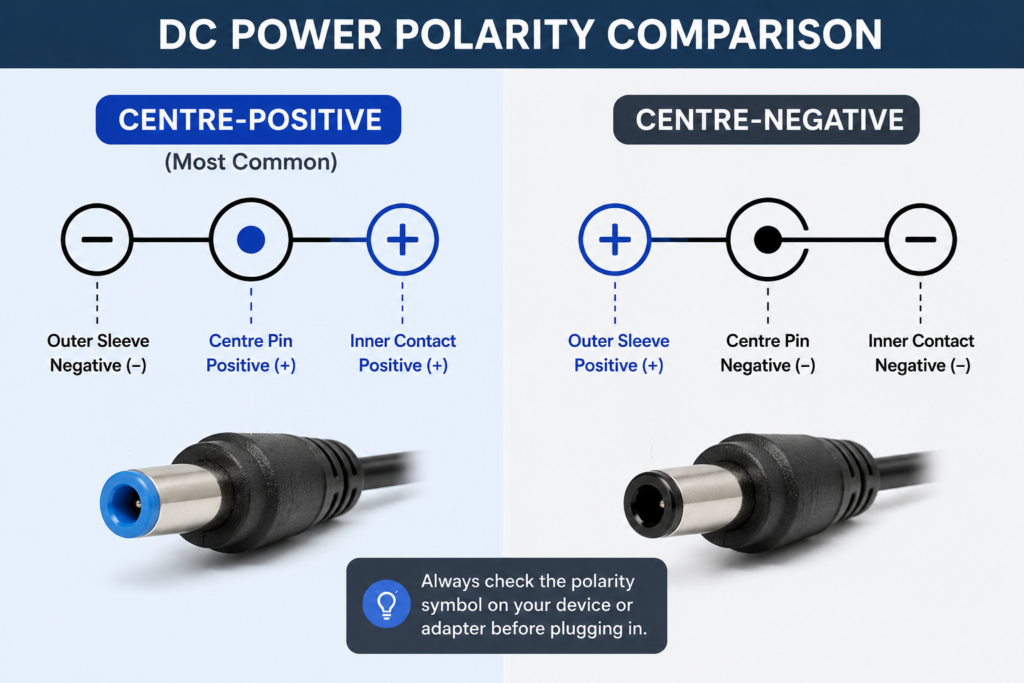
Positive vs Negative Polarity: Centre Pin Differences
Centre positive and centre negative describe which part of the connector carries the positive voltage. Most modern electronic devices use centre-positive polarity, while some specialist and older equipment still uses centre-negative connectors.
| Feature | Centre Positive | Centre Negative |
| Centre Pin | Positive (+) | Negative (–) |
| Outer Sleeve | Negative (–) | Positive (+) |
| Common in Modern Electronics | Yes | Less common |
Explanation
Centre-positive adapters are commonly used with laptops, routers, monitors, CCTV systems, LED lighting, and many other household electronics. Centre-negative polarity is more commonly found on some guitar effects pedals, vintage electronics, and specialist equipment.
Although the connectors often look identical, their internal wiring is different. This is why it’s important to confirm the polarity before connecting a replacement adapter.
Buying Advice
Never rely on appearance alone. Check the polarity symbol on the original adapter or the device itself before purchasing a replacement.
How to Identify the Correct Polarity
The easiest way to identify polarity is by checking the standardised polarity symbols printed on the original power adapter, the device label, or the manufacturer’s specifications.
Explanation
Most DC adapters include a small polarity symbol next to the output specifications. This symbol shows whether the centre pin or the outer sleeve carries the positive voltage.
If your original adapter is unavailable, you can also check:
- The label underneath the device
- The user manual
- The manufacturer’s website
- A digital multimeter
Taking a few moments to verify the polarity can prevent compatibility issues and protect your electronics.
Common Mistakes
- Ignoring the polarity symbol.
- Assuming all 12V adapters are interchangeable.
- Purchasing a replacement without checking the specifications.
Summary
Always confirm the polarity before connecting a replacement adapter, even if the connector appears identical.
What Happens If You Use the Wrong Polarity?
Using a power adapter with the wrong polarity can prevent your device from powering on or damage internal electronic components if reverse-polarity protection is not built into the device.
Explanation
Many modern electronics with proper CE marking include protection circuits that prevent damage when the wrong polarity is connected. However, older or lower-cost devices may not have this feature.
Possible consequences include:
- Device will not switch on.
- Blown fuse.
- Damaged circuit board.
- Faulty voltage regulator.
- Permanent electronic failure.
Replacing damaged components often costs much more than purchasing the correct replacement adapter in the first place.
Myth vs Fact
| Myth | Fact |
| If the connector fits, the adapter will work. | Connector size alone does not guarantee compatibility. |
| Voltage is the only important specification. | Voltage, current, connector size, and polarity must all match. |
| Every DC adapter is centre positive. | Some electronic devices require centre-negative polarity. |
Buying Advice
Before connecting a replacement adapter, compare all electrical specifications with the original power supply to ensure compatibility.
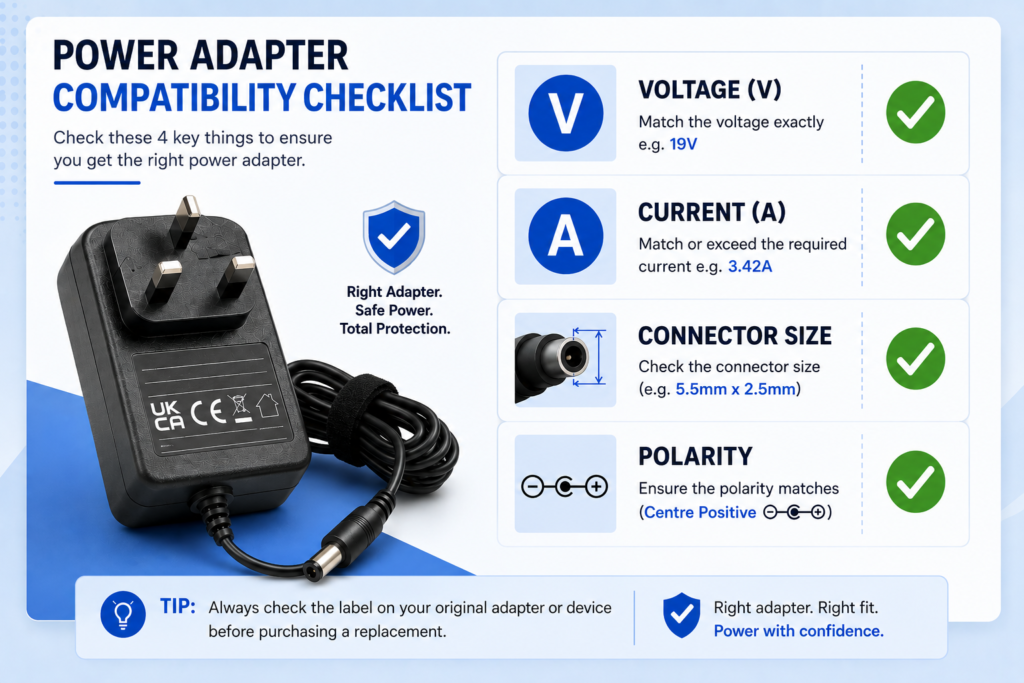
Choosing the Right Replacement Power Adapter
A compatible replacement power adapter should match your device’s voltage, current rating, connector size, and polarity.
Buying Checklist
Before placing your order, confirm:
- Correct output voltage
- Equal or higher current rating
- Matching connector size
- Correct polarity
- Suitable wattage
- Complies with the UKCA marking
- Reliable replacement supplier
Selecting the correct replacement adapter helps protect your electronics, improves reliability, and reduces unnecessary electronic waste by extending the life of your device.
Frequently Asked Questions
Is centre positive the most common polarity?
Yes. Most modern consumer electronics use centre-positive DC connectors, although some specialist and older devices still require centre-negative polarity.
Can the wrong polarity damage my device?
Yes. Incorrect polarity may damage internal components if your device does not include reverse-polarity protection.
How do I identify my adapter’s polarity?
Check the polarity symbol printed on the adapter or device label. If it isn’t available, consult the manufacturer’s specifications or test the adapter using a digital multimeter.
Can I use a universal power adapter?
Yes, provided the voltage, current rating, connector size, and polarity are correctly matched to your device.
Is polarity as important as voltage?
Absolutely. Voltage, current, connector size, and polarity must all be compatible to ensure safe and reliable operation.
Conclusion
Choosing the correct replacement power adapter involves more than matching the connector. The voltage, current, connector size, and polarity all need to be compatible to ensure safe and reliable operation.
Understanding the difference between positive and negative polarity helps you avoid compatibility issues, protect your electronics, and make a more informed purchasing decision. Before ordering a replacement adapter, always check the polarity symbol on your original charger or device and verify all electrical specifications.
If you’re looking for a reliable replacement power adapter, selecting one with clearly listed compatibility information makes it much easier to find the right solution for your laptop, router, CCTV system, monitor, musical equipment, or other electronic device.