

Audio Interface Power Adapters: Best Replacement Guide
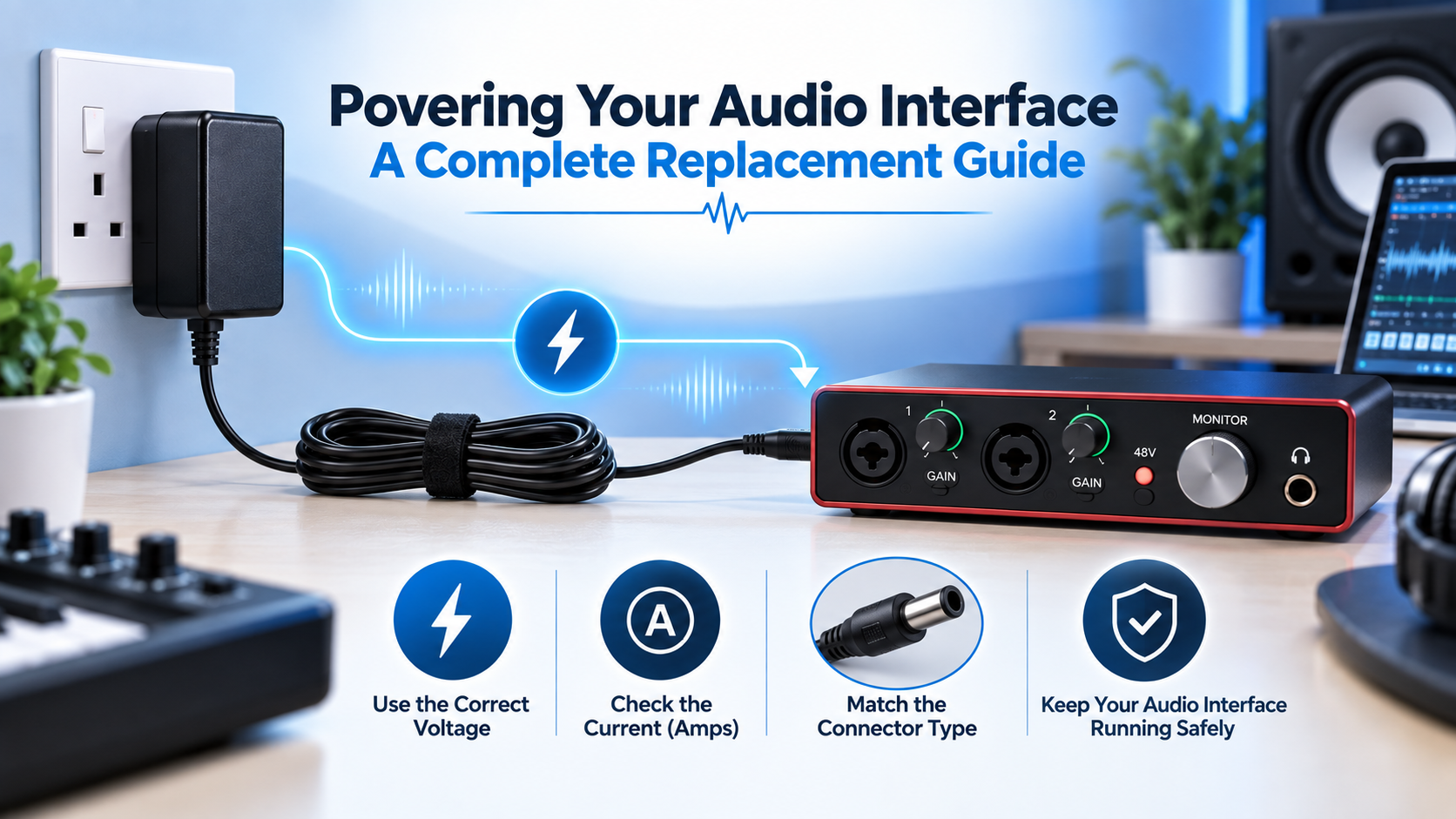
Losing the power adapter for an audio interface is frustrating, especially when your recording set-up still works. The good news is that you usually do not need to replace the entire interface. You just need a compatible replacement power supply.
Audio interfaces have different voltage, current, connector and polarity requirements, and some use USB power instead of a traditional external adapter. A plug that simply fits is not enough. This guide explains what to check before buying an audio interface power adapter and how to avoid mistakes that cause unreliable operation or damage.
What Power Adapter Does an Audio Interface Need?
An audio interface needs the power source specified for its exact model. Depending on the design, it may use USB bus power, an external DC adapter or another dedicated power arrangement.
Start by checking the input marking on the interface, the original adapter, the manual or manufacturer documentation. For example, a Zoom TAC-8 12V 2A replacement adapter serves as a direct model-specific audio interface example. A model-specific reference is much safer than choosing a generic 12V adapter simply because its connector looks similar.
Key point: Identify the exact interface model and its complete power requirement before shopping.
Match the Voltage Exactly
Voltage is the first electrical specification to check. If your interface requires 12V DC, the replacement should provide 12V DC. Do not assume that a higher voltage will make the equipment run better.
An incorrect voltage can cause malfunction and damage internal electronics. A lower voltage can also result in unstable operation or failure to start. When choosing a replacement, check that the adapter’s DC output matches the interface’s DC input requirement.
Key point: The adapter output voltage must match the interface requirement exactly.
Check Amperage and Wattage
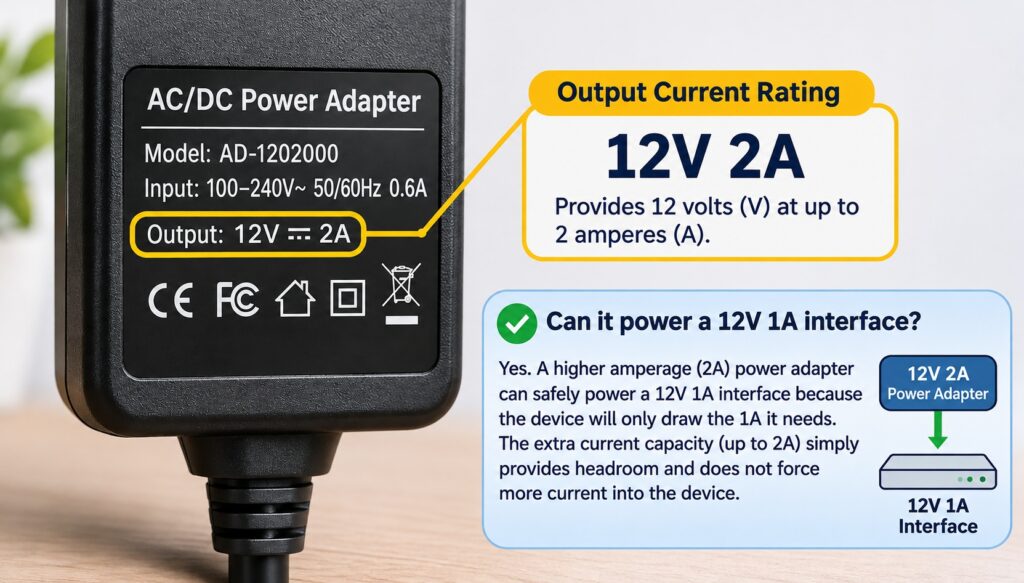
After voltage, check current. The replacement should provide at least the current the interface requires. A higher current rating can generally be used when all other specifications match because the interface only draws the current it needs.
Because wattage is simply voltage multiplied by amperage (V × A = W), matching the voltage and meeting or exceeding the current rating also ensures sufficient wattage.
For example, if an interface requires 12V 1A (12W), a compatible 12V 2A (24W) adapter has enough current and wattage capacity. Additionally, a 12V replacement for M-Audio FireWire 1814 shows why model-specific searches are useful for getting the right current capacity on older studio equipment.
Key point: Match voltage exactly and provide sufficient current capacity.
Check the DC Connector Size
Correct electrical ratings are not enough if the DC connector is the wrong size. Barrel connectors can look almost identical while having different inner and outer diameters.
Compare the replacement connector with the original adapter if you still have it. If the original is missing, use the interface manual or exact model documentation to identify the required connector. Never force a plug into the socket.
Key point: Physical connector compatibility must be checked separately from voltage and amperage.
Confirm the Polarity Before Connecting It
Polarity determines how positive and negative voltage are arranged at the DC connector. Centre-positive is common, but you should never assume every audio interface uses it.
Check the polarity symbol on the interface, original adapter or documentation before connecting a replacement. For example, a 9V negative-polarity Roland FA-101 adapter shows why polarity differs between models and cannot be guessed from connector shapes alone.
Key point: Voltage, connector and polarity must all agree with the interface requirement.
USB-Powered vs External-Power Audio Interfaces
Not every audio interface needs a conventional external power brick. Some draw power through USB, while others have a dedicated DC input.
A 5V USB-C Focusrite Scarlett Solo adapter is a helpful model-specific reference for USB-powered gear, though not every USB audio interface requires an external 5V supply.
Key point: Confirm how your exact interface is designed to receive power before ordering an adapter.
Can You Use a Different Brand’s Power Adapter?
Yes. A replacement adapter does not necessarily need to carry the same brand name as the interface. Compatibility matters more than the logo.
A third-party replacement should match the required voltage, provide sufficient current, use the correct connector and have the correct polarity. For instance, a 12V Audient iD22 power adapter is a good example of a compatible third-party replacement.
Key point: Brand matching is less important than complete electrical and physical compatibility.
What If the Original Adapter Is Missing?
If the original power supply has disappeared, start with the interface’s exact model number. Check the input marking near the power socket, then confirm the requirement through the manual or manufacturer documentation.
Write down the complete specification before shopping: model, voltage, current, connector and polarity. Do not identify a replacement by appearance alone.
How to Choose a Safe Replacement
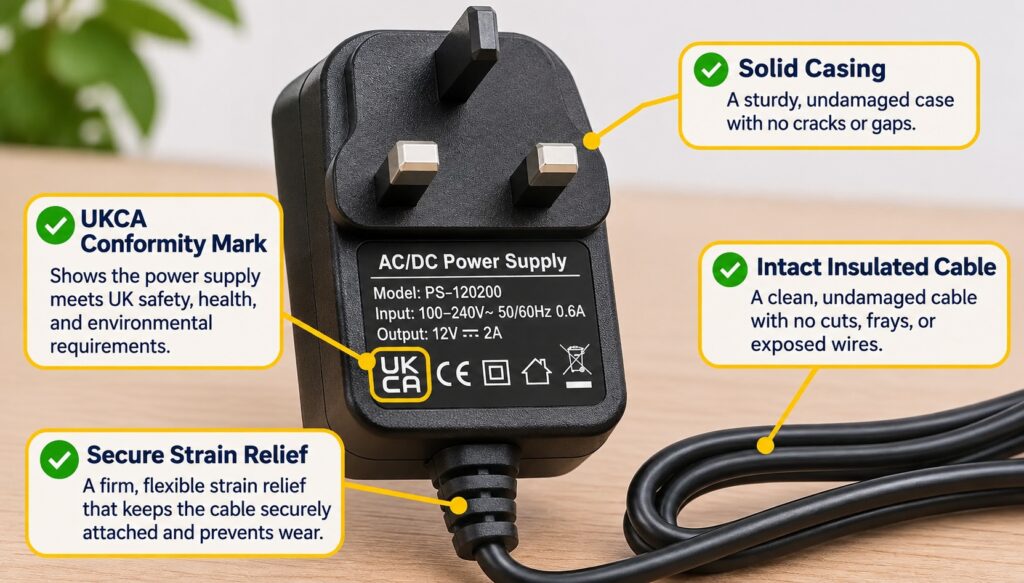
A studio set-up deserves the same care as any other electronic equipment. Look for clear electrical specifications and appropriate UK safety information. Review the UKCA marking guidance for UK conformity marking information, and consult Electrical Safety First USB charger safety advice for consumer electrical safety tips. Additionally, refer to HSE electricity guidance for UK workplace and electrical safety authority standards.
Before use, inspect the adapter for a damaged cable, exposed conductors, cracked casing or a loose connector. If it becomes unusually hot, smells of burning, makes abnormal noises or repeatedly cuts out, stop using it immediately.
Key point: Verify both compatibility and the condition of the replacement before using it.
Quick Audio Interface Adapter Check
Before connecting a replacement, confirm:
- The interface model matches the replacement reference.
- Output voltage matches exactly.
- Current rating is equal to or higher than required.
- DC connector size matches.
- Polarity matches.
- The adapter is suitable for UK mains use.
- Cable, casing and connector are undamaged.
If one of these details is unknown, do not guess. Identify it first.
FAQs
Can I use a higher-amp power adapter with an audio interface?
Generally, yes, provided the voltage, connector, polarity and other requirements match. A higher current rating represents available capacity, not current being forced into the interface.
Can I use a higher-voltage adapter if the plug fits?
No. A matching connector does not make a higher voltage safe. Use the voltage specified for the interface.
Are all audio interface power adapters the same?
No. Models can differ in voltage, current, connector size, polarity and power method. Always check the exact model.
What should I do if my audio interface has no power label?
Use the exact model number to find reliable technical documentation. Do not identify the adapter by appearance alone.
Can a wrong power adapter damage an audio interface?
Yes. Incorrect voltage or polarity can damage electronics, while inadequate current capacity can cause unreliable operation and adapter stress.
Final Thoughts
Finding a replacement audio interface power adapter is mainly a compatibility exercise. Get the model right, match the voltage exactly, provide enough current, confirm the connector and check polarity before connecting anything.
A few minutes spent checking the interface label or documentation can prevent an expensive mistake and get your recording set-up running again smoothly.