

What Power Adapter Does an Audio Interface Need? Best Guide
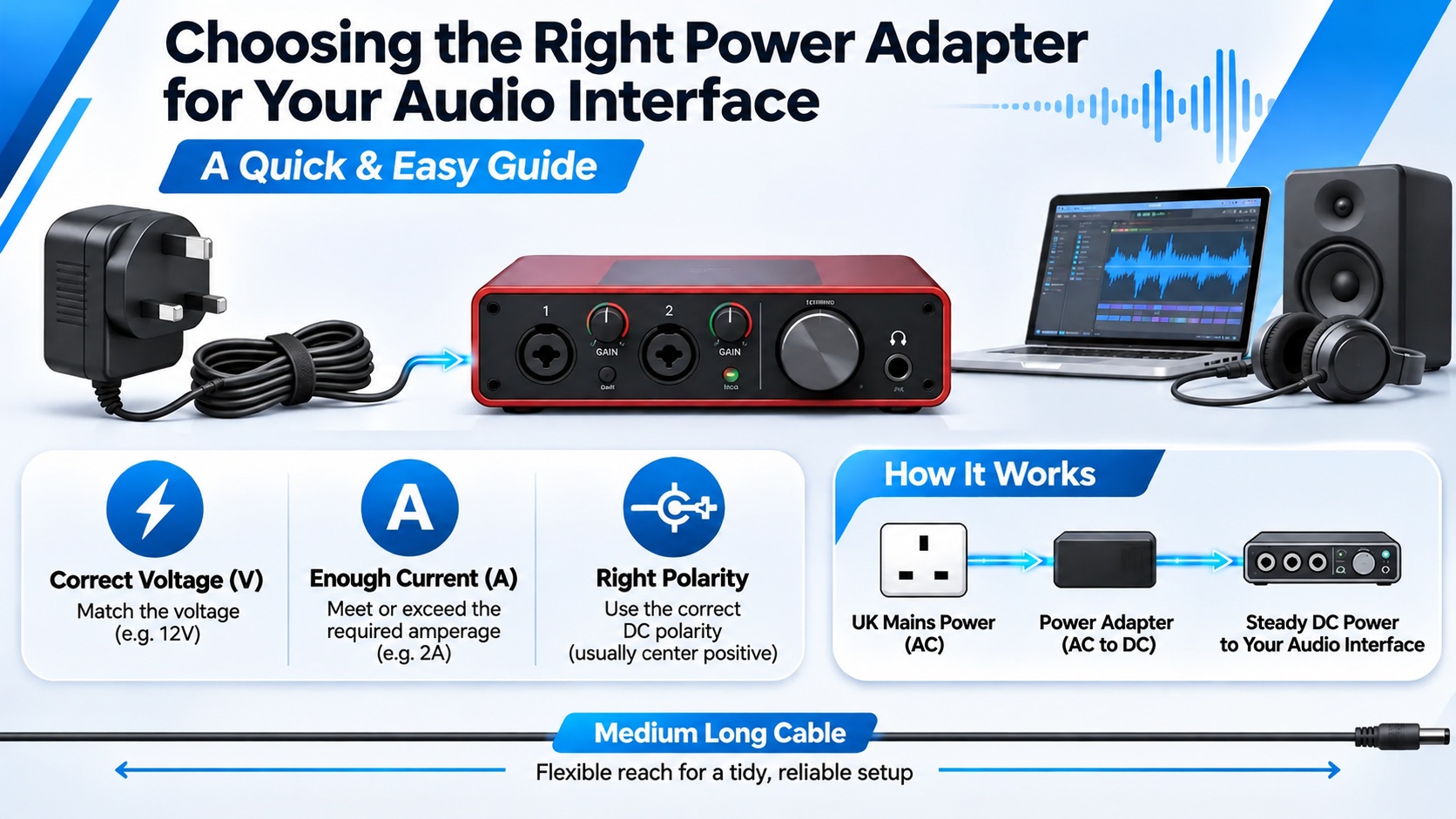
Choosing a power adapter for an audio interface is not simply a case of finding a plug that fits. Some audio interfaces receive power through USB, while others rely on a dedicated external AC/DC power supply with strict electrical requirements. If you need a replacement, always start with the exact interface model and verify its specifications before connecting anything.
What Power Adapter Does an Audio Interface Need?
An audio interface needs the power supply specified for its exact model. For an externally powered unit, check the required voltage, amperage, connector size and polarity. The replacement adapter should meet those requirements before you connect it.
Different models can have very different power needs. One model might use 12V DC, while another uses a completely different voltage or connector. Some interfaces use USB power instead of a dedicated DC adapter. That is why the model number matters. Do not choose an adapter simply because the connector looks similar.
For example, Power Adapter Warehouse supplies a compatible 12V 2A replacement adapter for the Zoom TAC-8 Thunderbolt audio interface.
How Do You Find the Voltage an Audio Interface Needs?
Check the original power adapter, the label on the interface or manufacturer specifications for the required voltage. The replacement adapter’s output voltage must match the equipment requirement. Voltage is one of the most important specifications because using the wrong voltage can prevent the interface from working correctly and cause permanent damage.
Do not confuse input voltage with output voltage. A UK mains adapter may accept 100-240V AC from the wall socket while supplying a much lower DC voltage to the audio interface. Look specifically for markings such as Output: 12V DC. If the original adapter is missing, search for the exact model rather than guessing from the connector.
How Much Amperage Does an Audio Interface Need?
Amperage describes how much current the power adapter can provide. Check the interface or manufacturer documentation for the required current rating. If an interface requires 2A, a replacement should provide at least the required current where manufacturer specifications allow. A suitable higher-current-rated adapter does not automatically force extra current into the interface; the equipment draws what it needs.
However, voltage, connector size and polarity must also be correct. Wattage can also help you understand power requirements. For a DC supply, watts are calculated using:
Watts = Volts x Amps
For example, a 12V 2A adapter has a maximum rated output of 24W.
Does the Audio Interface Power Adapter Need the Same Connector?
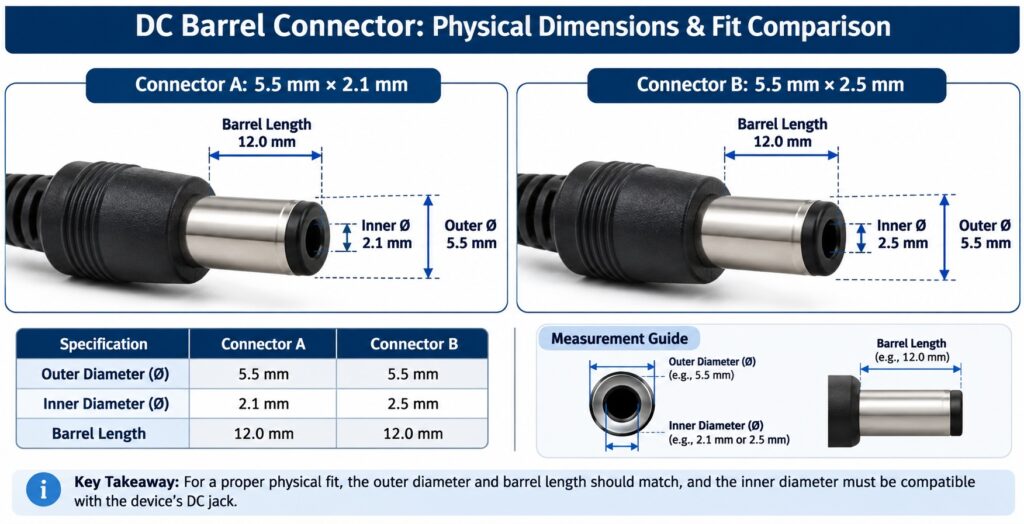
Yes, the DC connector needs to be physically compatible with the interface. Two adapters can have the same voltage and current rating but still be incompatible because their barrel connectors differ in outer diameter, inner diameter or length.
A connector that feels loose can create intermittent power problems. A connector that does not fit correctly should never be forced into the socket. Check the original adapter specification or equipment documentation for connector dimensions.
For example, when matching both voltage and connector size, Power Adapter Warehouse lists a 12V replacement adapter for the M-Audio FireWire 1814 audio interface.
Does Polarity Matter for an Audio Interface?
Yes. If an audio interface uses a DC barrel connector, polarity is vital for compatibility. The most common arrangement is centre-positive, but you should never assume this without checking the equipment or original adapter.
Look for the polarity symbol on the adapter label or interface specification. An adapter with the wrong polarity can cause the interface to fail and may damage internal circuitry. The connector fitting correctly is not enough; electrical polarity must match.
For example, Power Adapter Warehouse lists a compatible power adapter for the Roland FA-101 audio interface, illustrating why model-specific compatibility is important.
Do All Audio Interfaces Need an External Power Adapter?
No. Many compact USB audio interfaces receive operating power through USB. Others use an external adapter, particularly models with higher power requirements or extra features. Do not automatically buy a DC power supply simply because your equipment is an audio interface. Check the exact model’s requirements first.
Can You Use a Higher-Amp Adapter With an Audio Interface?
A higher-current-rated adapter can often be suitable when voltage, connector and polarity all match, but equipment manufacturer requirements take priority. An interface requiring 15V 1A may use a correctly matched 15V 2A supply because the adapter provides up to 2A while the equipment draws what it needs.
This does not mean higher voltage is acceptable. Think of specifications separately:
- Voltage: match the requirement.
- Current: meet the required rating.
- Connector: must physically fit correctly.
- Polarity: must match.
Can You Use a Different Brand’s Power Adapter?
The replacement does not need to carry the same brand name as the audio interface. Compatibility depends on electrical and physical specifications, not the logo printed on the adapter. A third-party replacement is suitable when it has the correct output voltage, sufficient current capacity, compatible connector dimensions and correct polarity.
For example, if your interface is a Focusrite model that uses USB-C power, Power Adapter Warehouse lists a 5V replacement power adapter for the Focusrite Scarlett Solo.
What If You Have Lost the Original Audio Interface Adapter?
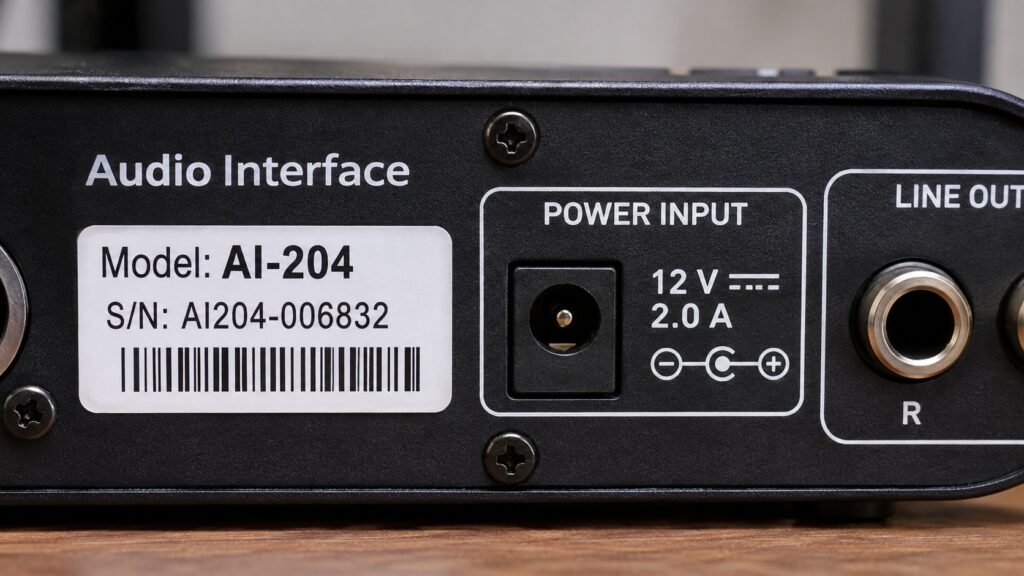
If the original adapter is missing, do not guess based on the connector alone. Start by recording the exact model number of the audio interface, then check manufacturer specifications for the required power input.
You should identify:
- Required voltage
- Required current
- Connector size
- Polarity
- AC or DC requirement
- Whether the interface is USB-powered
Power Adapter Warehouse also provides a compatible 12V power adapter for the Audient iD22 USB audio interface.
How Do You Check an Audio Interface Adapter Before Connecting It?
Before plugging in a replacement, compare the adapter label against the audio interface requirements. Check output voltage, current rating, connector and polarity.
If anything does not match, stop and verify the specifications before connecting. For general electrical safety information, the Health and Safety Executive’s electricity guidance provides useful UK advice. You can also review Electrical Safety First’s guidance on USB chargers and power safety. For UK conformity marking information, see the UK Government’s UKCA guidance.
FAQs
Can any 12V adapter power an audio interface?
No. Voltage alone is not enough; confirm current rating, connector size and polarity.
Does the amperage need to be exact?
The replacement needs to meet the required current rating, though a higher-rated supply can sometimes work if permitted.
Can the wrong power adapter damage an audio interface?
Yes. Incorrect voltage, polarity or connections can cause malfunction and damage equipment.
Do USB audio interfaces need power adapters?
Not always. Some receive power through USB, while others require an external supply.
Is a same-brand replacement necessary?
Not necessarily, as long as electrical and physical specifications meet interface requirements.
Final Thoughts
The correct audio interface power adapter is determined by equipment specifications, not simply by whether the plug fits. Check voltage first, then confirm current, connector size and polarity. Matching specifications carefully gives you a safe replacement route.