

Powered Speaker Keeps Turning Off? Causes & Proven Fixes
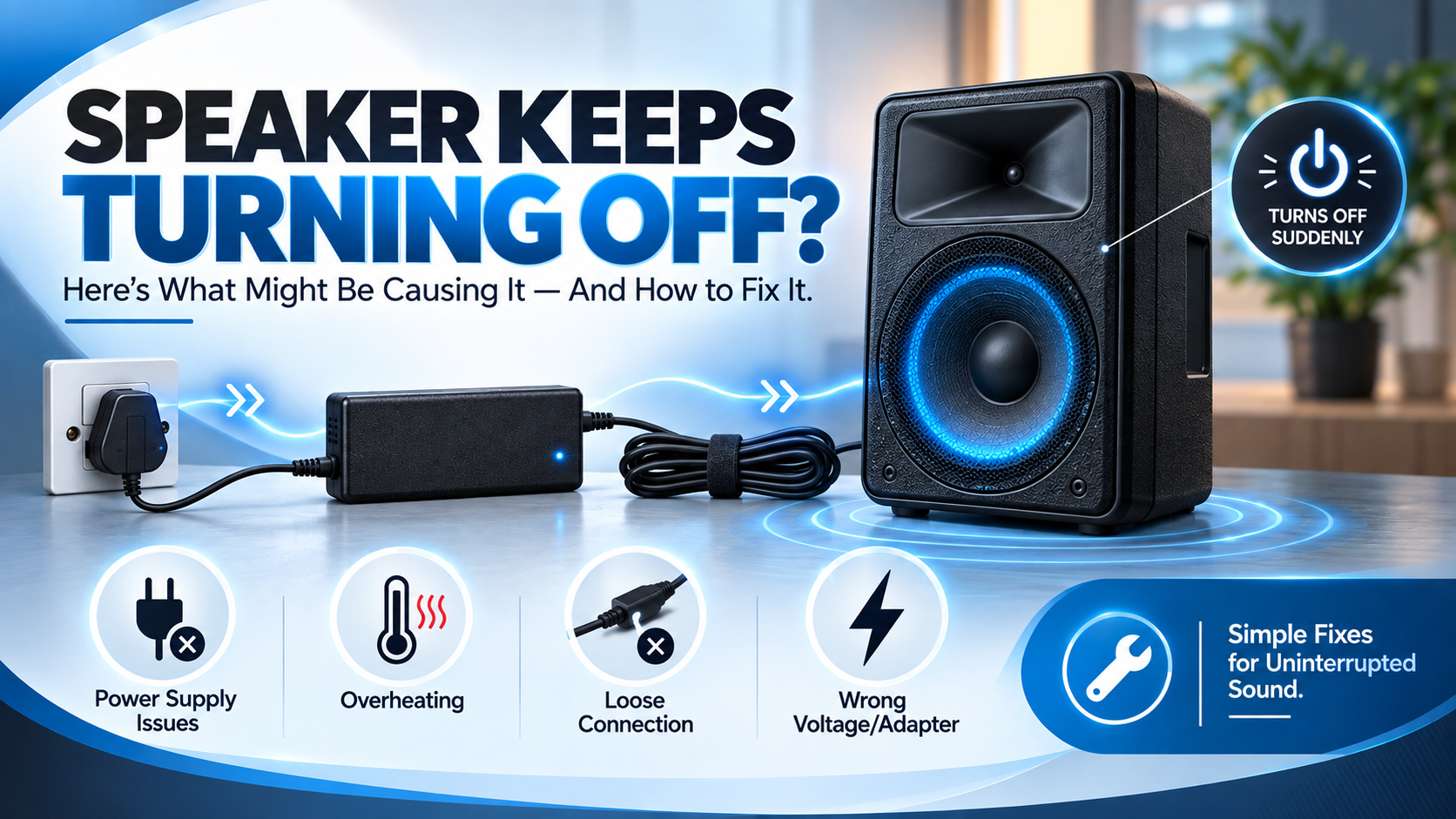
If your powered speaker keeps turning off during music, rehearsals or events, the cause could be a loose connection, a struggling power adapter, overheating or an internal fault.
The good news is that you can often narrow down the problem without immediately assuming the speaker is broken. Start with the power source and adapter, then consider when and how the speaker shuts down.
Check the Power Adapter First
A failing or unsuitable power adapter is one of the first things to check. The adapter must provide the voltage the speaker expects and enough current for normal operation.
If the adapter is ageing, damaged or struggling under load, the speaker may work normally for a while before switching off, particularly at higher volume.
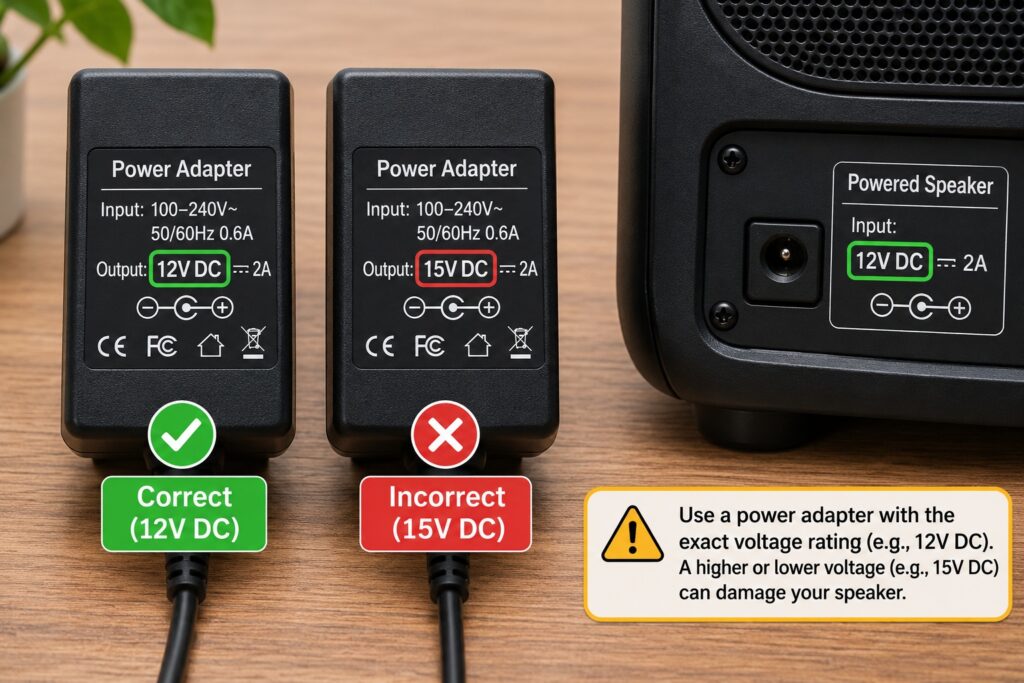
Check the adapter label against the speaker’s requirements. If the speaker requires 12V DC, for example, the replacement should provide 12V output and sufficient current.
A model-specific replacement can make this easier. Power Adapter Warehouse lists a 12V power adapter compatible with the QTX QR10PA 100W portable PA speaker.
What If Your Powered Speaker Keeps Turning Off at High Volume?
If the speaker stays on at low volume but switches off when you increase the volume, the extra power demand is an important clue. The amplifier can draw more power during louder playback.
An adapter with insufficient current capacity may struggle to maintain stable power, causing the speaker to shut down or restart. However, the speaker could also have thermal protection or an internal amplifier problem.
Try reducing the volume and see whether the shutdown stops. Then check the adapter’s voltage and current specifications.
Power Adapter Warehouse also lists a replacement adapter compatible with the Pyle PPHP1044B Bluetooth PA speaker, showing why speaker-specific compatibility matters.
Could the Powered Speaker Be Overheating?
Yes. Overheating can cause a powered speaker to switch itself off as a protective measure.
If the speaker runs for several minutes and then turns off after becoming noticeably hot, temperature could be involved. The problem may be worse in a warm room, near a wall or when ventilation openings are blocked.
Allow the speaker to cool and make sure air can circulate around it. Avoid covering ventilation areas or placing the speaker directly against heat-producing equipment.
Check the Power Cable and Connector
Sometimes the speaker is fine and the problem is the connection between the adapter and speaker. A damaged cable, loose barrel connector or worn connection can interrupt power unexpectedly.
With the system switched off, inspect the cable for cuts, severe bends or damage around the connector. If the connector feels unusually loose, that is also worth investigating.
Do not assume a plug is correct just because it fits. DC barrel connectors come in different sizes, and polarity must also match.
Can the Wrong Voltage Cause the Speaker to Turn Off?
Yes. An incorrect voltage can cause unpredictable behaviour or potentially damage the speaker’s electronics.
A replacement adapter’s voltage should match the speaker’s stated requirement. Do not choose a higher-voltage adapter because you think it will provide more power.
Amperage works differently. If the voltage is correct, an adapter with a higher current rating can generally provide additional available capacity. For example, a 12V 3A adapter may be suitable for equipment requiring 12V 2A, while a 15V adapter is not suitable simply because it has enough amperage.
What If the Speaker Turns Off After Running for a While?
A delayed shutdown can provide a useful clue. If the speaker runs normally for 30 minutes and then cuts out, consider heat, power delivery or a component that fails as it warms up.
If it switches back on after cooling down, thermal protection becomes more plausible. If it cuts out when the cable is moved, the connection may be the issue.
If the speaker completely loses power despite having the correct adapter and stable mains supply, an internal fault may require professional attention.
Can a Higher-Amp Adapter Help?
A higher-amp adapter can help when the original adapter does not provide enough current capacity, but only if the voltage, connector and polarity are also correct.
For example, if a speaker requires 19V 2A, a compatible 19V 3A adapter may be suitable. The higher current rating does not force 3A into the speaker.
For equipment using a 19V supply, Power Adapter Warehouse has a 19V replacement power adapter compatible with the Positive Grid Spark 40.
However, replacing the adapter is not a guaranteed fix. If the speaker is overheating or has an internal amplifier problem, a new adapter may not solve the shutdown.
Could a Power Connection or Mains Problem Be Responsible?
Yes. Before blaming the speaker or adapter, check the mains connection. Try a working wall socket and make sure the plug is properly connected.
For UK users, the Health and Safety Executive’s electrical safety guidance provides information about electrical risks and safe working practices. Electrical Safety First’s turntables and speakers safety advice also provides useful consumer safety information.
Do not continue using equipment if you notice burning smells, damaged cables, exposed conductors or other obvious electrical hazards.
When Is the Speaker Itself Probably at Fault?
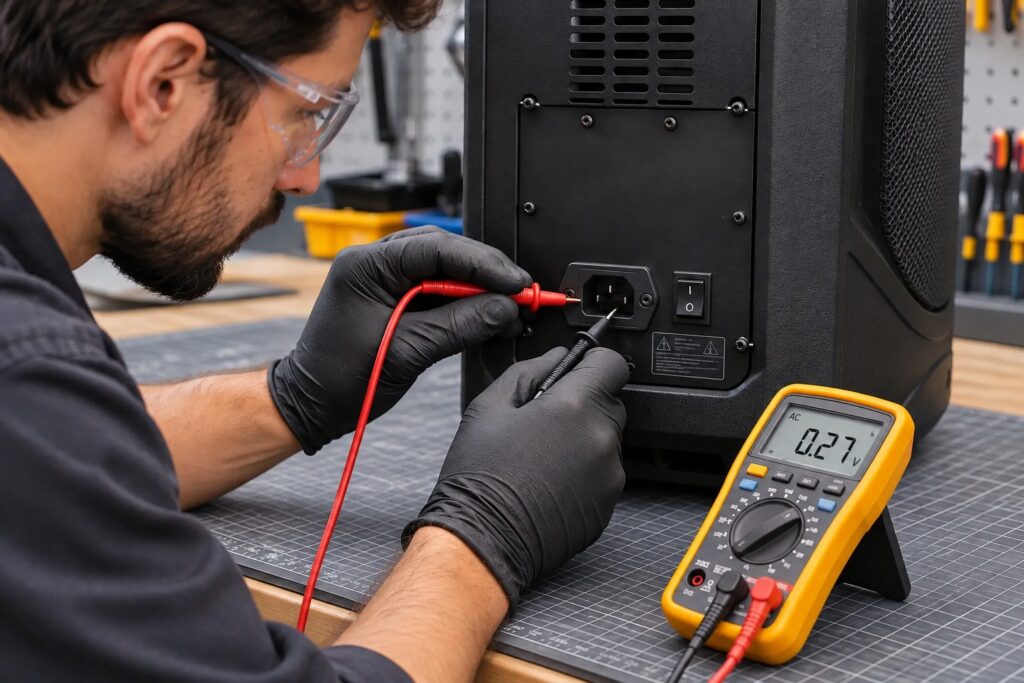
If the mains supply is stable, the adapter matches the speaker’s requirements, the connector is secure and the speaker is not overheating, an internal fault becomes more likely.
The problem could involve the amplifier, internal power circuitry or protection system. Repeatedly swapping random adapters is unlikely to help.
Stop using the speaker if it shows signs of electrical damage or behaves dangerously, and consider having it inspected by a suitably qualified technician.
How to Prevent a Powered Speaker From Turning Off
Use a compatible power adapter with the correct voltage and sufficient current capacity. Keep connectors secure, protect the power cable and provide enough ventilation during long sessions or high-volume use.
When replacing an adapter, use the speaker model and electrical specifications as your starting point. Choosing a compatible replacement is more reliable than selecting one based only on appearance.
Power Adapter Warehouse lists a 20V adapter compatible with JBL Control 2.4G active speakers and a replacement adapter for the Philips DS3100/05 docking speaker.
For UK products, you can also refer to the government’s UKCA marking guidance when considering product conformity information.
Frequently Asked Questions
Why does my powered speaker keep turning off?
Common causes include a failing power adapter, insufficient current capacity, overheating, a loose connector, unstable mains power or an internal fault. Check whether the shutdown happens immediately, at high volume or after extended use.
Why does my powered speaker turn off when I increase the volume?
Higher volume can increase power demand. If the power supply is struggling or the speaker’s internal protection activates, the system may shut down. Check the adapter’s voltage and current rating before replacing it.
Can overheating make a powered speaker turn off?
Yes. Some powered speakers use thermal protection and may shut down when internal temperatures become too high. Check ventilation and allow the speaker to cool before using it again.
Can I use a higher-amp adapter with my powered speaker?
Generally, yes, provided the voltage, connector size and polarity match. A higher current rating gives the adapter greater capacity; it does not normally force additional current into the speaker.
How do I know if the power adapter needs replacing?
Check for visible cable or connector damage, unstable operation, unusual heat or shutdowns that occur under load. Compare the adapter’s voltage and current specifications with the speaker’s requirements. If the adapter is damaged or cannot provide stable power, use a compatible replacement.
Final Thoughts
When a powered speaker keeps turning off, do not immediately assume it needs replacing. Start with the wall socket, power adapter, cable and connector, then consider when the shutdown occurs.
If it happens at high volume, check current capacity. If it happens after extended use, overheating may be involved. If the speaker loses power when the cable moves, investigate the connection.
The right replacement adapter must match the speaker’s voltage, current requirements, connector and polarity. If those checks pass and the speaker still shuts down, the problem may be inside the speaker itself.