

Powered Speaker Adapter: Best Replacement Guide

Finding the correct powered speaker adapter for your portable PA units, studio monitors, and smart practice amps saves you from costly equipment failures and unexpected mid-set dropouts. When a power supply breaks down or goes missing, buying a generic replacement straight off an online marketplace can look tempting. Yet, plugging in the wrong unit risks frying sensitive audio circuits, introducing maddening earth loop hums, or permanently bricking your favourite speaker.
Selecting the correct replacement power supply means looking past generic physical plug shapes and digging into the precise electrical specifications required by your gear. Taking the time to evaluate these details protects your financial investment and ensures uninterrupted audio performance, whether you are running a live mobile DJ gig, practising in a home studio, or setting up a back garden event space. Beyond just keeping the music playing, understanding the synergy between your power adapter and active speaker architecture prevents dangerous thermal events, stabilises low-end frequency reproduction, and extends the operational life of sensitive digital audio components that are otherwise vulnerable to dirty or fluctuating mains power.
What Power Adapter Does a Powered Speaker Need?
Every active sound system or portable PA speaker requires a specific combination of voltage (measured in volts, V) and current (measured in amperes, A or milliamperes, mA) tailored directly to its internal power amplifier board. If you own a high-output portable unit like the 12V power adapter for the QTX QR10PA 100W portable PA speaker, matching the exact voltage output is non-negotiable. Supplying too much voltage can overload internal capacitors and melt circuit board traces instantly, while supplying too little voltage prevents the internal amplifier from drawing the clean current it needs to drive the speaker cone cleanly.
Beyond voltage ratings, you must look closely at barrel connector dimensions, centre polarity configuration (whether the inner pin is positive or negative), and alternating current (AC) versus direct current (DC) conversion requirements. Active speakers demand clean, regulated DC current to avoid introducing high-frequency whine or electrical hum into the audio signal path. A poor quality or mismatched power brick will often bleed mains noise directly into your audio mix, ruining recordings and live performances alike. Furthermore, unshielded cheap adapters can pick up radio frequency interference (RFI) from nearby lighting rigs or wireless microphone transmitters, turning your sound system into an unwanted radio receiver.
Check the Amperage and Wattage
A common misconception when replacing a power supply is that a higher amperage rating will damage your equipment. In reality, the amperage rating listed on a power adapter or a 15V replacement power supply for the QTX QR10PA simply indicates the maximum current the adapter can safely deliver without overheating.
- Voltage (V) Must Match Exactly: Think of voltage as electrical pressure. It must match your speaker’s requirement precisely down to the decimal point to avoid stressing internal components or triggering instant hardware failure.
- Amperage (A) Can Match or Exceed: Think of current capacity as water flow. Your speaker will only draw the amperage it requires. Using an adapter with a higher amp rating is completely safe, provided the voltage matches. Using a lower amp rating, however, forces the adapter to work past its design limits, leading to overheating and potential fire hazards.
- Wattage Calculations: Wattage is calculated by multiplying volts by amperes ($W = V \times A$). Ensuring your power supply matches or exceeds the original wattage specification guarantees peak performance during heavy bass transients and high-volume output peaks.
Failing to account for these dynamic power draws can cause your speakers to clip, distort, or abruptly shut down when you push the volume knobs past the halfway mark, effectively ruining the dynamic range of your audio source material.
Check the Powered Speaker Model
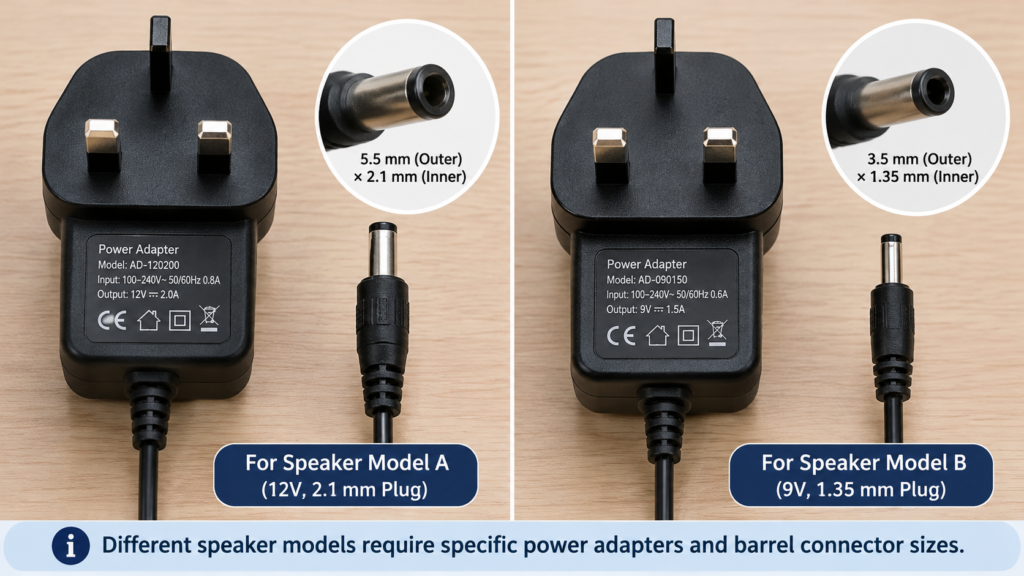
Different brands and even different revisions of the exact same model require completely different power bricks. For example, a heavy-duty portable Bluetooth PA system like the Pyle PPHP1044B power adapter requires a distinct voltage profile compared to specialised studio monitoring setups like the 20V JBL Control 2.4G active speaker adapter.
Cross-referencing your exact speaker model number against the manufacturer data plate ensures you avoid connector mismatches. Even if two power plugs look identical on the outside, a reversed polarity setup, where the inner pin is negative instead of positive, can instantly short-circuit your gear the moment you plug it in. Always verify the manufacturer part number stamped on the original power block before buying a replacement, and never rely solely on generic product photos found on internet storefronts, as many generic housings share identical plastic moulds while hiding vastly different internal wiring configurations.
Can the Wrong Power Adapter Damage a Powered Speaker?
Plugging an unverified, incorrect power brick into an active speaker or smart amplifier, such as running an incompatible supply on a 19V Positive Grid Spark 40 power adapter setup, can lead to catastrophic hardware failure.
When overvoltage occurs, delicate preamplifier chips and digital signal processors (DSPs) absorb the excess energy. This often results in a blown internal fuse, a burnt-out transformer, or permanent component degradation that costs more to repair than purchasing a brand-new speaker. Furthermore, using cheap, uncertified power supplies strips away essential short-circuit and overcurrent protections, exposing your equipment and your workspace to severe electrical safety risks, including potential thermal runaways or electrical fires. Undervoltage, conversely, causes continuous brownout conditions that strain power supply transistors, eventually causing them to fail prematurely and emit a distinct burnt odour during extended practice or performance sessions.
How to Choose a Safe Replacement Powered Speaker Adapter
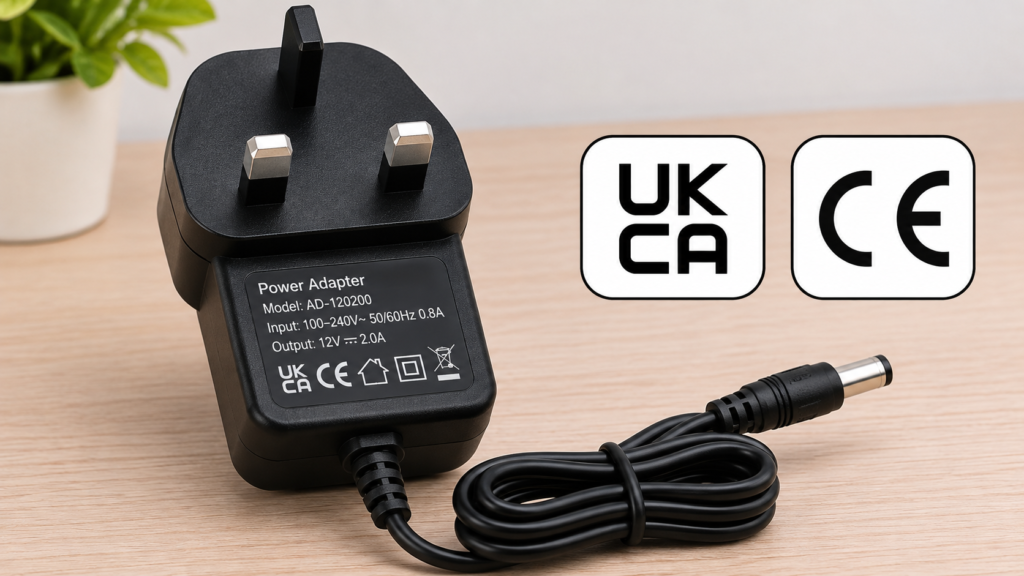
Sourcing a reliable power supply requires adherence to strict safety standards and regulatory marks to protect both your gear and your home environment. When evaluating options, always look for recognised safety compliance markers and consult industry standards, such as HSE electrical safety guidance, which outlines the principles of maintaining safe electrical equipment in any working or performance space.
When importing or purchasing hardware within the UK, verify that the unit complies with UKCA marking guidance on GOV.UK, confirming that the manufacturer has met rigorous health, safety, and environmental protection standards. Finally, when your old power adapter finally reaches the end of its lifespan, ensure it is disposed of responsibly according to UK electrical waste guidance rather than tossing it into standard household refuse. Prioritising certified, model-matched power supplies keeps your audio setup running clean, clear, and safe for years to come.
Frequently Asked Questions
Can I use a laptop charger for my powered speaker if the plug fits?
Never use a laptop charger unless the voltage, amperage, and polarity match your speaker specifications identically. Laptop chargers often output variable voltages or higher currents that can instantly destroy audio amplifier circuits.
What happens if the polarity is reversed on my speaker adapter?
Reversing the polarity sends current through your speaker components in the wrong direction, which usually causes an immediate short circuit, blowing internal fuses or frying delicate microchips.
Does a higher amp rating ruin a speaker?
No, a higher amp rating is completely safe. The speaker only draws the current it needs. Just ensure the voltage matches your original equipment specification perfectly.
How can I find my speaker’s required voltage if the label rubbed off?
Check the area directly surrounding the power input jack on the back of the speaker housing, look up your exact speaker model manual online, or cross-reference the original manufacturer part number to confirm precise electrical requirements.
Are universal power adapters safe to use with active PA speakers?
Universal adapters can work if configured correctly, but they carry a higher risk of accidental voltage switching or tip mismatch. Using a dedicated model-matched power supply is always safer for high-draw audio equipment.
Conclusion
Finding the right replacement powered speaker adapter is about much more than just matching the physical plug size. To protect your valuable audio equipment from catastrophic electrical damage, thermal hazards, or annoying signal noise, you must always ensure that the voltage and polarity match your speaker’s specifications exactly, while confirming the amperage meets or exceeds the original requirements.
Resist the temptation to use spare laptop chargers or cheap, uncertified universal power bricks, as these often lack the necessary electrical shielding and stable DC power delivery required by active PA systems and smart practice amps. By prioritising a model matched power supply with recognised safety certifications, such as the UKCA mark, you will safeguard your financial investment and guarantee crystal clear, uninterrupted sound for every gig, recording, or practice session.