

How to Find the Perfect Electric Keyboard Power Adapter
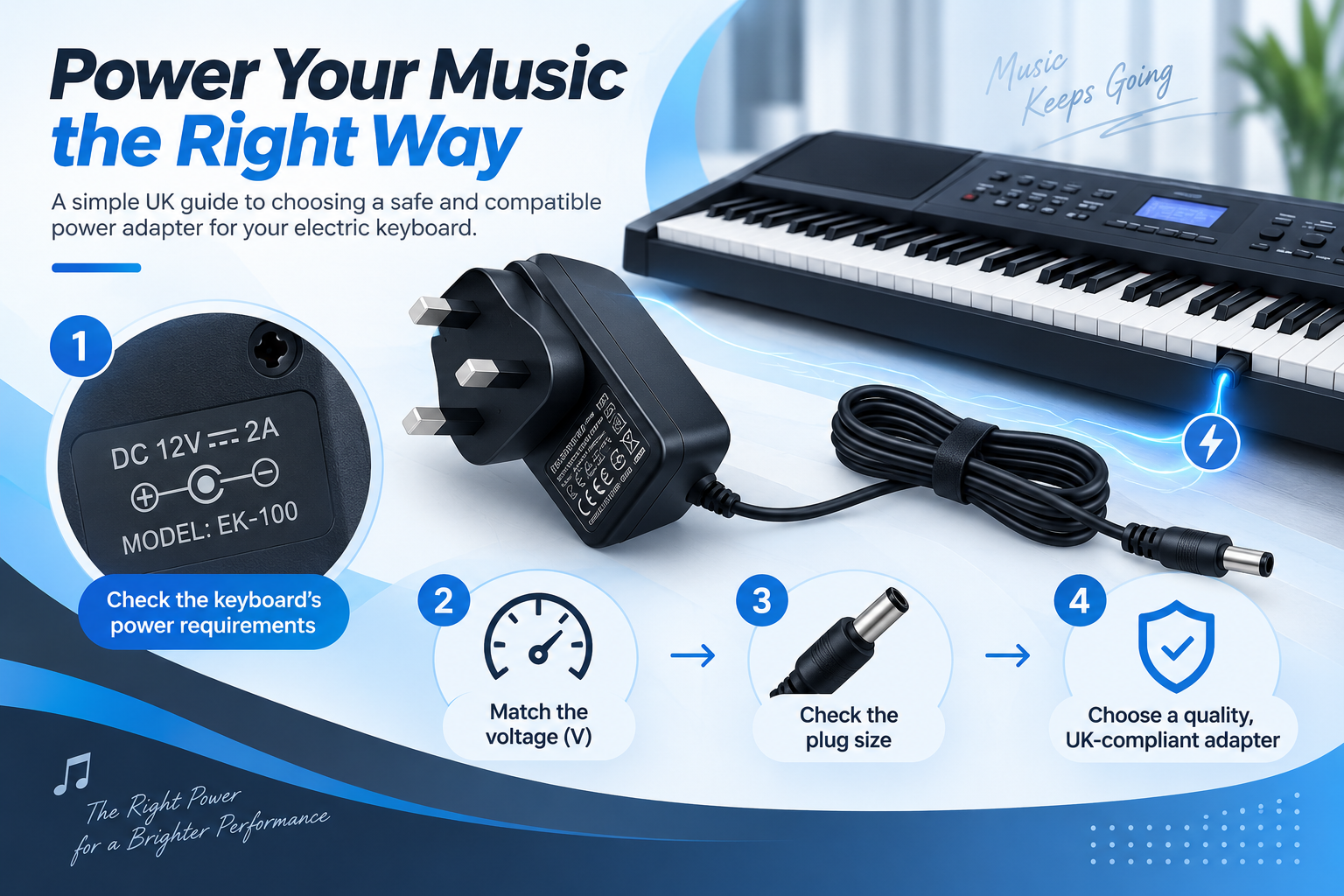
Finding the correct Electric Keyboard Power Adapter protects sensitive internal sound modules, digital synthesisers, and vintage workstations from costly electrical damage. Whether you play a professional digital piano, a stage keyboard, or a portable arranger model during live performances and home practice sessions, matching exact voltage, current capacity, polarity orientation, and physical barrel plug dimensions ensures your instrument receives clean, stable, and regulated power every time you switch it on. Taking the time to understand these technical specifications safeguards your electronic equipment against premature hardware failure, short circuits, and erratic power behaviour.
Locating Your Electric Keyboard Power Adapter Specifications
Electric keyboards feature critical electrical specification data stamped directly onto their bottom chassis casing or printed on recessed labels immediately adjacent to the round DC power input jack. Manufacturers outline the exact direct current voltage, minimum amperage draw, and polarity orientation required to power the device safely without risk of component failure.
Ignoring these vital details and hastily plugging in an incompatible charger can instantly blow internal protection fuses, short-circuit delicate circuit boards, or permanently fry expensive microprocessors. Thoroughly inspecting this physical specification label prevents costly mistakes and ensures you target the exact replacement specification required for your specific instrument model right away. Understanding these core manufacturer guidelines eliminates guesswork when searching for a dependable power solution for your setup, such as the Power Supply Compatible for Casio CTK-671 CTK-680 CTK-691 Keyboard Piano.
Understanding Voltage and Amperage Match Requirements
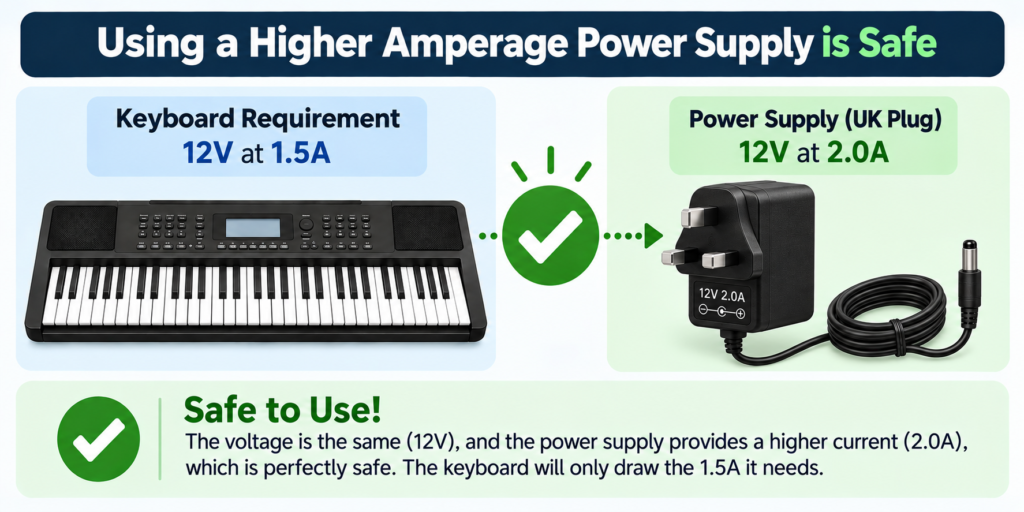
Direct current power distribution systems demand precise voltage delivery because supplying an excessive level of voltage burns out electronic components instantly, while providing insufficient voltage causes operational failure, random reboots, and audio distortion. Voltage must match your electric keyboard’s requirement exactly, whereas amperage measures current delivery capacity rather than forced output.
Selecting a replacement adapter with a higher amp rating is completely safe because electronic equipment only draws the electrical current it demands to function properly. For example, replacing an original 12V 1.5A power unit with a fully regulated 12V 2.0A adapter provides stable, risk-free operation with plenty of thermal overhead for extended playing sessions, ensuring your hardware stays cool, protected, and fully operational under continuous electrical load conditions when using a Replacement Power Adapter Compatible for Casio SA-46 Keyboard.
Verifying Polarity and Barrel Connector Sizing
Most modern and vintage electric keyboards utilise a centre-positive polarity configuration where the inner conductor pin carries positive voltage and the outer barrel shield carries negative return current, as clearly indicated by standard graphical icons near the rear power port. Reversing polarity by using an incorrectly wired adapter can instantly fry internal logic circuits and render your musical instrument completely inoperable.
Additionally, the physical barrel plug dimensions must match your device socket snugly to eliminate intermittent audio buzzing, high-frequency line interference, or sudden power drops during passionate live performances. Ensuring proper physical barrel fitment prevents loose connections from damaging the internal power socket over prolonged periods of frequent travel, professional gigging, and rigorous stage setup when using a Compatible Replacement Power Supply for the Yamaha PSR-640 Keyboard.
Why Avoid Cheap Unregulated Universal Chargers?
Unregulated universal multi-voltage chargers lack proper voltage smoothing circuitry, thermal protection fuses, and line noise filtering, frequently introducing audible electrical hum into audio monitors, headphones, and sound systems while risking equipment failure. Keyboards require exceptionally stable, clean electrical currents to maintain pure sound integrity and prevent digital artefacts. Cheap universal alternative chargers often fluctuate severely under load, causing persistent high-frequency buzzing and failing strict UK electrical safety standards.
Investing in a specialised, fully regulated power supply, such as the Compatible Power Supply for the Yamaha P50m Piano Tone Generator, guarantees clean, uninterrupted current delivery and protects your instrument over years of continuous use, safeguarding your audio output from unwanted interference, hum, and harmonic distortion during recording sessions.
Where to Buy Safe UK Replacement Adapters
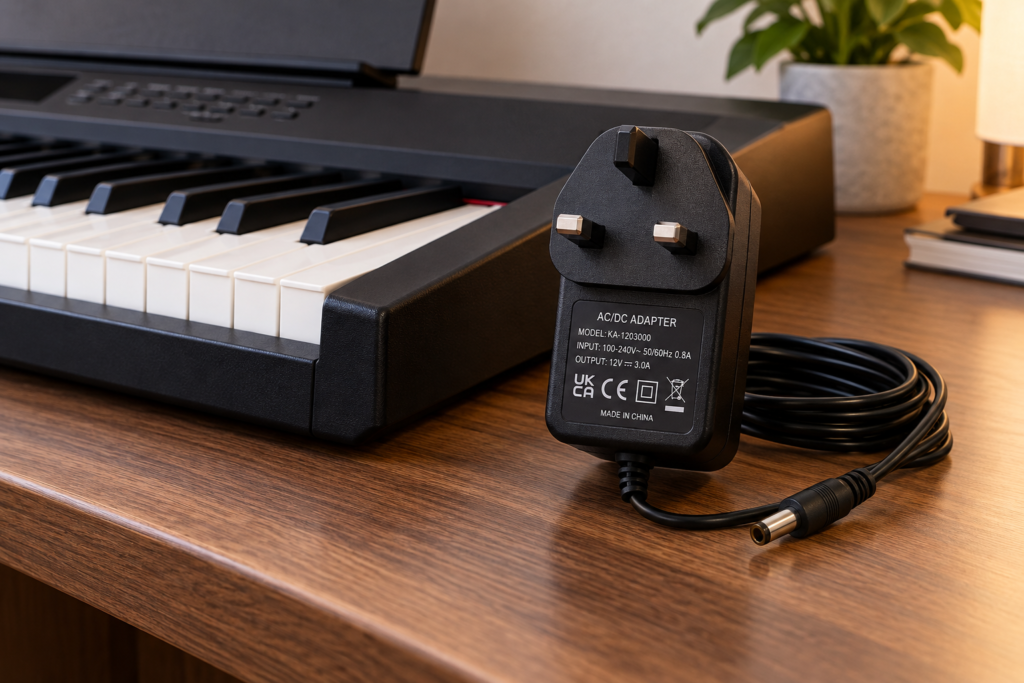
UK musicians can purchase fully safety-tested, compatible replacement power adapters designed specifically for electronic keyboards from trusted local electrical specialists and dedicated suppliers. Sourcing replacement power units from specialised distributors ensures complete compliance with UK electrical regulations, robust short-circuit protection, and cost-effective alternatives to expensive original branded accessories while actively reducing electronic waste.
Players can find reliable, model-specific power units such as the Yamaha PSR Keyboard Power Supply, Casio Keyboard Piano Power Supply, Yamaha Stage Piano Power Unit, Compatible Replacement for Yamaha External AC Power Adaptor Model PA-150A, and Casio SA-46 Keyboard Adapter. Working with dedicated power accessory specialists guarantees you receive the precise connector size and electrical protection needed for your specific instrument brand without any guesswork or risk of component incompatibility.
Frequently Asked Questions
Can I use a laptop charger for my electric keyboard?
No, laptop chargers output much higher voltages and feature different connector types, which will instantly damage an electric keyboard designed for lower voltage inputs. Using incompatible laptop power leads risks a catastrophic electrical failure that can permanently ruin your sound generation hardware.
Why does my electric keyboard buzz when plugged in?
A buzzing sound usually indicates an earth loop issue or an unregulated power supply lacking proper noise filtering and current smoothing components. Switching to a dedicated regulated power adapter eliminates this persistent background noise.
How do I find my keyboard’s power requirements?
Check the recessed label printed on the bottom panel of your electric keyboard or directly next to the round DC power input socket for voltage and amperage details. This manufacturer plate provides the definitive electrical specifications needed for a correct replacement match.
What happens if I use an adapter with higher amps?
Using a power adapter with a higher amp rating is completely safe. Your electric keyboard only draws the exact amount of electrical current it requires to operate, meaning extra amperage capacity remains safely in reserve without causing any internal damage.
Are aftermarket replacement adapters safe to use?
Yes, as long as they are certified for UK use, match the exact voltage and polarity specifications, and feature built-in overload and short-circuit protection. Reputable third-party suppliers rigorously test these units to meet rigorous electrical safety guidelines.
Conclusion
Finding the correct power adapter for your electric keyboard ensures your valuable instrument remains fully protected against electrical damage, power surges, voltage spikes, and unexpected performance issues during critical rehearsals or live sets. By systematically verifying required voltage, matching current amperage capacity, checking polarity orientation, and selecting trusted UK-compliant replacement units, you guarantee reliable, buzz-free operation for your entire home studio or live music setup while extending the functional lifespan of your electronic gear for years to come.