

Digital Piano Power Adapter: Perfect UK Replacement Guide

Finding the correct replacement digital piano power adapter protects your instrument’s internal sound modules and prevents electrical damage. Whether you play a Yamaha, Casio, or Roland keyboard, understanding voltage, amperage, and polarity ensures you select a safe, reliable power supply that keeps your music playing seamlessly. By avoiding the hidden dangers of cheap universal chargers, you can confidently invest in a proper UK certified solution.
Understanding Voltage and Amperage Requirements
Digital pianos require an exact voltage match to their manufacturer specifications, typically 9V, 12V, or 15V DC, while their amperage rating must match or exceed the keyboard’s power draw requirement. Digital pianos operate on direct current supplied by external mains adapters. The voltage printed on your piano’s rear panel or power port must match the adapter output precisely; higher voltage burns out internal circuits, while lower voltage causes operational failure.
Amperage represents current capacity, meaning an adapter with a higher amp rating is completely safe because the piano only draws the exact current it needs. For example, if a Casio digital piano specifies 12V 1.5A, you can safely use a 12V 2A replacement adapter, but plugging in a 19V laptop charger permanently ruins the motherboard.
The Critical Role of Polarity on Keyboard Power Supplies
Most digital pianos use centre-positive polarity, meaning the inner pin of the barrel connector carries positive voltage while the outer sleeve carries negative current. Reversing polarity instantly damages electronic components or blows internal fuses. Instrument manufacturers stamp a small graphical symbol near the DC input socket showing a circle with a dot in the middle connected to a plus sign and outer lines connected to a minus sign. Always verify this symbol matches your chosen adapter. A musician replacing a lost power supply for a Yamaha stage piano must inspect the polarity diagram to ensure the barrel plug configuration matches standard audio equipment wiring.
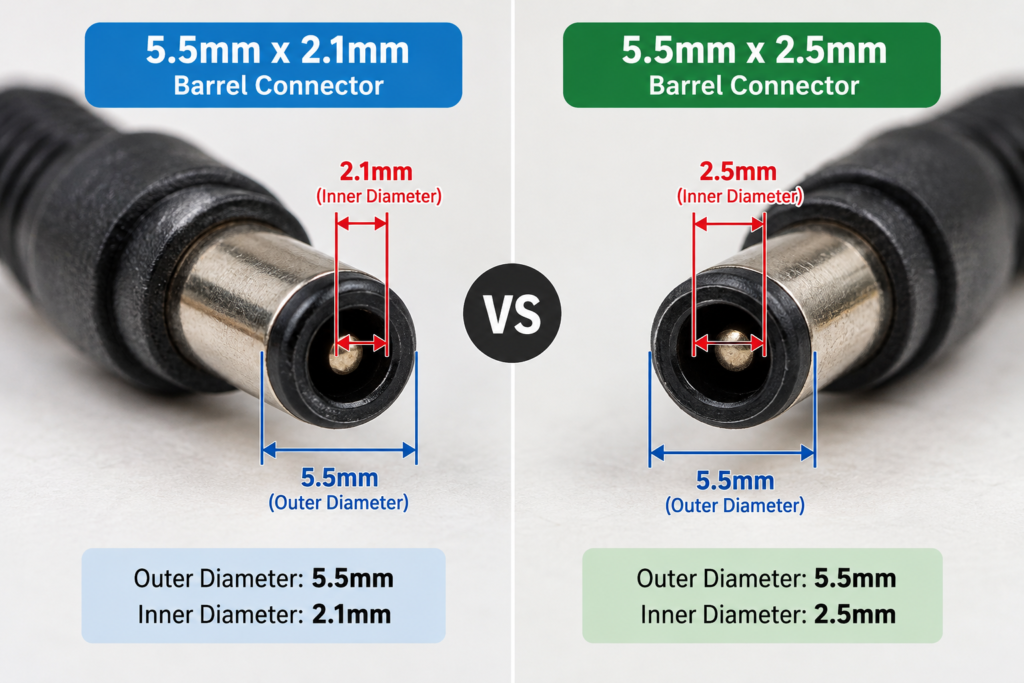
Choosing the Right Barrel Connector Size
A compatible digital piano power adapter requires a barrel connector that matches the exact inner and outer diameter of the instrument’s power socket, commonly 5.5mm x 2.1mm or 5.5mm x 2.5mm. Even if voltage and polarity are correct, a loose barrel plug causes intermittent power cuts, buzzing audio interference, or failure to make electrical contact. Selecting a dedicated compatible replacement adapter ensures a snug, secure fit into the DC socket. Connecting an ill-fitting generic multi-voltage adapter causes your digital piano to cut out mid-performance whenever the cable shifts slightly.
Why Avoid Cheap Universal Chargers?
Cheap, unbranded universal chargers often lack stable voltage regulation and proper surge protection, introducing electrical hum and risking permanent damage to sensitive musical equipment. Digital pianos contain sensitive microprocessors and digital-to-analogue converters requiring clean, steady power. Unregulated universal adapters introduce mains hum into audio monitors and fail UK safety standards. Investing in a specialised replacement power supply guarantees stable power delivery. A studio keyboardist experiencing high-frequency buzzing through their speakers discovered the noise disappeared entirely after switching from a generic multi-plug adapter to a dedicated regulated power supply.
Additionally, unbranded models frequently bypass mandatory UK electrical safety testing, lacking crucial certifications like the UKCA or CE marks. These substandard units often use inferior plastic casings that can overheat, warp, or even melt during extended practice sessions. Relying on these cheap alternatives puts both your expensive keyboard and your home’s electrical circuitry at severe risk of electrical fires or catastrophic short circuits.
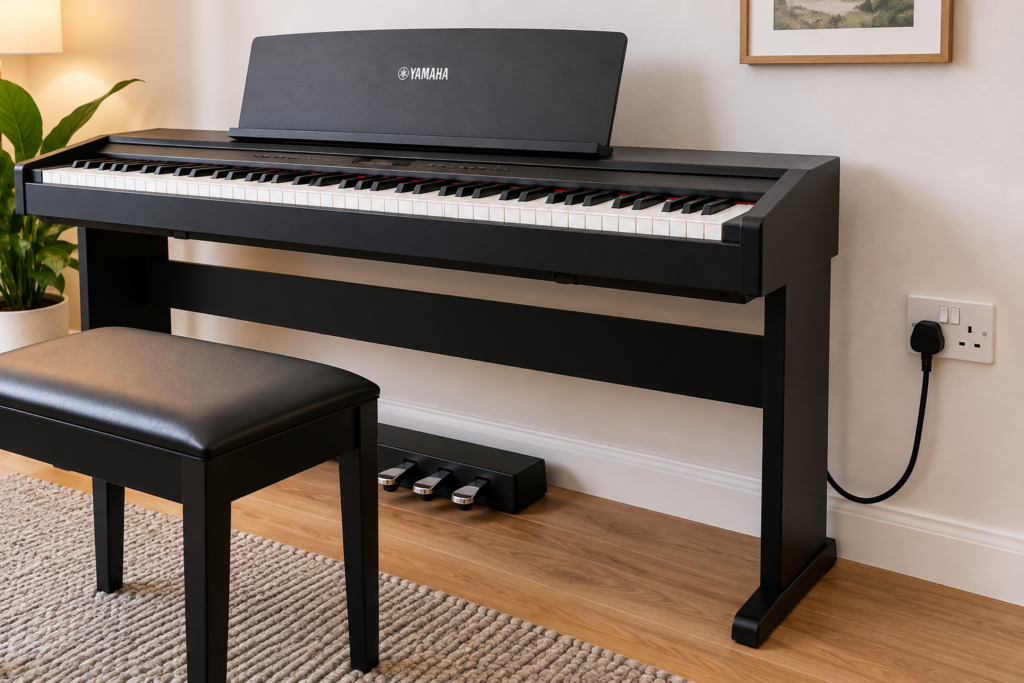
Where to Buy a Safe UK Replacement Digital Piano Power Adapter
UK consumers can purchase fully safety-tested, compatible replacement power adapters designed specifically for digital pianos and musical instruments from specialised suppliers. Buying from a trusted local specialist ensures your adapter meets UK electrical safety regulations, features built-in short-circuit protection, and matches your exact instrument brand. This provides a reliable, cost-effective alternative to expensive original manufacturer branding while reducing electronic waste. Musicians needing a reliable power lead can explore dedicated options like the Yamaha PSR Keyboard Power Supply, Casio Keyboard Piano Power Supply, Yamaha Stage Piano Power Unit, Yamaha PA-150 Replacement Adaptor, and Casio SA-46 Keyboard Adapter.
How to Care for Your Digital Piano Power Adapter
Once you purchase a compatible digital piano power adapter, proper cable management ensures its longevity and prevents premature failure. The most common cause of power supply death is internal wire fraying near the DC input socket or the mains plug base. Never wrap the power lead tightly around the heavy adapter block, as this places severe stress on the fragile internal copper wiring. Instead, use the ‘over under’ coiling method and secure the loose loop with a Velcro cable tie.
Furthermore, avoid stretching the cable across high traffic walkways where it can be tripped over, yanked from the wall, or rolled over by studio chairs. If your musical setup requires a longer reach, invest in a safe, high quality UK mains extension lead rather than placing tension on the adapter’s cord. Keeping the power unit well ventilated on a hard surface rather than buried under carpets or stage blankets also prevents thermal throttling and extends the lifespan of the internal capacitors.
Frequently Asked Questions
Can I use a laptop charger for my digital piano?
No, laptop chargers output much higher voltages and different connector types, which will instantly damage a digital piano designed for 9V or 12V power inputs.
What happens if I use an adapter with higher amps?
Using a power adapter with a higher amp rating is completely safe. Your digital piano only draws the exact amount of electrical current it requires to operate.
How do I find my keyboard’s power requirements?
Check the recessed label printed on the bottom panel of your digital piano or directly next to the round DC power input socket for voltage and amperage details.
Are third-party replacement adapters safe to use?
Yes, as long as they are certified for UK use, match the exact voltage and polarity specifications, and feature built-in overload and short-circuit protection.
Why does my digital piano buzz when plugged in?
A buzzing sound usually indicates an earth loop or an unregulated power supply lacking proper noise filtering and current smoothing components.
Conclusion
Selecting the correct power adapter for your digital piano safeguards your instrument against electrical faults and performance issues. By verifying voltage, matching amperage, checking polarity, and choosing reliable UK replacement units, you ensure long-lasting durability for your musical setup.