

15V Power Adapter Failure: Why It Happens & Proven Fixes
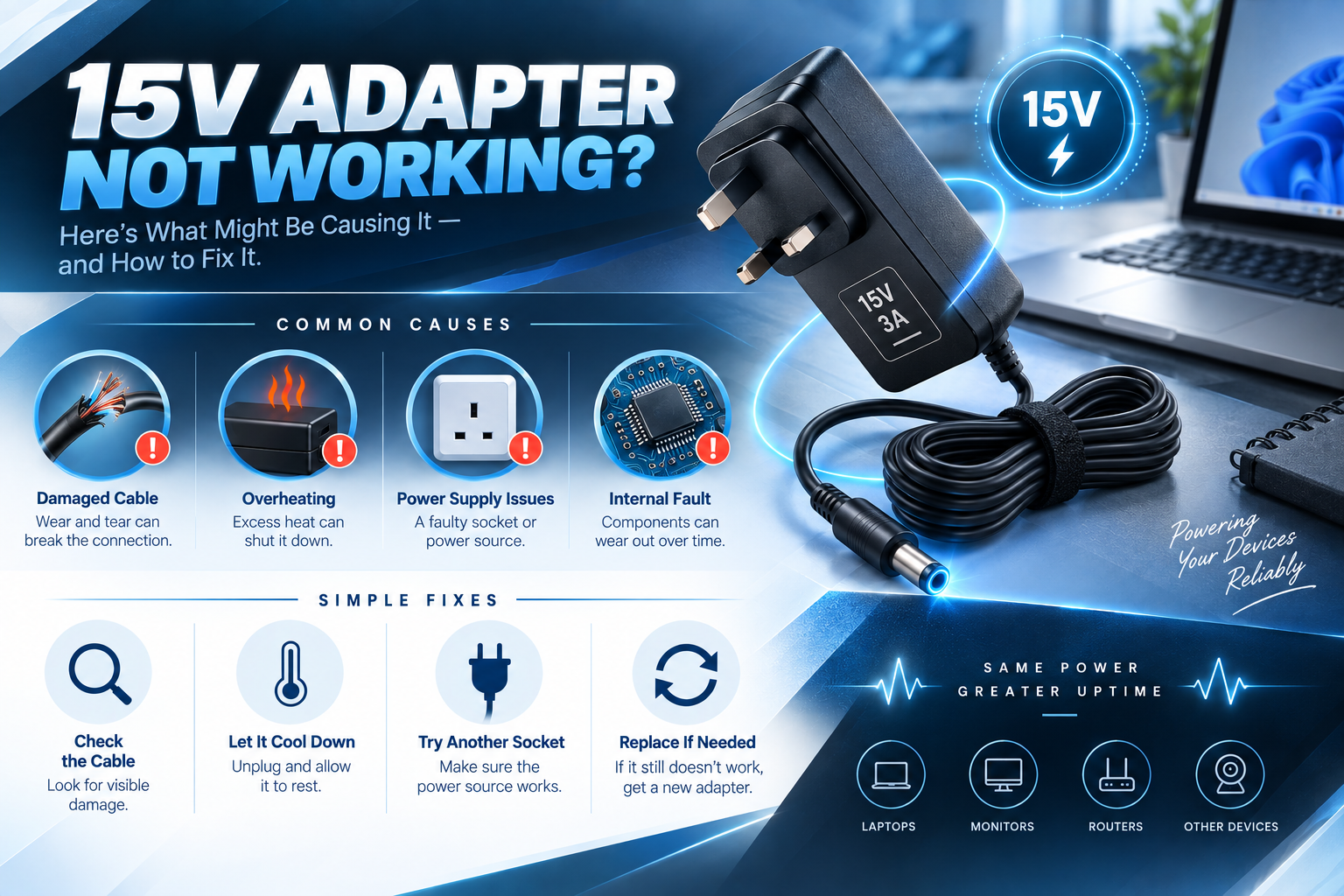
A 15V power adapter failure usually happens because of overheating, overload, damaged cables or connectors, power surges, internal component failure, or age. Before replacing it, check whether the adapter or the equipment is actually at fault. Inspect the mains connection, cable, connector and device input first.
A failed adapter does not always mean the power supply itself is faulty. A damaged wall socket, overloaded supply, loose connector or problem inside the connected equipment can produce similar symptoms. Identifying the likely cause first can help you avoid buying the wrong replacement or continuing to use an unsafe adapter.
Check the Mains Supply First
Before assuming the adapter has failed, make sure the wall socket works. Try another appliance or move the adapter to a known working socket. Check any extension lead or extension block as well.
If the adapter has an indicator light, check whether it illuminates. No light does not always prove failure because some power supplies have no indicator.
Overheating Can Cause a 15V Power Adapter Failure
Heat is one of the most common reasons a power adapter stops working. Every adapter produces some heat during operation, but excessive temperature can stress internal components. Poor ventilation, being covered by clothing or placed against another heat source can make the problem worse.
An adapter can also overheat when the equipment draws more current than the supply can provide. Repeated overheating can shorten component life.
If a 15V adapter becomes unusually hot, smells burnt, makes abnormal noises or shows signs of melting, unplug it and replace it rather than continuing to test it.
The Adapter May Be Overloaded
Voltage and current ratings both matter. A 15V adapter should provide the required voltage and sufficient current capacity.
For example, if equipment requires 15V 2A, a 15V 1A adapter can become overloaded, run hot or shut down.
A higher current rating is generally acceptable when the voltage, connector, polarity and output type all match. The device draws the current it needs rather than automatically receiving the adapter’s full rated current.
Check the Cable and Connector
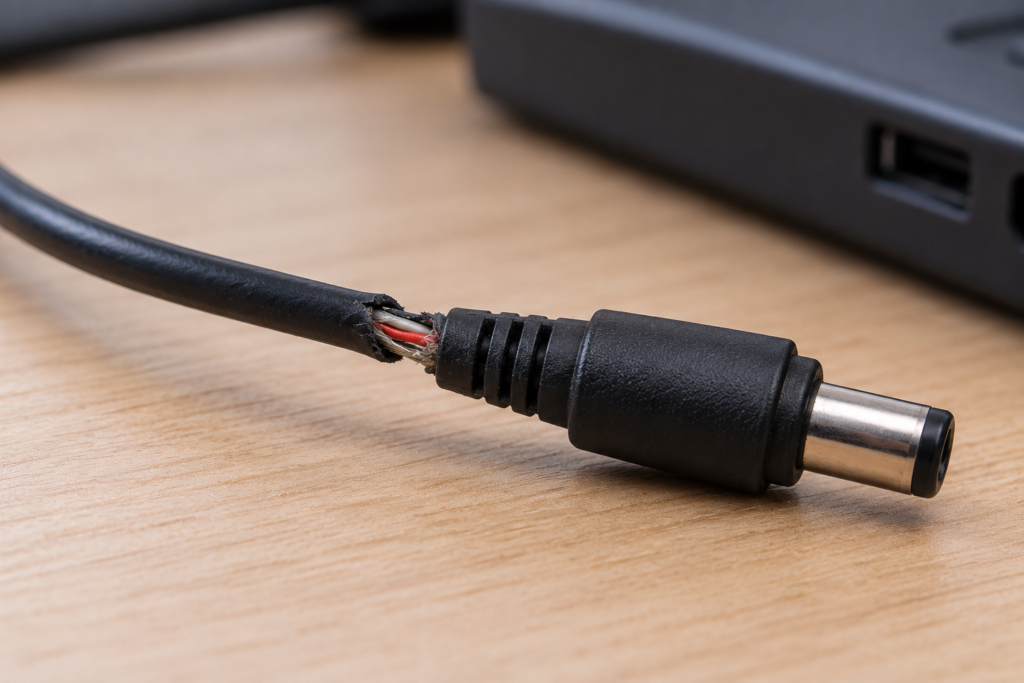
The adapter itself may still be functional while its cable or connector has failed. Repeated bending near the adapter housing or plug can break internal conductors. A connector can also become loose, bent, corroded or physically damaged.
Inspect the cable for cuts, exposed wires, crushed sections or unusual warmth. Check the connector for damage and make sure it fits securely without force.
If moving the cable causes the equipment to switch on and off, stop using the adapter. An intermittent connection can create unreliable power.
A Power Surge Can Damage the Adapter
Power adapters contain electronic components that can be damaged by electrical surges. A surge can cause immediate failure or weaken components until the adapter fails later.
The Equipment Could Be the Real Problem
A dead adapter is not always the cause of a device that will not turn on. The equipment itself may have a damaged input socket, internal power circuit or other fault.
A compatible adapter can help determine whether the equipment is at fault. Never use one simply because its plug fits. Confirm voltage, current, polarity and AC or DC output first.
If a compatible adapter also fails to power the equipment, the device may need further diagnosis.
Age Can Cause Failure
Power adapters do not last forever. Internal components can deteriorate after years of use, especially when the unit regularly operates under heavy load or high temperatures. Intermittent power, unusual buzzing, increased heat or repeated restarts can indicate an ageing supply. When these symptoms appear, replacing the adapter with a specified unit is often more practical than continuing to use an unreliable one.
How to Choose the Correct 15V Replacement
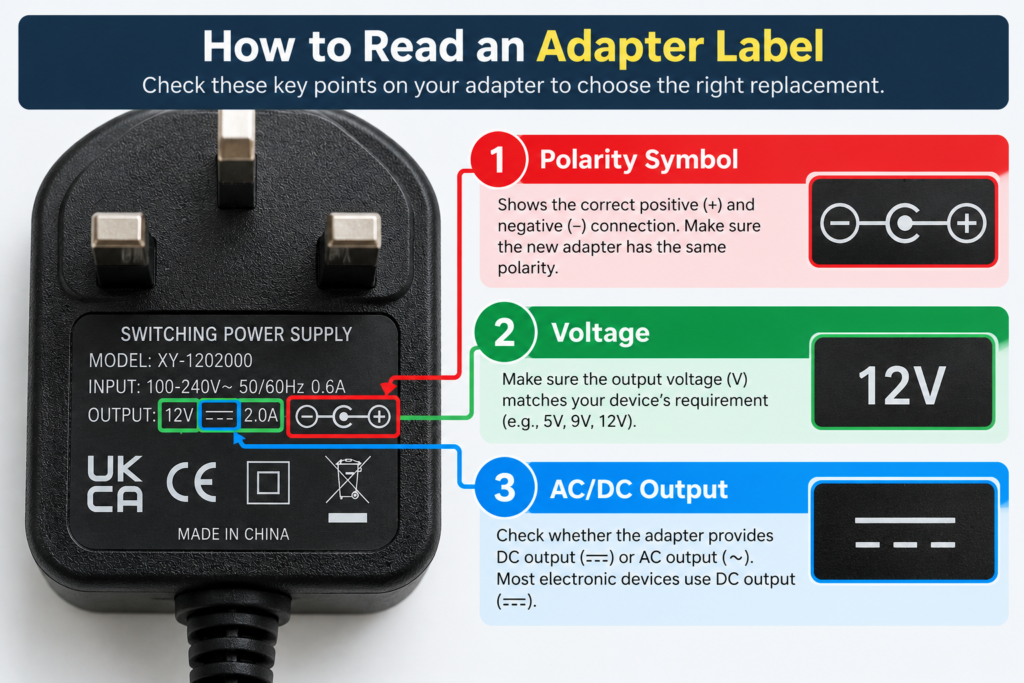
When replacing a failed adapter, do not choose one based on “15V” alone. Compare the specification with the equipment requirements.
Check:
- Output voltage
- Current rating
- AC or DC output
- Connector dimensions
- Connector polarity
- Device model compatibility
For example, a 15V 2A AC/DC replacement adapter may suit equipment requiring those specifications, but connector and polarity must still match.
If your equipment requires a lower current rating, a 15V 1A replacement power supply may be more appropriate. Higher-demand equipment may require a 15V 3A AC/DC replacement adapter.
A 15V power adapter should still be selected according to the equipment’s complete requirements. A model-specific specified replacement can be useful when the original adapter is unavailable.
15V Adapter Troubleshooting Checklist
Before buying a replacement, work through these checks:
- Confirm the wall socket works.
- Inspect the adapter for burns, cracks or unusual swelling.
- Check the cable for cuts, exposed conductors or severe bending.
- Inspect the connector for physical damage.
- Confirm the equipment’s required voltage.
- Confirm the required current capacity.
- Check whether the output must be AC or DC.
- Verify connector polarity.
- Confirm the replacement connector fits correctly.
- Stop using any adapter that becomes dangerously hot, smells burnt or shows visible damage.
These checks can help distinguish an adapter fault from a problem elsewhere.
When Should You Replace a 15V Power Adapter?
Replace the adapter if it has visible damage, repeatedly shuts down, produces abnormal smells or sounds, becomes excessively hot, or no longer provides stable power.
For most consumers, replacement is safer than opening a mains-powered adapter. Choose a replacement that matches the original specifications. UK electrical safety guidance from the Health and Safety Executive provides additional information about electrical safety.
FAQs
Can a 15V adapter stop working because it is too hot?
Yes. Excessive heat can stress components and cause shutdown or permanent failure.
Can a 15V 1A adapter power a device requiring 15V 2A?
It is not recommended because the supply may be overloaded and overheat.
Is a higher-amp 15V adapter safer?
It can be suitable when voltage, connector, polarity and output type all match.
Why does equipment keep restarting with a 15V adapter?
An overloaded or failing adapter can cause unstable power, although the equipment may also be faulty.
Should I repair a failed 15V power adapter?
For consumers, replacement is safer than opening a mains-powered adapter. Match the complete specification.
Conclusion
A 15V power adapter can stop working for several reasons, including overheating, overload, cable damage, connector problems, power surges, internal component failure and age. First identify whether the adapter is actually faulty before buying a replacement.
Start with the simple checks, then compare the adapter’s complete specification with your equipment. Voltage must match, current capacity must be sufficient, and connector size, polarity and output type must also be correct. If the adapter shows dangerous heat, burning, physical damage or unstable operation, stop using it and choose a compatible replacement adapter instead.