


Wondering what makes a 5V power adapter get hot? While some warmth is normal during operation, excessive heat can indicate heavy loading, poor ventilation, damage, or an unsuitable replacement. Understanding what makes a 5V power adapter get hot helps you determine whether the temperature is safe or if the power supply needs attention.
Is It Normal for a 5V Power Adapter to Get Warm?
Yes. Some heat is normal because an adapter converts mains electricity into the lower-voltage output required by electronic equipment. The conversion is not perfectly efficient, so some energy becomes heat.
A warm adapter is not automatically faulty. What matters is how hot it becomes and whether the temperature is accompanied by other warning signs. Unusual smells, buzzing, discolouration, damaged plastic or intermittent power should not be ignored.
Why Does a 5V power adapter get hot?
One common reason is the amount of power the adapter is processing. A 5V 1A adapter has a theoretical output of 5 watts, while a 5V 2A adapter can provide up to 10 watts. Actual heat depends on efficiency, load and the adapter’s design.
A supply operating close to its limits for long periods may run warmer than one with comfortable capacity. A 5V 2A mains AC/DC adapter can illustrate the difference in available current capacity, but the rating alone does not determine operating temperature.
For background on the relationship between electrical power and energy, see OpenStax’s electric power guidance.
Can an Undersized 5V Adapter Overheat?
Yes. If the device requires more current than the adapter is designed to provide, the supply may be forced beyond its intended capacity.
For instance, using a 5V 600mA adapter for equipment that can require 1A is not an appropriate replacement simply because both provide 5V. The lower capacity can contribute to unstable operation and excessive stress.
A 5V 600mA AC power adapter is a useful example of a lower-current supply that should only be used where the connected equipment’s requirements are compatible.
Does a Higher-Amp 5V Adapter Run Cooler?
Not necessarily, although it can provide more available capacity.
If a device requires 5V 1A, a 5V 2A adapter has more current capacity while the device normally draws only what it needs. It may therefore have more headroom than a lower-rated supply.
A 5V 2A power adapter with UK plug can be considered when the device specifically requires 5V and the connector, polarity and other specifications also match.
However, current capacity alone does not determine temperature. Efficiency, component quality, ventilation and actual load also matter.
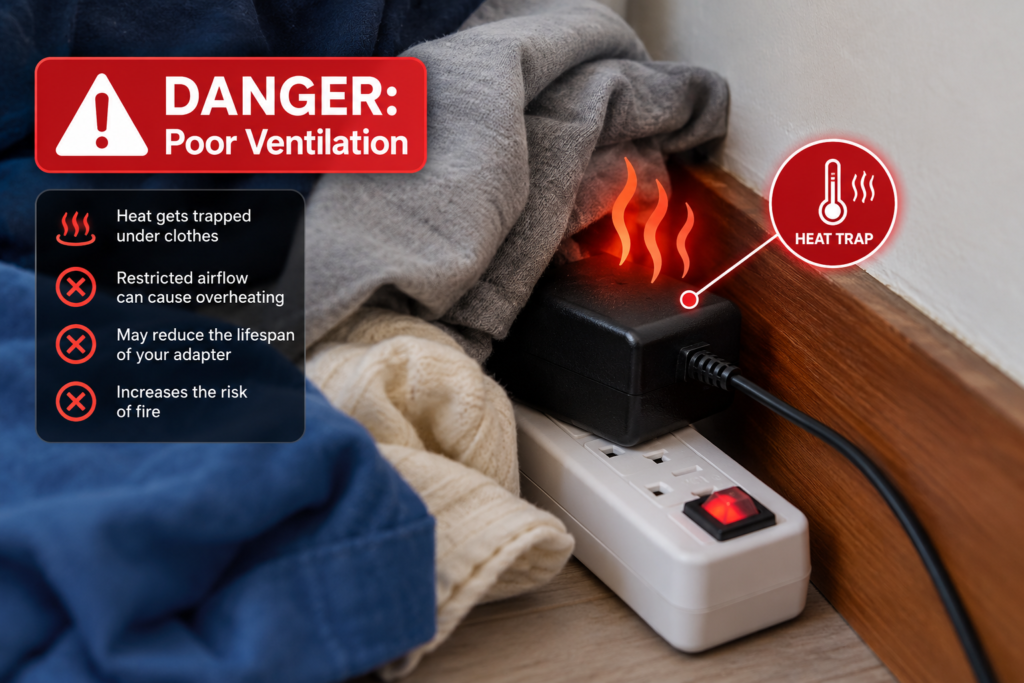
Can Poor Ventilation Make a 5V Adapter Hotter?
Yes. Heat needs somewhere to go.
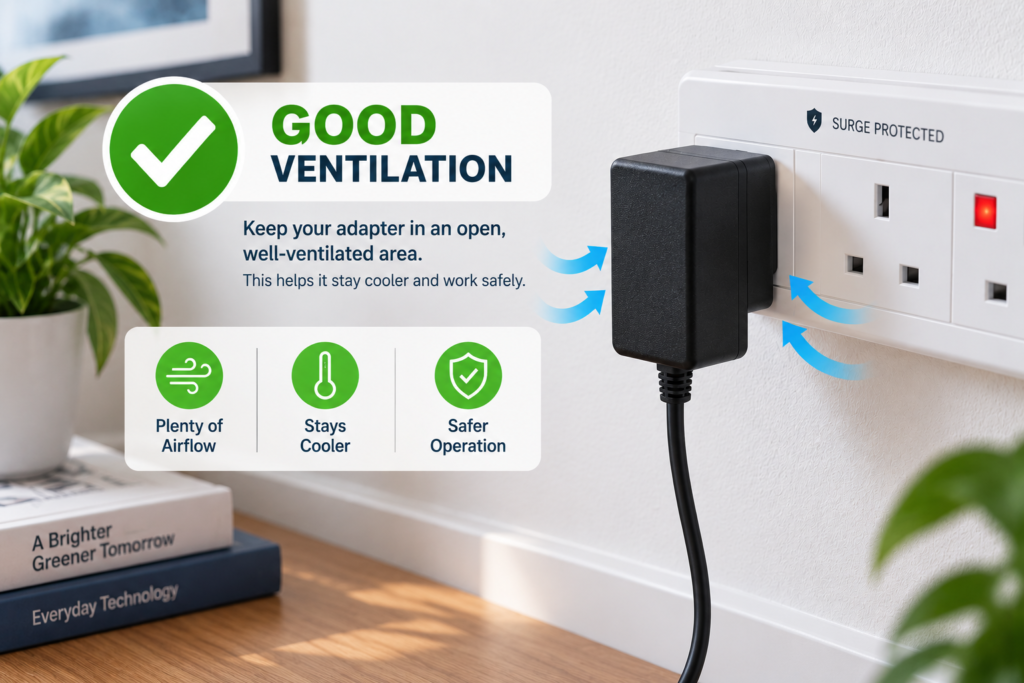
An adapter under clothing, inside a crowded cabinet, behind furniture or against another heat-producing device may not dissipate heat effectively. Restricted airflow can cause heat to accumulate around the housing and internal components.
Keep the adapter in an open, ventilated position. Avoid covering it or placing it near radiators, heaters or other significant heat sources.
Can a Faulty Adapter Get Hot?
Yes. Excessive heat can be a warning sign of internal damage or component failure.
Stop using an adapter if it becomes unusually hot or develops a burning smell, smoke, melted plastic, cracking, repeated buzzing or discolouration.
Do not open a mains-powered adapter yourself. Internal components can retain dangerous electrical energy after disconnection. Electrical Safety First’s power-adapter guidance also provides consumer safety information.
If damaged, replace it with a correctly specified supply rather than attempting an internal repair.
Can the Wrong 5V Adapter Cause Excessive Heat?
Yes. Matching the voltage alone is not enough.
A replacement also needs the correct output type, adequate current capacity, connector and polarity where applicable. A connector that fits physically may still be electrically unsuitable.
For example, a 5V adapter with a Micro-USB connector is not automatically interchangeable with a 5V adapter using a particular DC barrel connector. Connector type needs to be checked alongside electrical ratings.
The safest approach is to compare the original adapter label with the device manufacturer’s requirements before purchasing a replacement.
Does Polarity Matter When Replacing a Hot Adapter?
Yes. If the device uses a DC barrel connector, check the polarity before connecting a replacement.
Centre-positive is common, but centre-negative configurations also exist. The polarity symbol on the original adapter, device label or manufacturer documentation can show the required arrangement.
A connector can physically fit while having the wrong polarity. Therefore, physical compatibility is not enough.
What Should You Do If Your 5V Adapter Is Very Hot?
First, disconnect the adapter if it is excessively hot or showing warning signs. Allow it to cool.
Then compare the original adapter label with the device requirements. Confirm voltage, current capacity, connector and polarity where applicable.
Inspect the cable, plug and housing for damage. Check ventilation and whether the device is drawing more power than expected.
If the adapter remains unusually hot, replace it with a correctly specified quality adapter rather than continuing to test it.
How Can You Reduce 5V Adapter Heat?
Use an adapter with appropriate current capacity and keep it well ventilated. Do not cover it or place it against other heat-producing equipment.
Avoid damaged supplies or products with unknown specifications. A properly matched replacement should provide 5V output and sufficient current capacity.
A 5V 2A switch-mode power supply adapter is relevant when considering modern power-conversion designs. More capacity or a switch-mode design does not automatically guarantee lower temperatures, but the correct rating and efficient conversion can help the supply operate appropriately for its intended load.
5V Power Adapter Heat: What Should You Check?
Before assuming a hot adapter is faulty, check:
- Is the adapter only warm, or unusually hot?
- Does the device require more current than the adapter can provide?
- Is the adapter covered or poorly ventilated?
- Is the adapter damaged or producing an unusual smell?
- Does the output voltage match the device requirement?
- Does the connector and polarity match?
- Is the replacement from a reputable source?
A 5V 800mA switching adaptor is another example of a lower-current supply that should be matched carefully to the equipment’s requirements.
For UK product-marking information, see GOV.UK UKCA marking guidance.
FAQs
Is it normal for a 5V power adapter to get warm?
Yes. Some warmth is normal during energy conversion. Excessive heat, burning smells, smoke or damaged housing are warning signs.
Why does my 5V adapter get extremely hot?
Possible causes include excessive load, inadequate ventilation, internal faults, damage or an unsuitable adapter.
Can I use a higher-amp 5V adapter?
Often, yes, if the voltage, connector, polarity and other specifications match. A higher current rating provides more available capacity.
Should I unplug a very hot power adapter?
Yes. If it is excessively hot or showing warning signs, disconnect it and allow it to cool. Replace it if the problem continues.
Can a hot 5V adapter damage a device?
Excessive heat can indicate a problem with the adapter or power setup. Continuing to use an abnormally hot supply can increase equipment and safety risks.
Conclusion
A 5V power adapter getting slightly warm can be normal because electrical energy conversion produces heat. The concern is excessive or rapidly increasing temperature, especially with unusual smells, buzzing, damaged plastic, smoke or intermittent operation.
Check the load, current capacity, ventilation and condition. Confirm that any replacement matches voltage, connector, output type and polarity.
If a 5V adapter becomes unusually hot during normal use, do not ignore it. Disconnect it when necessary and replace a faulty or unsuitable supply.