

Best 9V Guitar Effects Pedal Power Adapters: Complete Buying Guide
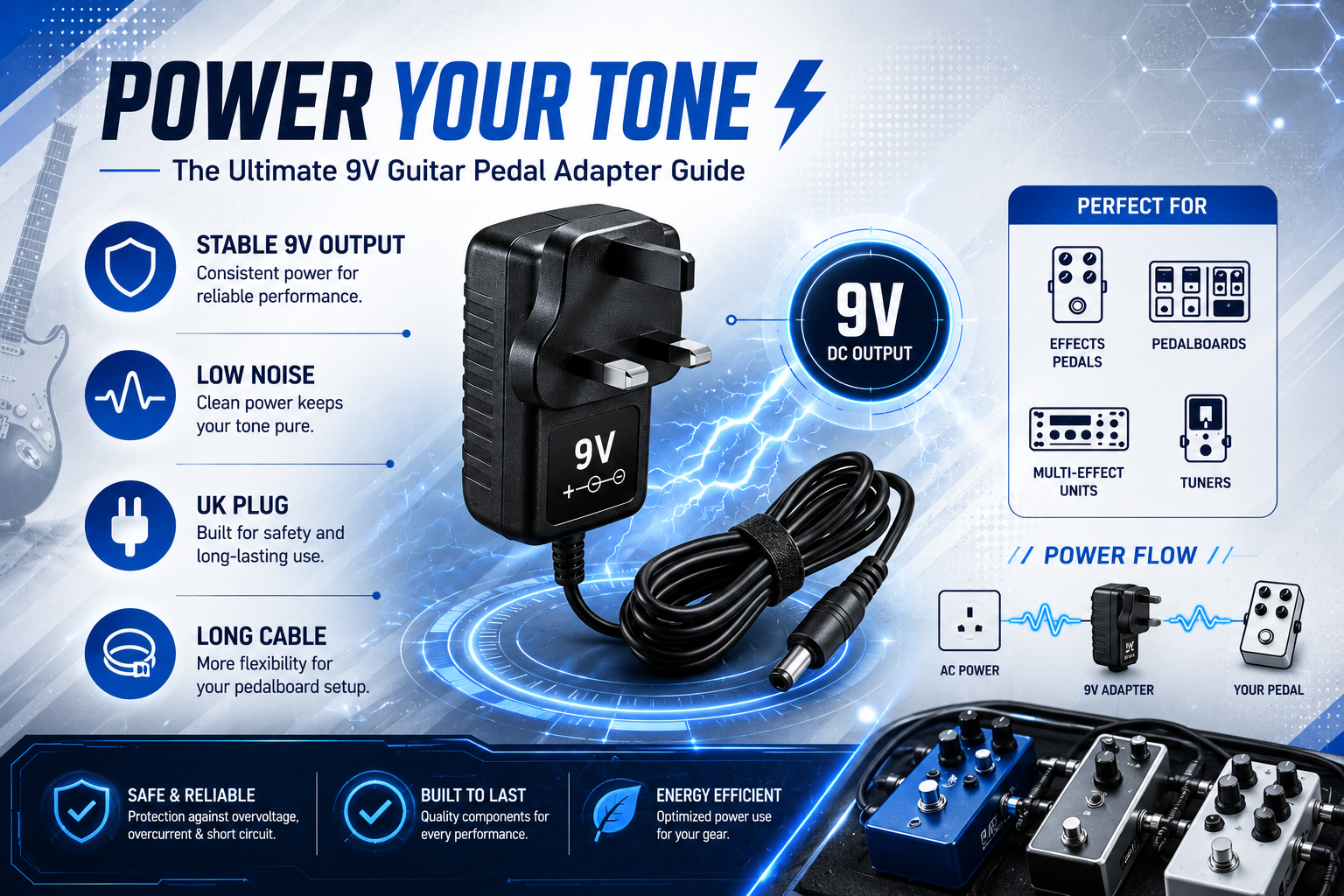
Choosing a 9V guitar effects pedal power adapter sounds simple until you discover that several pedals can use 9V while still needing different connector sizes, polarity arrangements, or current requirements. The voltage alone does not tell you whether an adapter is suitable.
If you are replacing a lost or damaged pedal power supply, start with the pedal model and its power requirements. Then check the voltage, current, connector size, polarity and UK mains plug.
What Does 9V Mean on a 9V Guitar Effects Pedal Power Adapter?
A 9V rating refers to the output voltage supplied by the adapter. If your effects pedal is designed for 9V DC, the replacement adapter should provide the required 9V DC output. Do not choose a different voltage simply because another adapter has a similar connector. Always confirm the pedal’s required output before connecting a replacement.
A suitable example is a dedicated power adapter for the Strymon Flint effects pedal. The important point is that it is intended for a specific pedal.
How Many Amps Does a Guitar Pedal Need?
The current rating tells you how much current the adapter can supply. The adapter’s current capacity can generally be equal to or higher than the pedal’s requirement, provided the voltage, connector and polarity are correct.
For example, if a pedal requires 9V 100mA, a suitable 9V adapter with greater current capacity can generally supply that demand without forcing the pedal to consume the full rating. Using an adapter with too little current capacity can cause unreliable operation or excessive heat.
A model-specific power adapter for the BBE Opto Stomp effects pedal is a useful example of why matching the pedal model is safer than choosing a generic adapter based only on its 9V label.
Why Polarity Matters More With Guitar Effects Pedals
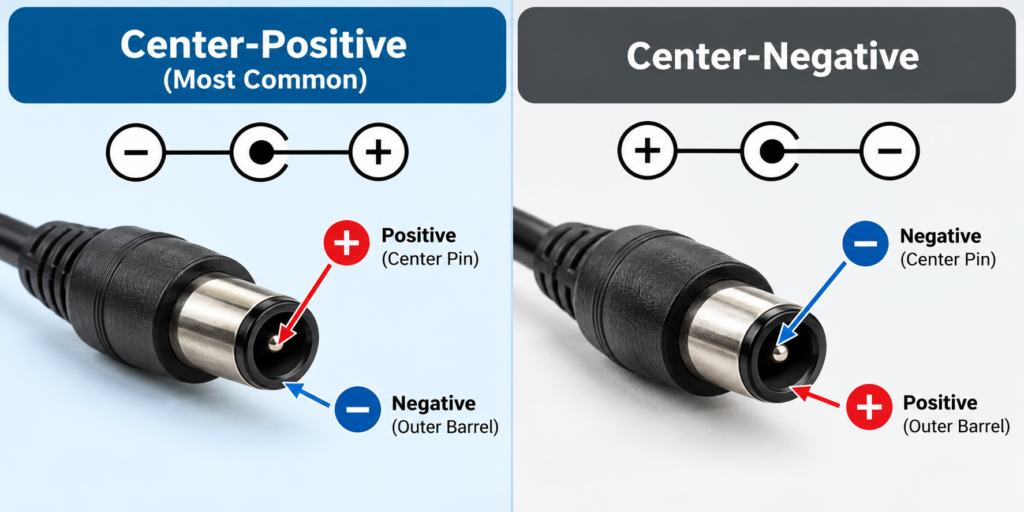
Polarity is one of the easiest specifications to overlook. The polarity symbol shows how positive and negative connections are arranged at the DC connector.
Centre-negative configurations are common in effects pedals, while centre-positive is used by many other types of electronics. You should never assume a pedal uses the same polarity as another device.
A plug can physically fit the pedal and still have the wrong polarity. Connecting the wrong arrangement can damage the pedal.
If the original adapter is still available, check its polarity symbol. If it is missing, use the exact pedal model to confirm the required arrangement before ordering.
Check the DC Connector Size
Even after confirming 9V and polarity, you still need the correct connector. Barrel plugs are available in different dimensions, and two plugs can look almost identical while having different inner or outer diameters.
Do not force a plug into a pedal. A connector that feels loose may cause intermittent power, while one that is too large or too small may not make the correct electrical contact.
If you have the original adapter, use it as a reference. If you do not, search using the exact pedal model and compare the listed connector specifications.
For example, a 9V replacement adapter for the TC Electronic Vortex Flanger guitar pedal provides a model-specific reference instead of leaving you to guess from a generic 9V listing.
Can One 9V Adapter Power Every Guitar Pedal?
No. A 9V label by itself does not make an adapter universal.
Different pedals can have different current requirements, connector dimensions and polarity. Some may also have additional power requirements that make a generic adapter unsuitable.
A model-specific 9V power supply for the VSN Vibrock guitar effects pedal shows why the pedal model should remain part of the compatibility check.
If you are powering several pedals, verify every pedal’s requirements rather than assuming they are identical.
How to Choose the Right 9V Adapter for a Pedalboard
If you are replacing an adapter for a single pedal, first check whether you plan to use that pedal on its own or as part of a larger pedalboard. A pedalboard can contain several effects, and each one may have its own power requirements.
Check the voltage, current requirement, connector and polarity for every pedal rather than assuming all 9V pedals are interchangeable.
If you are buying an individual replacement adapter, a model-specific product can make the selection easier because the intended pedal is clearly identified. For example, a 9V power adapter for the Amuzik Odrive II guitar effects pedal provides a specific reference rather than relying on a generic 9V description.
If you are powering several pedals, do not automatically connect one adapter to multiple devices unless the equipment and power arrangement are designed for that setup. A suitable pedalboard power supply may be better when several effects need to run together.
Check the UK Mains Plug and Safety Information
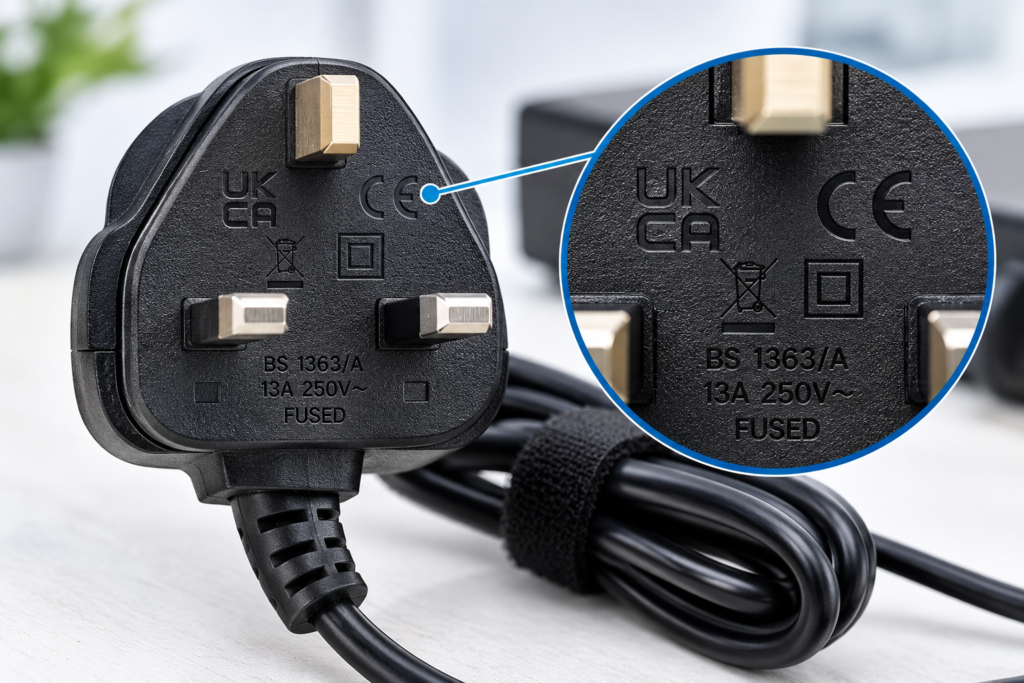
For UK guitarists, the mains side of the adapter matters too. The adapter should be appropriate for UK mains use and should come from a reputable source with clear product information.
For UK product-marking information, the UKCA marking guidance on GOV.UK is a useful official reference. It is better to check product information carefully than to rely on vague claims about safety or compatibility.
9V Guitar Effects Pedal Adapter Buying Checklist
Before buying a replacement, check:
- Pedal model
- Output voltage
- DC or AC output
- Current requirement
- Connector size
- Polarity
- UK mains compatibility
- Product-specific compatibility information
FAQs
Can I use any 9V adapter with a guitar pedal?
No. The adapter must match the pedal’s required voltage and should also have suitable current capacity, connector size and polarity.
Can I use a higher-amp 9V adapter?
Generally, yes, when the voltage, connector, polarity and other requirements match. A higher current rating represents available capacity rather than forcing that current into the pedal.
Are guitar pedal adapters centre-negative?
Many effects pedals use centre-negative connections, but you should confirm the exact pedal specification rather than assuming.
Can the wrong connector damage a pedal?
A connector that does not fit correctly can cause unreliable contact. If the connector or polarity is wrong, connecting the adapter can also damage the equipment.
Do all 9V guitar pedals use the same power supply?
No. Pedals can differ in current requirements, connector dimensions and polarity even when they all operate at 9V.
Conclusion
Finding the right 9V guitar effects pedal power adapter is mostly about matching the complete specification rather than choosing the first product labelled 9V.
Start with the pedal model, confirm the voltage and current requirements, then check the connector and polarity. For musicians using several pedals, repeat these checks for every unit rather than assuming one adapter will work for everything.
A properly matched replacement power adapter can help you keep an existing pedal in use without replacing equipment unnecessarily. For old adapters, follow GOV.UK WEEE guidance for electrical waste.