

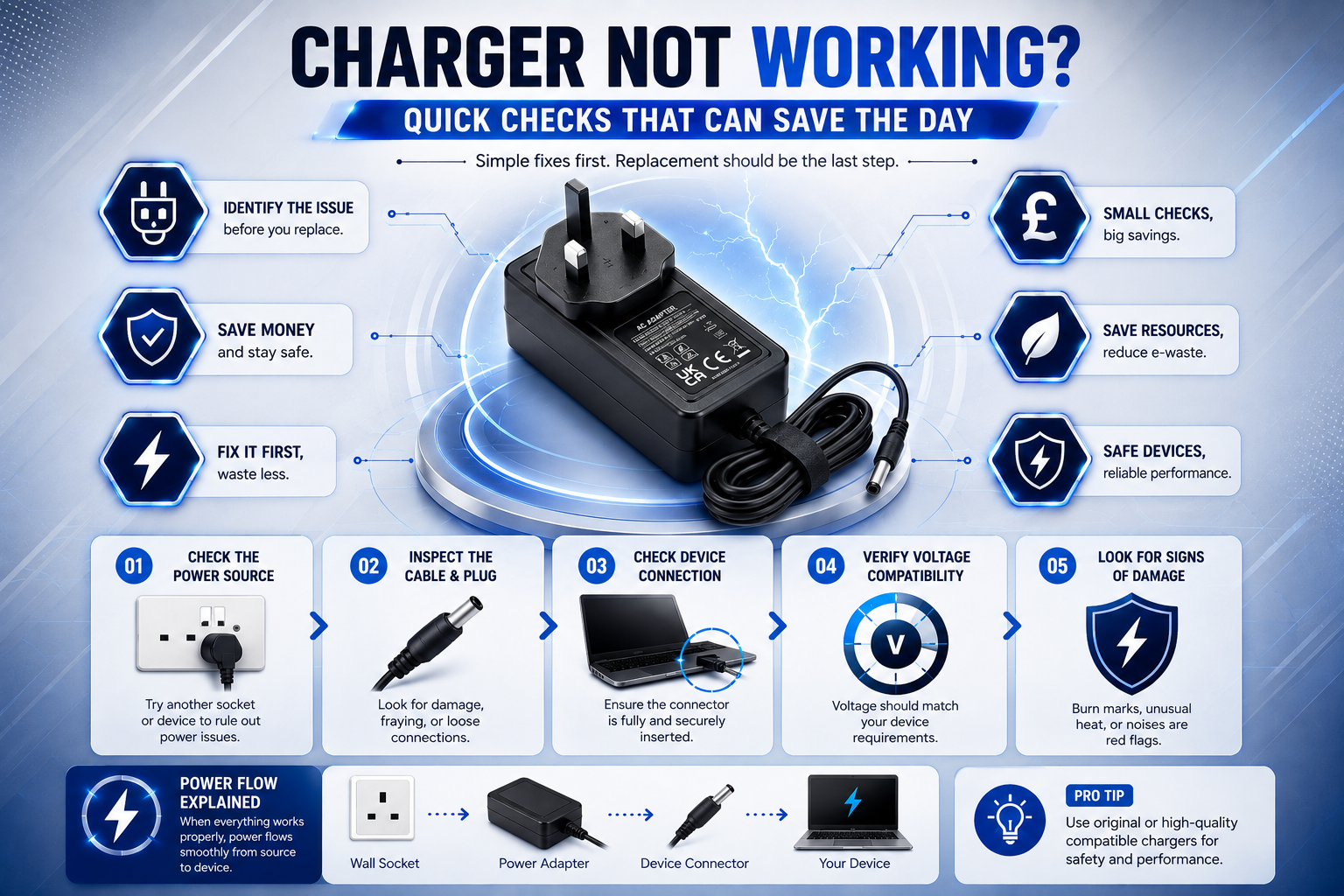
Is your charger not working? Few things are more frustrating than plugging in your device and realising nothing happens. Whether you’re preparing for work, relaxing with your favourite music or trying to stream a film, a sudden power failure can interrupt your plans without warning.
Many people immediately order a replacement, only to discover later that the adapter wasn’t actually the problem. A worn cable, blocked charging port or loose power connection can produce exactly the same symptoms.
Before spending money on another adapter, it’s worth taking a few minutes to identify where the fault begins. If the charger has genuinely reached the end of its life, choosing a compatible replacement designed for your exact device model is the safest and most reliable solution.
Charger Not Working? The Problem Might Start Somewhere Else
When a device refuses to power on, it’s natural to blame the charger first. In reality, electricity passes through several components before reaching your device. The wall socket, extension lead, charging cable, connector and charging port all need to work correctly.
Start with the obvious checks to rule out simple fixes:
- Try another wall socket in a different room to ensure you haven’t tripped a circuit breaker.
- Remove any extension lead or multi-way adapter, plugging the charger directly into the mains.
- Check whether the connector fits securely into the device without wobbling.
- If possible, test the charger with another compatible device to see if it delivers power.
Additionally, examine the charging port on your device. Over time, ports can accumulate dust or pocket lint, preventing the metal contacts from making a solid connection. If you spot debris, carefully clean it out using a non-conductive tool like a wooden toothpick. These quick checks often identify the problem without needing to buy another charger.
Small Warning Signs Often Appear First
Chargers rarely stop working without giving some indication that something is wrong.
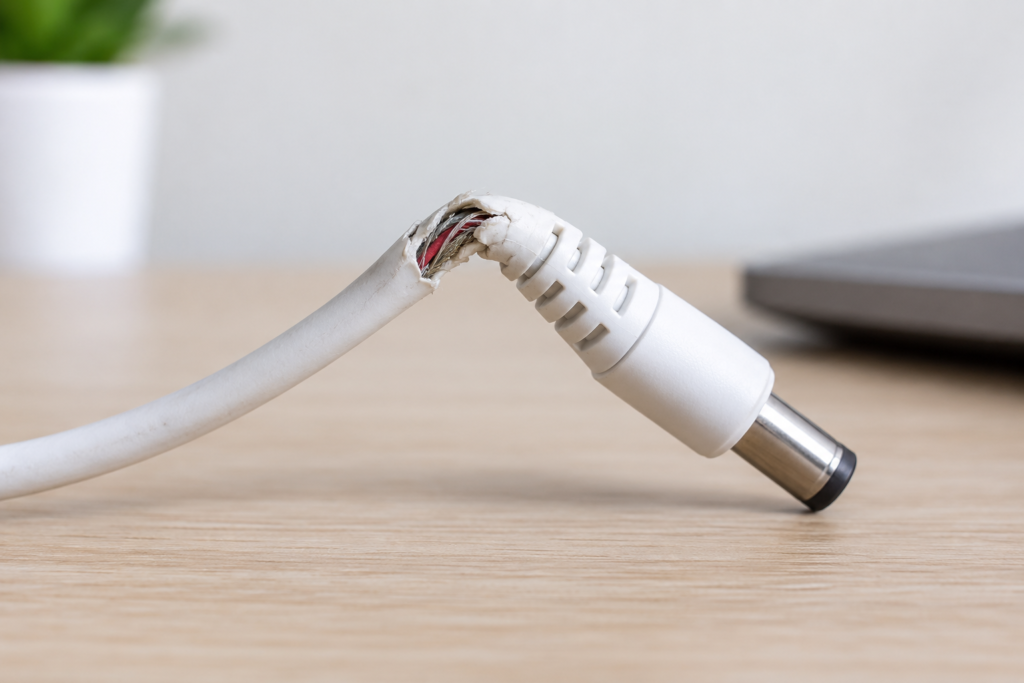
Perhaps charging only works when the cable is bent at a certain angle. This usually points to frayed internal wiring, meaning the connection is barely hanging on. Maybe the adapter feels much hotter than it used to, or the connector has gradually become loose and easily falls out of the device.
Visible damage is another clear warning sign. Cracked plastic casings, exposed internal wires and bent connector pins are all immediate reasons to stop using the charger. Continuing to use deteriorating equipment can pose a severe safety risk.
If your record player needs a replacement adapter, choosing the Compatible 12V Adaptor for TEAC TN-400BT-X Bluetooth Turntable Record Player Power Supply gives you a replacement that’s designed specifically for that model instead of relying on a universal charger. Dedicated supplies guarantee the correct polarity and voltage, keeping your audio equipment safe from power surges.
Similar Connectors Don’t Always Mean Compatible Chargers
One of the most common buying mistakes is assuming that chargers with identical-looking connectors deliver the same power.
Unfortunately, appearances can be misleading. Different devices often require completely different electrical specifications, even though the physical connector looks exactly the same.
This becomes particularly noticeable with high-draw electronics and audio equipment. Plugging a low-amperage charger into a device that demands a lot of power can result in overheating, slow charging or complete failure to switch on.
For example, if your portable speaker no longer powers on after replacing the adapter, using the Power Adapter Compatible for Pyle PPHP1044B Bluetooth PA Speaker helps eliminate compatibility concerns because it’s designed specifically for that equipment.
Choosing a charger that’s perfectly matched to your device’s voltage and amperage is usually far more reliable than experimenting with generic, off-the-shelf alternatives. It removes the guesswork and ensures a stable electrical current.
Every Device Has Different Power Requirements
Charging problems aren’t limited to laptops and mobile phones.
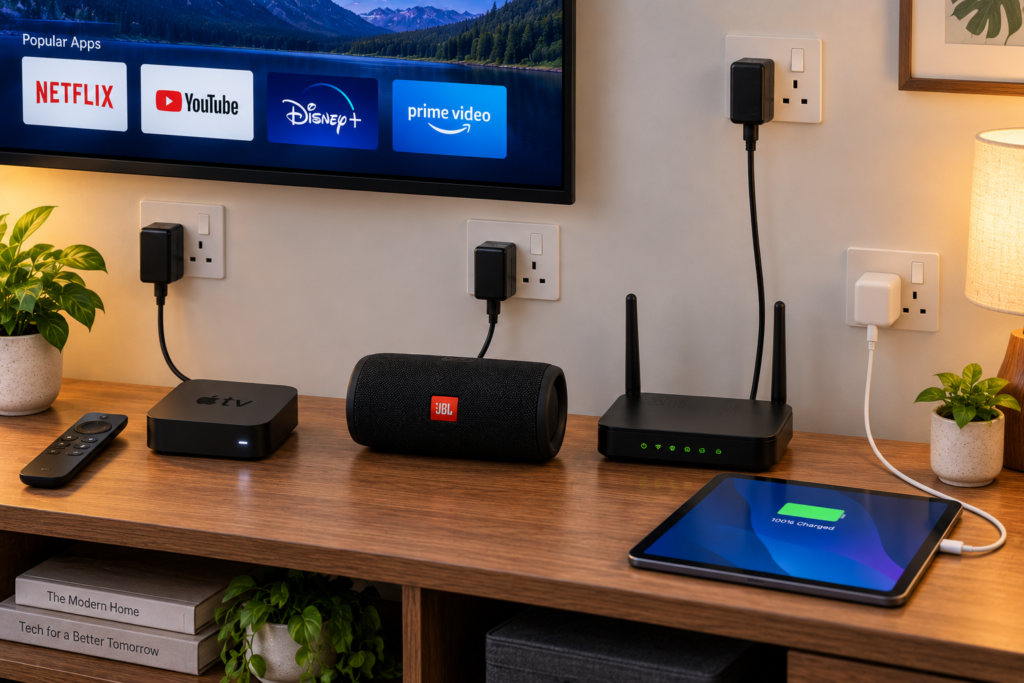
Streaming devices, televisions, music equipment and many other electronics all depend on the correct power supply.
If your Android TV box no longer powers on after changing the adapter, replacing it with the 5V 2A AC/DC Power Supply Adapter Compatible with MECOOL KM3 Android TV Box gives you a model-specific replacement that’s designed for the correct device.
Electronic drum kits are another good example. If you’ve ruled out the wall socket and cable but the kit still won’t start, the Power Adapter Compatible for TourTech TT-16S Electronic Drum Kit AC/DC Mains Supply Adapter provides a compatible replacement built for that model.
Selecting the correct adapter from the beginning saves time, reduces returns and avoids repeated charging problems.
Knowing When Replacement Is the Best Option
Some issues are worth troubleshooting.
Others are clear signs that replacement is the safer decision.
| Situation | What You Should Do |
| Charger works intermittently | Test another compatible charger if available |
| Cable insulation is damaged | Replace the charger |
| Adapter becomes unusually hot | Stop using it and replace it |
| Burning smell or scorch marks | Disconnect immediately |
| Charger fails after basic troubleshooting | Choose a verified compatible replacement |
Using a damaged charger isn’t worth the risk. Besides unreliable performance, deteriorating components can become a safety concern over time.
Frequently Asked Questions
Why did my charger suddenly stop working?
Everyday wear, damaged cables, loose connectors or internal component failure are common causes. Testing another wall socket and inspecting the charger for physical damage are good first steps.
How can I tell if my charger has failed?
Common signs include overheating, intermittent charging, exposed wiring or a charger that no longer powers compatible devices. Testing with another compatible device can help confirm the fault.
Can a faulty charger damage my device?
Yes. A damaged or incompatible charger may supply unstable power, which can affect charging performance and potentially damage sensitive electronic components.
Should I repair or replace a damaged charger?
Chargers with exposed wiring, overheating, cracked casings or burnt components should always be replaced. Continuing to use a damaged charger can create unnecessary safety risks.
How do I choose the right replacement charger?
The simplest approach is to search using your exact device model and choose a replacement designed specifically for that equipment. This reduces compatibility problems and helps ensure reliable performance.
Final Thoughts
A charger that stops working isn’t always beyond repair, but it shouldn’t be ignored either. Taking a few minutes to check the cable, connector, charging port and power source can often reveal the real cause before you spend money on another adapter.
If the charger has genuinely failed, choosing a compatible replacement for your exact device model is the best way to restore reliable power. It removes the guesswork, reduces compatibility issues and helps protect your equipment for the long term.