


Finding the correct charger for your electronics can be a minefield. With a mix of rectangular ports on older blocks and tiny oval ports on newer ones, you might be wondering which option actually keeps your tech running safely. When comparing USB-C vs USB-A chargers, the choice affects more than just how the cable plugs into the wall.
It impacts charging speeds, device safety, and long-term usability. If your original equipment has failed or gone missing, choosing high-quality replacement power adapters that match your hardware is critical. This guide breaks down exactly which solution fits your home or business setup.
The Technical Evolution of USB-C vs USB-A chargers
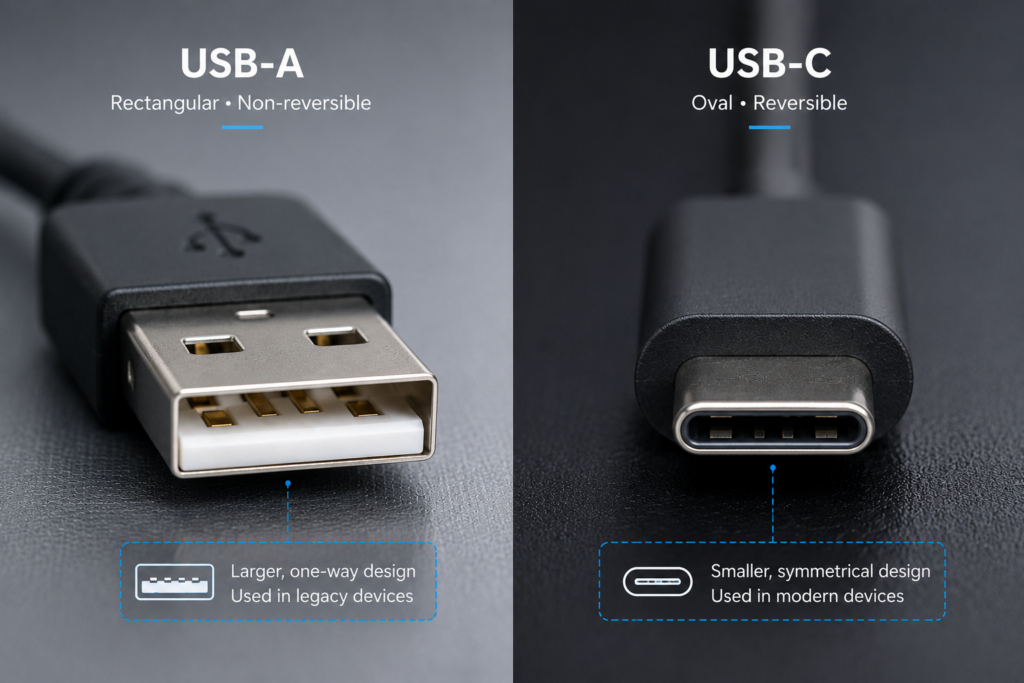
To understand the core differences between USB-C vs USB-A chargers, we must look at how these shapes evolved. The traditional USB-A port is a rectangular connector that has powered our tech for over two decades. It only plugs in one way, often leading to frustration as you flip the cable back and forth.
USB-C is the modern standard, featuring a smaller, sleek oval connector that is fully reversible. Beyond the physical shape, the internal wiring represents a massive leap forward. USB-A ports use a four-pin connection system that restricts data and electrical flow. USB-C utilises a twenty-four-pin configuration, allowing it to handle vastly more data and electrical current simultaneously.
For modern UK electronics users, this physical upgrade means fewer broken ports and much cleaner cable management. While newer smartphones and laptops have completely transitioned to modern charging interfaces, older household devices—such as radios, displays, or specialised tools—still rely on traditional power bricks. For instance, if you are looking to power home cooling equipment, finding a dedicated power adapter for Makita fans ensures you get the exact electrical footprint required.
| Feature | USB-A Chargers | USB-C Chargers |
| Shape | Rectangular | Oval |
| Reversible | No | Yes |
| Pins | 4 Pins | 24 Pins |
| Standard Max Power | 12W | Up to 240W |
| Fast Charging Tech | Limited / Vendor Specific | Power Delivery (USB-PD) |
Power and Velocity: The Charging Speed Comparison
When comparing USB-C vs USB-A chargers, the main reason to favour modern ports is the sheer difference in speed and power delivery. A standard USB-A charging brick typically outputs around 5W to 12W of power. This is perfectly adequate for a small alarm clock or a low-power radio, but it falls short when powering an entire laptop or a modern smartphone.
USB-C introduces advanced fast charging technology via a standard known as USB Power Delivery specifications. This protocol allows the power source and the connected machine to talk to each other and negotiate the fastest, safest wattage possible. USB-C connections can supply anywhere from 15W up to an impressive 240W of power.
This vast difference in speed between USB-C vs USB-A chargers explains why a modern device can recharge fully in under ninety minutes using an oval port, while a traditional rectangular charger would take half a day. When selecting compatible replacement adapters for high-demand electronics like televisions, audio systems, or medical scales, ensuring you have the correct power architecture is essential to keep everything running without interruption. If you are replacing a power block for home viewing, choosing a verified 19V replacement adapter for LG smart TVs prevents screen flickering and hardware strain.
Finding the Right Fit: Device Compatibility Solutions
Figuring out the right USB-C vs USB-A chargers does not have to be complicated, even if your household contains a mixture of old and new electronics. The reality is that billions of USB-A items remain in active service across the UK. Everything from older streaming boxes to legacy cameras relies on these older connections. For example, many streaming households still keep entertainment hardware online using a specialised power adapter for TalkTalk TV boxes.
However, when looking at the future of USB-C vs USB-A chargers, the tech industry has made its decision. Major manufacturers have standardised their ecosystems around modern oval ports. This means that if you buy a new premium laptop or tablet today, it will almost certainly require a high-wattage modern supply.
Instead of throwing away perfectly functional gear when an old power brick dies, smart consumers look for reliable compatible replacement adapters. Sourcing a high-quality power supply tailored specifically to your hardware allows you to preserve older electronics, extending their lifespan and directly matching electronic waste reduction data metrics across the country.
Best Suited For: High-Power Tech (Laptops, Tablets, Modern Smartphones)
Power Supply Source
Option A: USB-A Port (Legacy Tech)
Power Output: 5W to 12W Maximum
Voltage Type: Fixed Voltage
Best Suited For: Low-Power Tech (Routers, Radios, Older Accessories)
Option B: USB-C Port (Modern Tech)
Power Output: 15W to 240W Maximum
Voltage Type: Dynamic USB Power Delivery (USB-PD)
Safety First: UK Safety Standards for Power Delivery
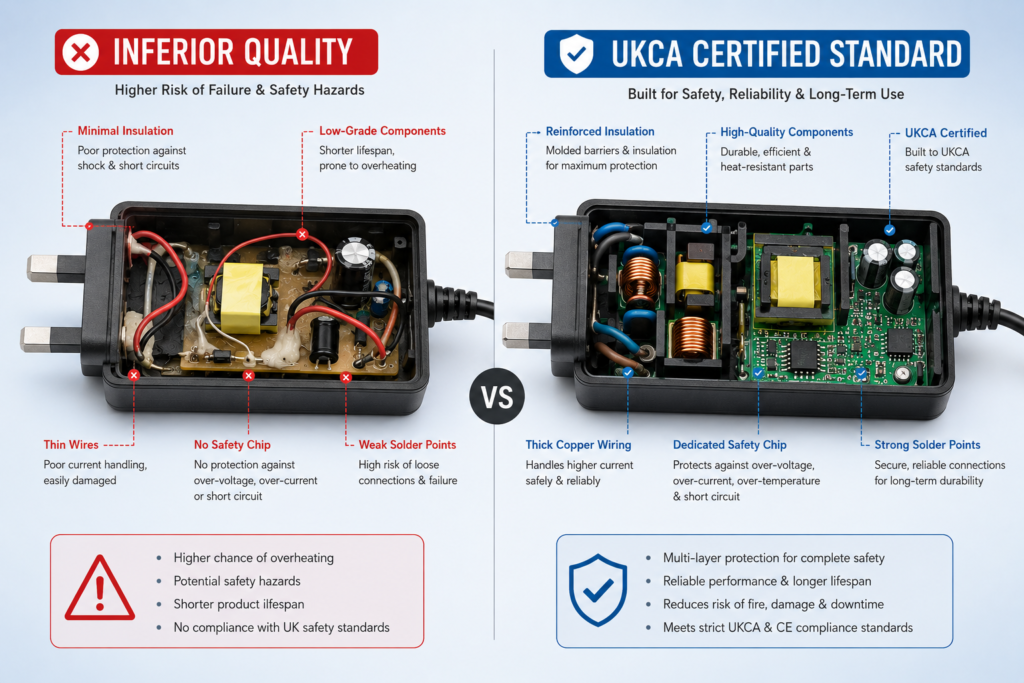
No matter where you land on the debate of USB-C vs USB-A chargers, safety remains the single most important factor. The UK market is flooded with cheap, unbranded charging bricks that do not feature proper voltage regulation, which can put your expensive electronics at serious risk of short circuits or overheating.
High-quality replacement power adapters are built to adhere strictly to UK electrical product regulations. This includes integrated overcurrent protection, overvoltage protection, and thermal monitoring. Because modern fast charging technology moves a significant amount of electricity, having built-in fail-safes is non-negotiable.
Whether you are keeping standard consumer items powered or matching critical tools like a 12V power supply for Marsden weighing scales, safety parameters must never be bypassed. When you purchase certified compatible replacement adapters from a trusted UK supplier, you are investing in peace of mind. Your equipment gets the exact electrical current it needs, protecting internal circuits from degrading prematurely and ensuring your home remains safe from electrical hazards.
Frequently Asked Questions
Can I use a USB-A to USB-C cable to fast charge my device?
While a hybrid cable allows you to plug a modern device into an older port, your charging speed will be limited by the lower output of the older power brick. To experience true fast charging, both the power adapter and the device must support modern power standards.
Is it safe to use a compatible replacement adapter instead of the original brand?
Yes, it is entirely safe provided the adapter is sourced from a reputable UK supplier that meets national safety regulations. High-quality compatible units provide identical performance and safety metrics at a fraction of the original manufacturer cost.
Why does my laptop require a modern oval charger instead of a rectangular one?
Laptops require substantial amounts of power, often between 45W and 100W. Traditional rectangular ports are generally limited to 12W, which is insufficient to power a laptop motherboard and charge its battery simultaneously.
How does choosing replacement adapters help the environment?
By replacing only the failed power block rather than discarding the entire electronic device, you prevent functional hardware from entering landfills. This practical approach supports a circular economy and aids in reducing electronic waste.
What happens if I use a charger with a higher wattage than my device needs?
Modern smart power delivery systems ensure the device only draws the specific amount of electricity it can handle. Using a higher wattage power block will not damage your equipment, as the power supply automatically scales down its output.
Conclusion: Smart Power Decisions for Your Tech
In the matchup of USB-C vs USB-A chargers, modern tech is the clear winner for speed, power output, and future-proofing. However, legacy equipment remains a core part of our daily lives. Whether you need a high-power block for a modern laptop, a replacement adapter for acoustic solutions speakers, or a reliable power supply for Roberts portable radios, sourcing premium components is key to long-term performance.
Don’t let a missing or broken power block render your expensive electronics useless. Explore our full range of certified replacement power adapters today to find the perfect power match for your hardware. Ensure your household stays safely powered by browsing our reliable compatible replacement adapters and secure your order now.